ChatGPT Wallet hides the real card number from agents and merchants at checkout, and the first rollout is limited to US Pro subscribers
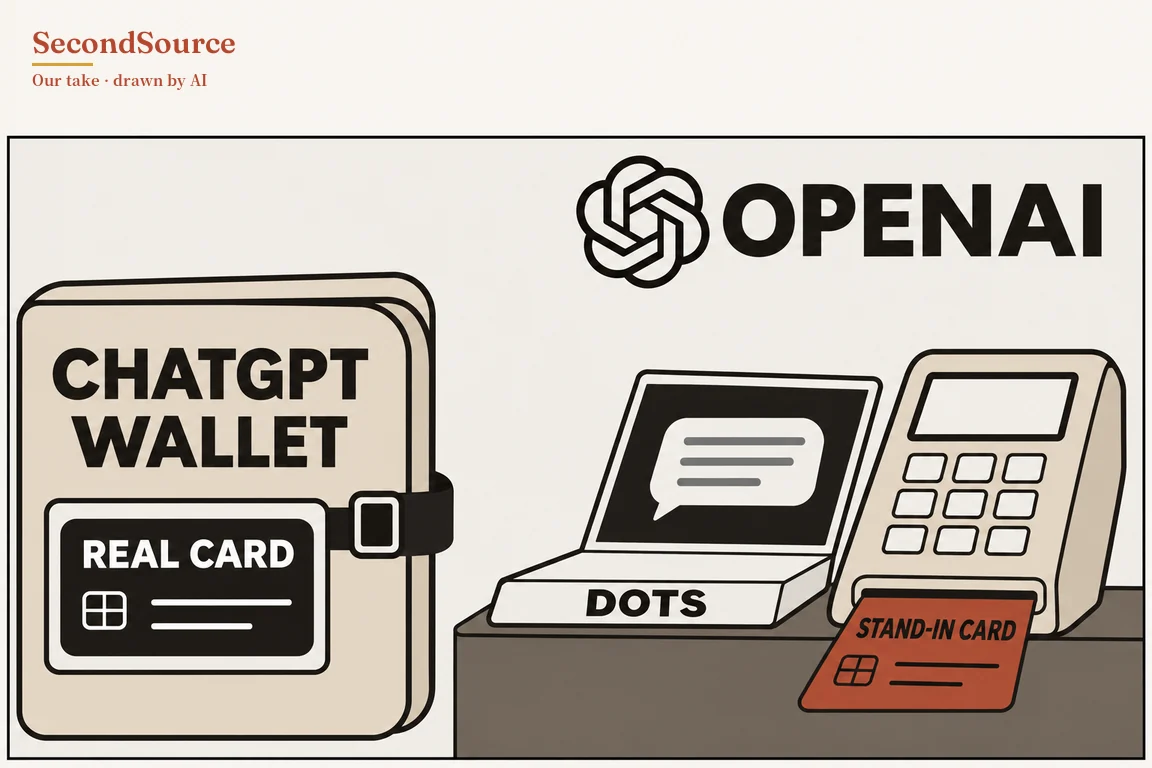
OpenAI launched ChatGPT Wallet on November 13, letting dots pay on a user's behalf once the user approves each purchase (OpenAI, 2026-11-13). Dots is the name of OpenAI's agent product inside ChatGPT, and each user's agent is called a dot. Our inference: Wallet keeps card numbers from agents, but agent purchases still hinge on sellers, sites and fraud checks letting agents through.
According to OpenAI, after the user approves a purchase with Face ID or a fingerprint, the payment network issues a stand-in card number, security code and expiry date. Neither the agent nor the merchant sees the real card number, and the merchant collects payment through its existing checkout. The first users are ChatGPT Pro subscribers in the US who are 18 or older and hold an eligible US-issued card.
OpenAI writes in the same announcement that some websites may inadvertently block purchases made through ChatGPT Wallet. OpenAI also writes that risk systems may still flag legitimate agent orders as suspicious, so transactions get declined or orders cancelled. One of OpenAI's recommendations to merchants is to have the firewall or content delivery network in front of their site recognize requests signed with Web Bot Auth. Web Bot Auth is a standard for bots to prove their identity with a cryptographic signature on each request. The signature lets a website tell that a request comes from a ChatGPT agent.
United Airlines has written the block on agents into its contract. According to venture investor Tomasz Tunguz's blog, United changed its contract of carriage on November 11 to bar AI agents from booking or changing tickets, or buying any services or goods, for passengers. United may cancel a ticket an agent booked without notice, even if the passenger was watching (Tomasz Tunguz, 2026-11-13). So even when an agent checks out successfully, the ticket can still be cancelled later. The travel-industry outlets Skift and PhocusWire also reported United's ban (Skift, 2026-11-11; PhocusWire, 2026-11-11). The United statement Skift quotes says the ban covers unauthorized third-party personal agents.
Not proven yet: OpenAI's announcement gives no user numbers, transaction volume or fees How we checked →
Next to watch: when OpenAI opens Wallet beyond Pro subscribers, and what large retailers and airlines say about agent checkout before the year-end shopping season. What would overturn the judgment is Wallet purchases still often failing at sellers that openly accept agent checkout because the stand-in card number itself is not accepted; the observable signals are whether OpenAI publishes decline and cancellation rates and reasons when it widens access, and whether United publishes how authorized agents can connect.
Source and checks
This item ran in the brief of Nov 14, 2026, alongside 14 other items. How we checked it, the quote checks and what was still missing that day are on that issue's How we checked page.
Cite this item
SecondSource (2026). "ChatGPT Wallet hides the real card number from agents and merchants at checkout, and the first rollout is limited to US Pro subscribers." https://secondsource.io/en/news/2026-11-14-1/. Accessed access date.