Venture investor Tomasz Tunguz says United blocks AI agents to protect add-on sales, but Tunguz compares add-on revenue, not add-on profit
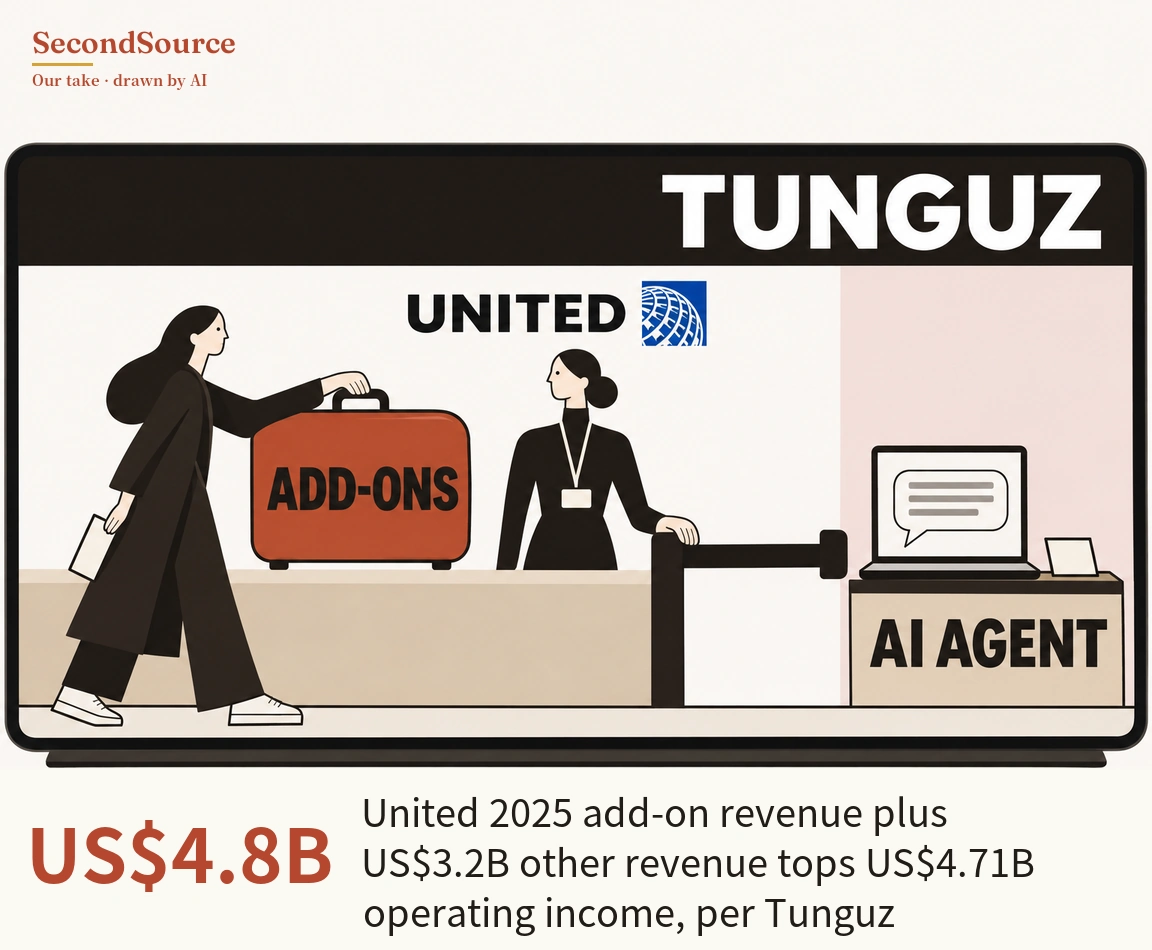
Tomasz Tunguz, founder of the venture firm Theory Ventures, wrote on his blog on November 13 that the reason large sellers block AI agents lies in their income statements (Tomasz Tunguz, 2026-11-13). Our inference: if Tunguz is right, sellers that profit from checkout add-ons need other income before letting agents check out.
Tunguz argues that these sellers' profits come from seat selection, bags and ads at checkout, while agents buy what the task calls for and add nothing extra. Shopify, an e-commerce platform paid through a cut of each sale, is different. Its revenue is about 3.1% of gross merchandise volume, and it takes that cut on agent orders too. That is why it has opened checkout to agents.
For United, Tunguz compares add-on revenue, not add-on profit. By Tunguz's count, United's 2025 add-on revenue of US$4.8 billion plus US$3.2 billion of other revenue exceeds full-year operating income of US$4.71 billion. United's annual report doesn't break out the profit margin on add-ons. For Amazon, Tunguz uses a different method: assume a 50% margin on advertising, then compare that ad profit with operating income.
United's new terms in item 1 are the kind of block Tunguz is trying to explain.
Not proven yet: only Tunguz has estimated that add-on sales are the motive How we checked →
Next to watch: whether United launches a paid or approved channel for agents by year-end. If sellers with no add-on business also start blocking agents, Tunguz's explanation doesn't hold.
Source and checks
This item ran in the brief of Nov 14, 2026, alongside 14 other items. How we checked it, the quote checks and what was still missing that day are on that issue's How we checked page.
Cite this item
SecondSource (2026). "Venture investor Tomasz Tunguz says United blocks AI agents to protect add-on sales, but Tunguz compares add-on revenue, not add-on profit." https://secondsource.io/en/news/2026-11-14-2/. Accessed access date.