Daily Brief Oct 13, 2026
AMD and NVIDIA each put out a CPU-only rack for running AI tools; neither announcement gives performance figures or orders
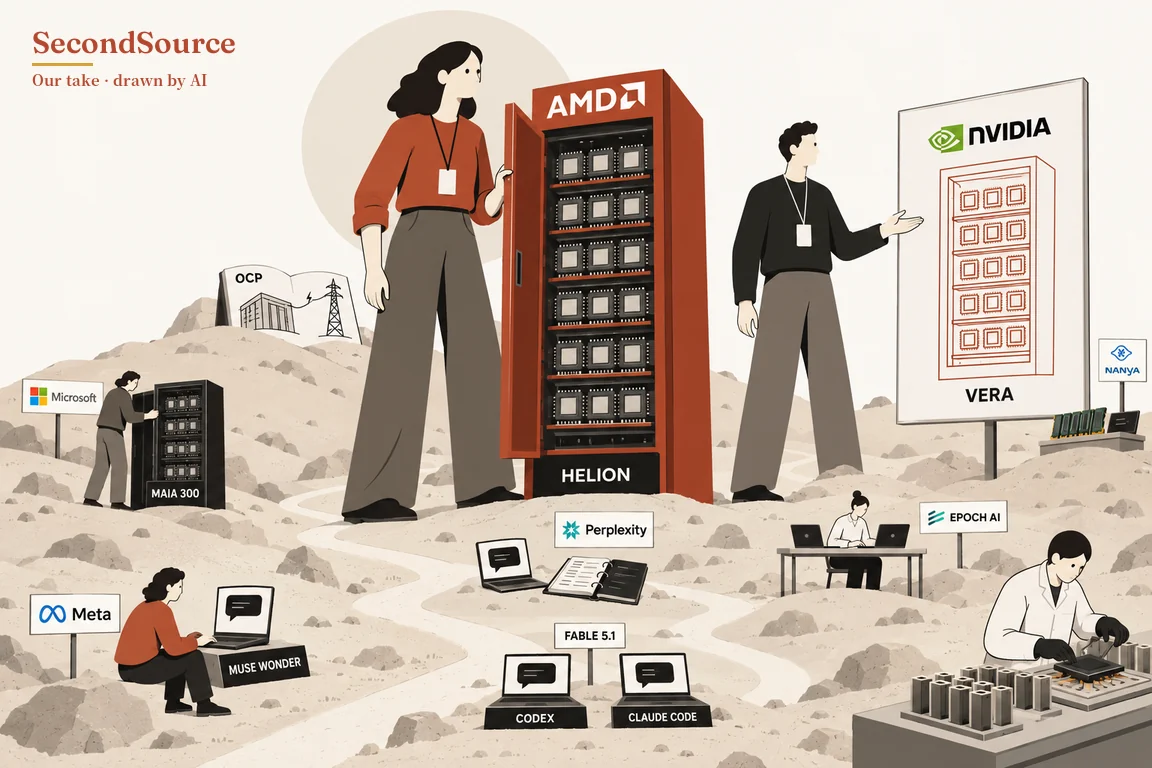
At a glance
1. On the same day, AMD launched a rack that holds only CPUs and NVIDIA published the design specs for a similar one, both meant for AI agents (AI that takes actions on its own) to call tools and run code, with model inference wired to separate GPUs. (Affects: whoever estimates AI compute budgets)
2. Two outside tests of Meta's new model Muse Wonder pointed in different directions on launch day: one independent evaluator ranked it top three on 6 of 10 tests, while a code-rewrite test from the tech publication Every gave it 52% against 71% for OpenAI's GPT-Sol 6.1. (Affects: engineers choosing a coding model)
3. According to one reporter and one analyst relaying the results, the average selling price of Taiwanese DRAM maker Nanya Technology rose 60% from the previous quarter while its shipments fell. (Affects: whoever plans memory purchasing)
Today's main line
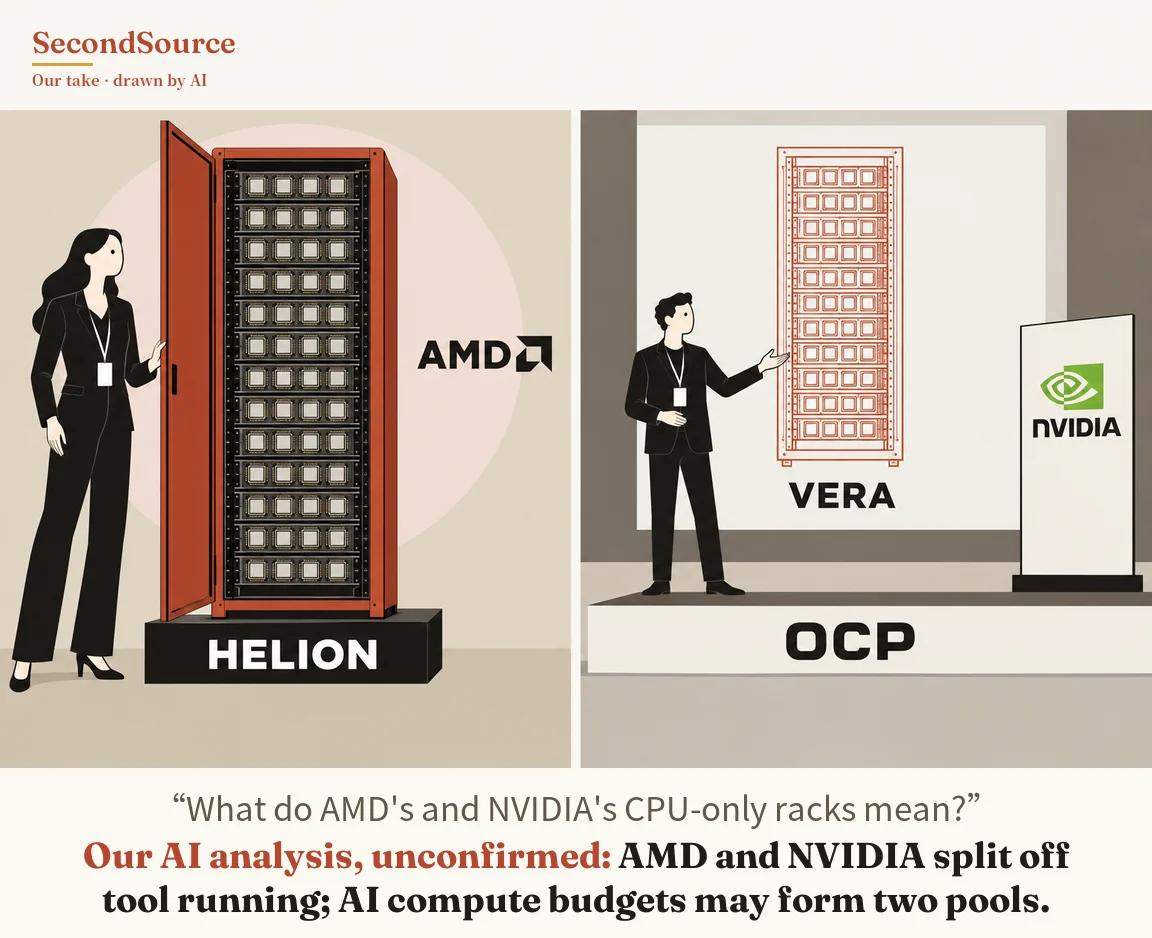
1. [Today] (event date October 12) On the same day, AMD launched and NVIDIA published the design of a rack that holds only CPUs, built for AI agents to carry out tasks
Why this matters to you: Measure how much time your AI workflows spend waiting on tools and running code before deciding whether CPUs need their own budget line.
Read the full item
AMD announced its Helion rack; one configuration holds only CPUs, up to 32,768 cores, to run tools for AI agents, with model inference on a separate system, and AMD expects to ship in November (AMD press release, 2026-10-12). The same day NVIDIA released the design of its Vera CPU rack, which it says is for calling tools, sequencing steps and running code in an isolated environment (NVIDIA blog, 2026-10-12).
Our reading: on the same day, two rivals gave the work of running AI agents' tools a CPU rack of its own. AMD ships in November. NVIDIA has so far published only the design specs. AI compute budgets may split into two pools as a result, one for running models and one for running tools. This is a judgment we haven't settled yet. It sits in tension with a common view that a CPU's value lies in keeping the GPUs busy. As AMD's press release describes it, this CPU rack connects to a separate inference system, so its main job isn't feeding GPUs. AMD's pitch is the core count per rack. NVIDIA's announcement this time gives no per-core figure. Jensen Huang, NVIDIA's CEO, said in a March interview that this kind of work rewards single-core speed. That remark predates this announcement. If he is right, a rack's core count says little about how fast agents finish their tasks. Ask both vendors for per-task speed, not core counts.
Not proven yet: neither announcement gives performance figures or mentions cloud customer orders How we checked →
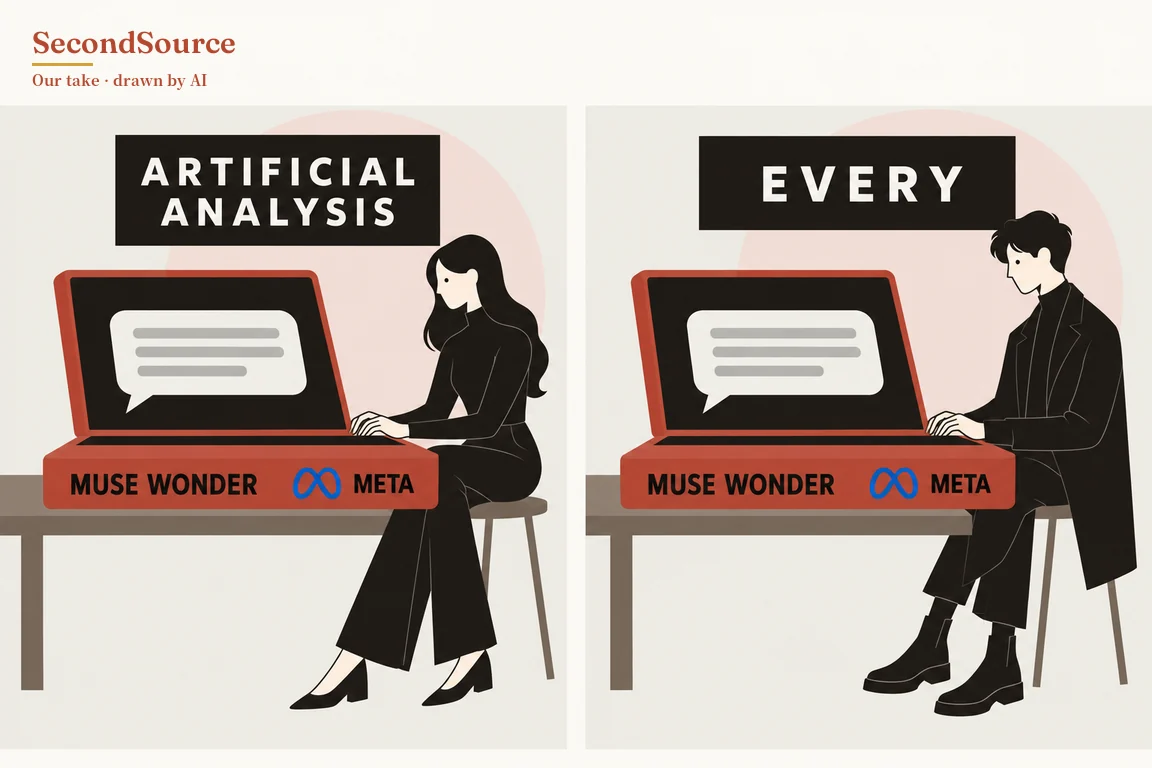
2. [Today] (event date October 12) On Muse Wonder's launch day, two outside tests of Meta's new model gave readings that point different ways
Why this matters to you: Before switching models, run each on a set of your own real engineering tasks; a top-three overall ranking doesn't mean it's strong on yours.
Read the full item
Meta announced the Muse Wonder family on October 12, in a fast version, Wonder, and a full version, Wonder Full. CEO Mark Zuckerberg called it "our new family of frontier models with state of the art performance for personal and professional agentic work" (Mark Zuckerberg, 2026-10-12).
The same day, the independent evaluator Artificial Analysis published the first outside measurements. Wonder Full ranked top three on 6 of the 10 evaluations in its overall intelligence index, and the evaluator itself noted that the leads are small (Artificial Analysis, 2026-10-12). The post we read doesn't list every model it was compared with. One evaluation pits answers on professional work tasks against each other in pairs. There Wonder Full scored 1857 and Anthropic's Claude Opus 5.5 scored 1866. That score is a ranking converted from head-to-head wins and losses. The evaluator notes that the two models' error ranges overlap.
Dan Shipper, CEO of the tech publication Every, ran his own "senior engineer benchmark." The task is rewriting a codebase that an AI had cobbled together. Muse Wonder scored 52% and OpenAI's GPT-Sol 6.1 scored 71% (Dan Shipper, 2026-10-12).
Our reading: the overall index measures performance across many tasks, while Shipper measures one kind of large rewrite. Artificial Analysis tested the full version. Shipper doesn't say which version he tested. Until he does, his 52% shouldn't be weighed against the index ranking.
Not proven yet: we haven't seen Every's task set or how it scores them How we checked →
our analysis is produced with help from Anthropic's models, and Claude Opus 5.5 is one of the models compared in this item.
What to take away today: #1: Measure how much time your AI workflows spend waiting on tools and running code before deciding whether CPUs need their own budget line. #2: Before switching models, run each on a set of your own real engineering tasks; a top-three overall ranking doesn't mean it's strong on yours.
Chips & semiconductors
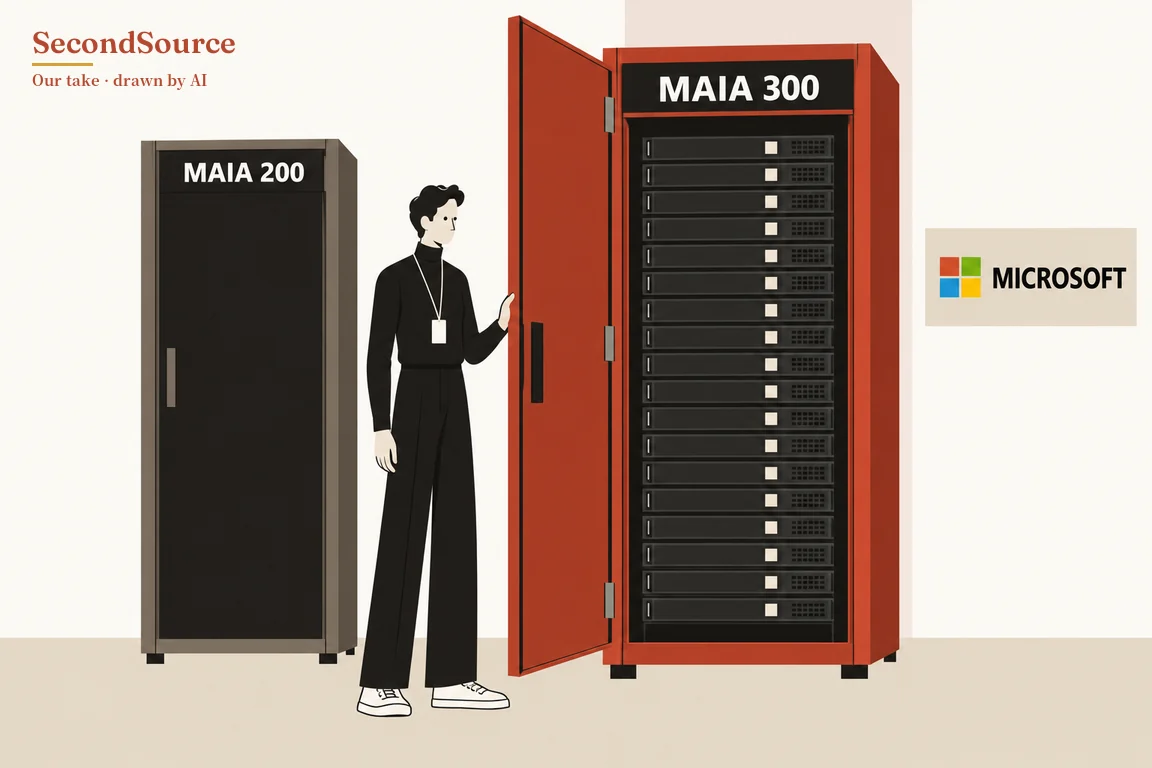
1. [Today] (October 12) Microsoft published rack specs for Maia 300, its in-house AI chip: 96 chips in a 167-kilowatt rack, with peak rack throughput it puts at 7 times the previous Maia 200. Microsoft's Azure technical post says: "Maia 300 integrates 96 accelerators across 24 four-accelerator trays within a 167-kW rack, doubling the accelerator density of Maia 200." (Microsoft Azure, 2026-10-12) The same post says peak rack throughput is 7 times that of a fully configured Maia 200 rack. It puts throughput per watt at more than 2.5 times the previous generation. The 7x and 2.5x figures compare against Microsoft's own previous generation. Up to 12,288 chips can be linked into one group that works as a single machine, and each chip has 288GB of high-bandwidth memory. The same day, Microsoft CEO Satya Nadella said that from 2027 Maia is to become "the primary inference system" for Microsoft's own products (Satya Nadella, 2026-10-12). Microsoft's official blog also says Maia 300 produces 40% more tokens per watt than "leading GPU systems" (Microsoft official blog, 2026-10-12). The 40% doesn't say which GPU system it compares against. More tokens per watt means the same electricity serves more text. All of these figures are Microsoft's own. There is no outside measurement, and we didn't read the test conditions. The industry analyst Patrick Moorhead also writes in his report that Microsoft hasn't announced any Maia that Azure customers can rent directly. How we checked →
2. [Today] (posts October 12) Taiwanese DRAM maker Nanya Technology posted an 85.7% gross margin in the third quarter, according to one reporter and one analyst relaying its results. The analyst says higher prices alone drove growth, and bit shipments fell from the previous quarter. Nanya is a second-tier memory maker behind Samsung, SK hynix and Micron. Dan Nystedt, a reporter who has long covered Taiwan's chip industry, relayed Taiwanese media: Nanya's third-quarter gross margin was 85.7%, its average selling price rose 60% from the previous quarter, and revenue was NT$133.65B (Dan Nystedt, 2026-10-12). Independent semiconductor analyst Sravan Kundojjala broke it down separately: "Price alone drove growth. ASP up >60% q/q while bit shipments down MSD q/q" (Sravan Kundojjala, 2026-10-12). That means the total memory capacity sold fell by a mid-single-digit percentage from the previous quarter. He says more than 60% of Nanya's revenue comes from older DRAM such as DDR4 and LPDDR4. He also writes: "Long Term Agreements (LTAs) are becoming standard for DRAM." In other words, long-term supply contracts that lock in volume and price are becoming the norm for DRAM. Both posts relay the results Nanya published, so there is only one primary source. We didn't check the financial report. Our reading: shipments down while prices jump looks more like a supply squeeze. Since more than 60% of Nanya's revenue comes from older DRAM, the squeeze may not be limited to the high-bandwidth memory used in AI. These are one company's numbers, and they could also reflect a shift in Nanya's own product mix. How we checked →
3. [Today] (spec finalized September 17, made public at the summit October 12) A data-center power-grid spec whose original text lists Google, Meta, Microsoft and NVIDIA says data centers must not disconnect during grid faults within its defined range. We read the spec's original text (version 1.0.0) on OCP's site. It says large loads must "stay connected to the BES during all faults"; the BES is North America's bulk electric system. After a fault clears, computing equipment's power draw must "restore to 90% of pre-fault load within 2 seconds" (OCP spec original, 2026-09-17). Cooling equipment isn't covered by that rule. The power industry calls this kind of requirement ride-through. NVIDIA's blog describes it as returning to near full load within two seconds. The original says 90% of pre-fault load, and only for computing equipment. Our reading: on top of securing power, data centers are being asked to plan for staying connected when the grid faults. The spec doesn't give a reason for this rule. The next thing to watch is whether North American utilities or regulators write it into their interconnection requirements. The spec was written by four large power users themselves, not by utilities or regulators. It doesn't bind the utilities. How we checked →

Named commentary
1. [Today] (post October 12) Former Intel CEO Pat Gelsinger says AI will make chip design faster but won't make chips easier to make; he names memory bandwidth, advanced packaging, the shift from copper to optics, and power as the choke points. He wrote: "AI will make chip design faster. It won't make chips easier," and added, "Memory bandwidth and advanced packaging are huge choke points" and "Energy capacity is becoming economic capacity" (Pat Gelsinger, 2026-10-12). He also said silicon manufacturing progress is measured in quarters. Gelsinger is now a partner at the venture firm Playground Global. It has invested in optical interconnect companies, so he has a stake when he talks about copper giving way to optics. This is his personal judgment, with no data attached. He also said the variety of specialized AI chips will narrow. He flagged that point himself as a guess. How we checked →
Model watch
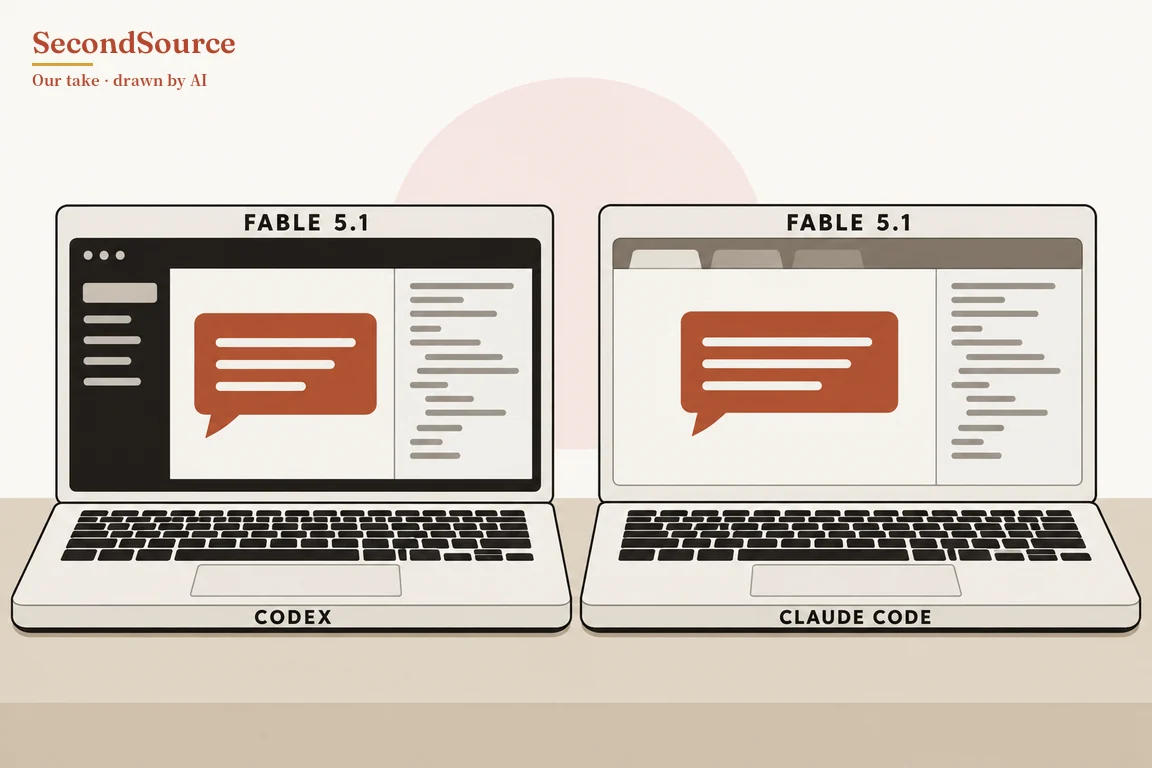
1. [Today] (post October 12) A test that investor Chamath Palihapitiya commissioned from 8090 says the same Claude Fable 5.1 solved 61% of tasks inside OpenAI's Codex and 41% inside Claude Code. Claude Code and Codex are both harnesses, the program wrapped around a model that calls tools and manages steps for it. Put the same model in a different harness and it solves different problems, so part of the score measures the harness. The test used 113 bug-fixing tasks, pairing 7 models with 5 harnesses each. Another model, GLM 5.3 Flash, showed a similar gap: 59% in its best harness and 24% in its worst (Chamath Palihapitiya, 2026-10-12; 8090, 2026-10-12). 8090's post says each combination ran only twice, so gaps within 9 percentage points may be noise. Fable 5.1's gap is 20 percentage points, larger than that range. This is a single test published by the people who commissioned it, and no third party has rerun it. Chamath has a business relationship with 8090. ⚠️ Disclosure: our analysis is produced with help from Anthropic's models, and Claude Code and Fable 5.1 are both Anthropic products. How we checked →
2. [Today] (preprint, October) A preprint from an ETH Zurich team says coding agents build software from specs, and that software passes 82% of the reference tests. But the tests the agents write themselves catch fewer than 60% of deliberately planted bugs. Across 165 applications, the researchers broke each one in 74 places on average and checked how many of those breaks the agents' tests caught. The paper's conclusion is that "agents can build software they cannot verify" (TestSuiteBench preprint). The researchers also report that 88% of the agents' tests pass on correct code. So the tests aren't wrong. They are too weak to catch errors. We read only the abstract. We don't know which agents were tested, or whether these figures are averages or the best single agent. Before you accept an agent's tests as your acceptance check, you can deliberately break the code in a few places and see how many breaks the tests catch. This check is our suggestion. The paper didn't run it. How we checked →

Product moves
1. [Today] (post October 12) Perplexity CEO Aravind Srinivas says AI agents that look things up with the most basic file-listing and text-search commands answered 63% of questions correctly on the company's financial-document test, against 37% with semantic search. Perplexity is an AI search company. The agents here are AI that find information and read files on a user's behalf. He wrote: "Agents search with plain `ls` and `grep`. That beats semantic search 63% vs 37%" (Aravind Srinivas, 2026-10-12; Perplexity blog). `ls` lists files, and `grep` searches text for literal matches. Semantic search instead turns text into a string of numbers and finds passages with similar meaning. The 63% versus 37% comes from Perplexity's own financial documents. We didn't read how the semantic-search setup was configured, so this isn't necessarily a verdict on the two methods themselves. Results may differ on other kinds of data. How we checked →
From the archive
1. [Looking back] (deep dive, July 21, 2026) "Are export controls working?" is at least three questions: did they widen the compute gap, did they speed up China's self-sufficiency, and how much did they leak? The three use different yardsticks and can't refute each other. The research group Epoch AI estimates that the capability gap between Chinese and US models averages seven months, within a range of 4 to 14 months. Meanwhile, Beijing banned purchases of the chips made specially for China, and state projects exclude foreign accelerators. That amounts to Beijing giving up better products in the short term to build up its own supply chain.
The accurate version of "controls sped up China's self-sufficiency" is this: China's drive for self-sufficiency predates the controls, and the controls made it more urgent. China's national chip industry investment fund was set up in 2014 and the memory maker CXMT in 2016, both before the controls (deep dive, 2026-07-21). The single best leading indicator the deep dive named is CXMT's HBM3 yield and capacity expansion. What would prove its judgment wrong: the gap in Chinese model capability shrinks to under 4 months, or a Chinese frontier lab publicly completes full training of a flagship model on domestic chips. The deep dive set its own check-back deadline of July 2027. We didn't go back and check this round, so there's no result yet. When you hear "the controls failed" or "the controls worked," first ask which of the three questions the speaker means. How we checked →
Also happened
1. Not verified by us yet: [Today] (post October 12) Helen Toner, a former OpenAI board member, cited an August survey by METR, an outside AI evaluation group, to correct something Palantir CTO Shyam Sankar said in a TV interview. Toner says the time an OpenAI model broke into Hugging Face involved about 1,200 AI agents coordinating over several days, not simply following instructions to find an answer. We didn't reread METR's original this time (Helen Toner, 2026-10-12).
2. Not verified by us yet: [Today] (report October 12) The Information reporter Leo Schwartz, citing anonymous officials, reports that the Trump administration plans to have three senior officials at the Commerce Department's Center for AI Standards and Innovation (CAISI, formerly the US AI Safety Institute) report directly to the White House. The full story is paywalled and we didn't read it (Leo Schwartz, 2026-10-12).
3. Not verified by us yet: [Today] (relayed October 12) According to The Information, as relayed by the commentator Gary Marcus, the ten highest-quality models account for only 14% of developers' token usage, against 55% a year ago. A token is the unit AI models count text in. Each is roughly a few characters, and usage is billed per token. We didn't read how this was measured or what population it covers (Gary Marcus, 2026-10-12).
4. Not verified by us yet: [Today] (report October 12) According to Bloomberg, as relayed by China tech-policy analyst Paul Triolo, DeepSeek led a seed round of tens of millions of dollars in the robotics startup Winverse. We didn't read what the US$400 million in Bloomberg's headline refers to (Paul Triolo, 2026-10-12).
Correction: the October 11 issue had five errors or missed readings. Main line, Fireworks: we hadn't read the security notice attached to the CEO's post. It says the company discovered the incident on October 6, and that API keys and access tokens stored as secrets in some affected accounts may have been taken; it asks affected customers to rotate the third-party credentials named in their notice. The notice was also updated on October 10, so saying we "found no later update" was wrong. Product moves, Open SWE: the link pointed to a different post by Harrison Chase. LangChain's October 1 blog post had already made public which model was used before the change and how quality was measured, so saying it "wasn't public" was wrong. Chips section, Terafab: the first-phase investment of more than US$16.8 billion had already been announced by the Texas governor's office on August 6; it didn't rest on a single post. The English translation page of the Jordan interview states that it was published on October 4. The Chinese edition's main line gave October 9, the date Altman's remarks were reposted, as the date he made them. The archive pages on our site have been corrected in all three languages.
SecondSource isn't a news digest: each day we hunt the AI firehose for the insights that matter and the practitioner judgments worth tracking over time, and show how every item was verified. The point is always which judgment got harder and who's been right, not what happened today.
Written from the same research and judgments as the Traditional Chinese edition. Sources are linked; we distinguish original documents from reporting and mark what we could not verify.