Daily Brief Oct 17, 2026
Anthropic's Claude Code team lets machines clear low-risk changes while people still approve the rest; the results are Anthropic's own figures
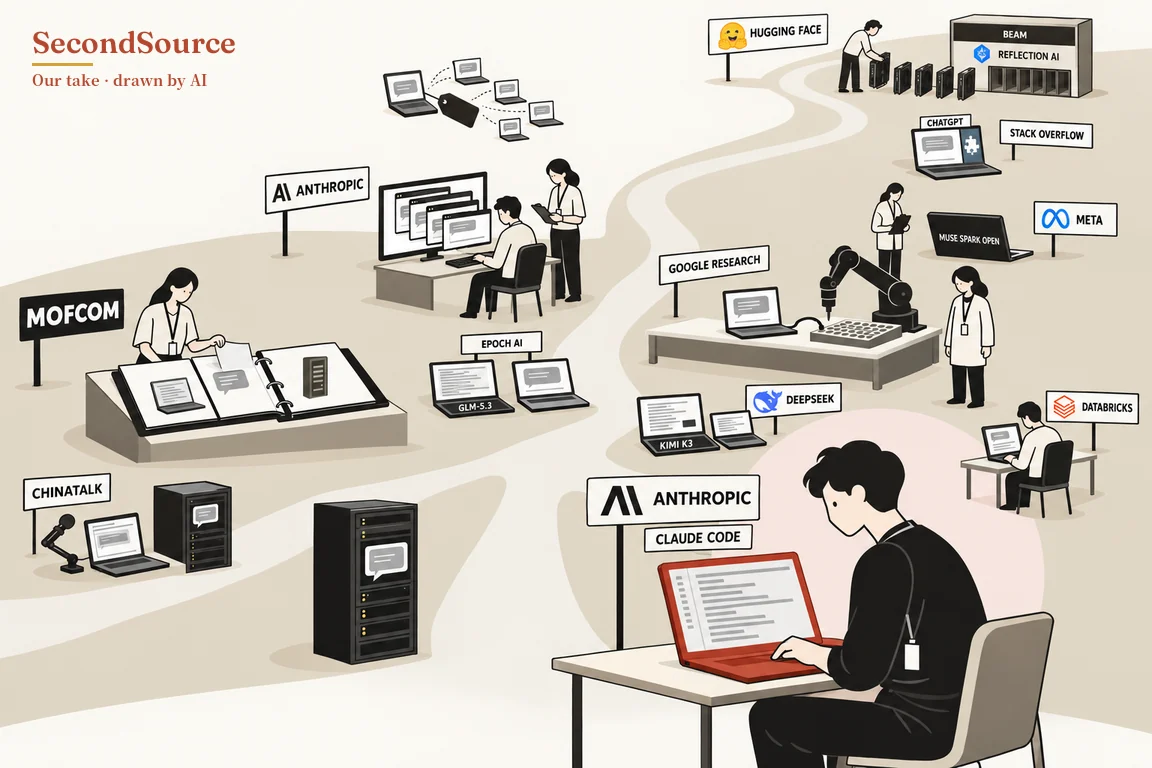
At a glance
1. Changes landing daily in Anthropic's main codebase rose from about 2,500 in May to more than 30,000 in September. Anthropic's Claude Code team has published how review now works: low-risk changes that pass AI review and security checks skip human review, and everything else still needs a person's approval. The results figures are Anthropic's own, with no outside audit.
2. China's Ministry of Commerce, in Announcement No. 48, puts large models, AI agents and compute clusters into a draft revision of the technology export catalog, as 23 of the 40 listed technologies across three fields. The notice reportedly leaves out technology already open-sourced. That wording hasn't been checked against the page, and the annex's 23 AI entries haven't been reviewed item by item.
3. Anthropic's research arm says that in August the hours of AI agents deployed by individual employees were six times those employees' own working hours. Entry-level employees fell from 21% of Anthropic's technical staff in early 2025 to 14% at the time of the report. That is a share of current staff, not of new hires. These figures come from Anthropic's internal records, and no outsider has audited them.
Also today: #4 — the product operations lead for Ant Group's Ling models on inference margins; #5 — Google Research's AI-driven wet lab.
Today's main line
1. [Today] (event date October 15) Anthropic's Claude Code team publishes its review rules: only low-risk changes skip a human reviewer, and an agent's approval never counts as a person's
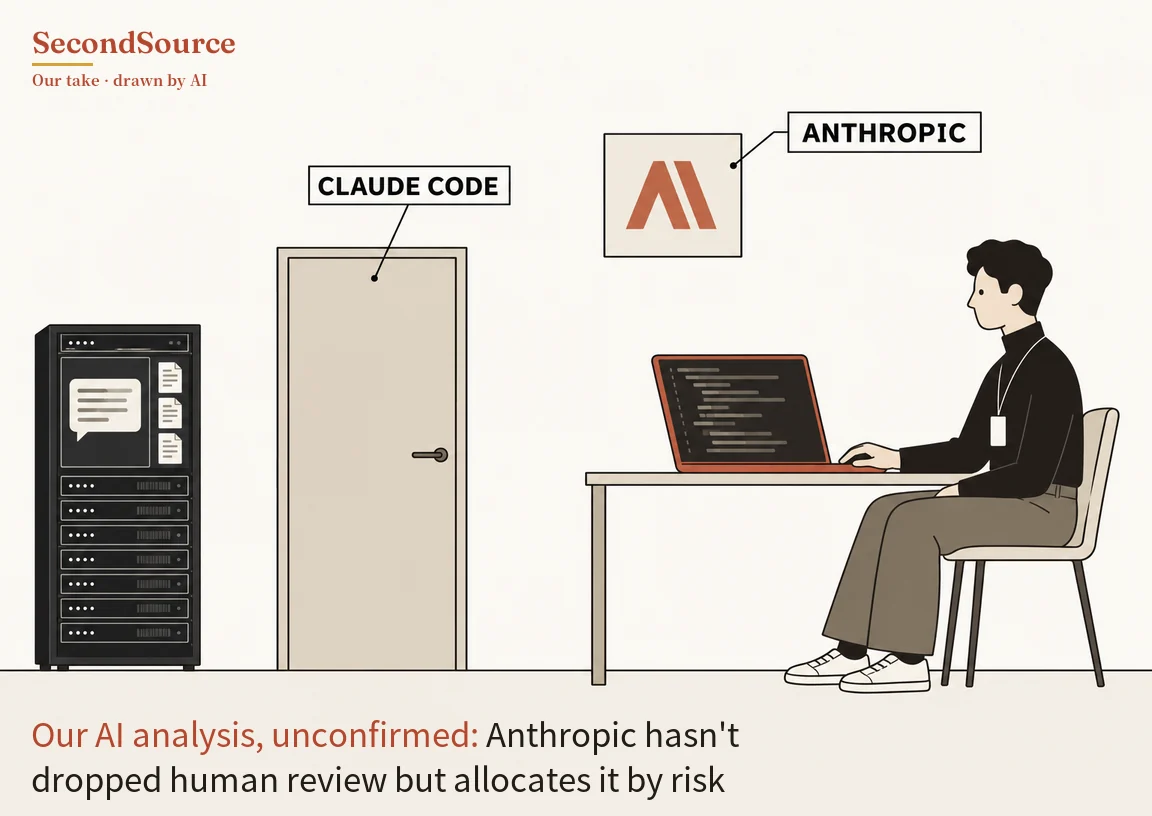
Why it matters: Our read: Anthropic now allocates human review by risk, and a person still approves every change that isn't low risk.
Read the full item
The Claude Code team described its review process on October 15 on Anthropic's developer blog (Claude Code team, 2026-10-15). Changes landing daily in Anthropic's main codebase rose from about 2,500 in May to more than 30,000 in September. That figure covers the whole main codebase, and the October 14 issue reported it. What is new today is how review changed. Documentation, copy and new code behind feature flags count as low risk. Those changes skip human review once they pass machine review and security checks. Everything else still needs a person's approval. The post also says AI approval can't stand in for a person: "An agent's approval never counts as a person's, either".
The results figures that follow cover only the Claude Code product's own codebase, a different population from the main codebase above. The post says: "merged pull requests to Claude Code's codebase more than doubled while the share that had to be reverted fell by more than 40 percent". The period is June to September.
The next day Thorsten Ball, an engineer at Amp, argued for pushing changes straight to the main branch, with several models each reviewing them a few times (Thorsten Ball, 2026-10-16). Amp is an AI coding product where engineers hand off code-writing and test runs to AI agents. That evening Ball added: "I never said 'don't review'." He framed that around a small team of high-trust engineers (Thorsten Ball, 2026-10-16).
Not proven yet: the more-than-40% fall in the share of changes that had to be reverted is self-reported, and its cause isn't isolated How we checked →
Judgment update: One of our working reads, not yet settled, says "mandatory human review is loosening." Anthropic's document supports only half of that; the post says "We didn't remove review." We propose rewording it as: "Engineering organizations have to decide the risk rule that allocates human review." No editor other than the author has reviewed that rewording yet. Confidence stays where it is.
2. [Today] (announcement relayed October 16) In Announcement No. 48, China's commerce and science ministries list large models, AI agents and compute clusters in a draft export-catalog revision, and the notice reportedly leaves out technology already open-sourced

Why it matters: China puts large models into a draft export-control list, and the notice reportedly leaves open-sourced or published technology out. We make no new call today.
Read the full item
Paul Triolo, an analyst who has long tracked Chinese tech policy, relayed the official notice on October 16 with a link to it (Paul Triolo, 2026-10-16; MOFCOM Announcement No. 48). The announcement, issued by the Ministry of Commerce and the Ministry of Science and Technology, seeks comment on revising China's Catalogue of Technologies Prohibited or Restricted from Export, with a deadline of November 15. The notice says the consultation covers 40 technologies in three fields: artificial intelligence, biomedicine and photovoltaics. Twenty-three of them are in AI, including large models, AI agents and compute clusters.
The announcement adds a second rule that applies now. From the date of the notice, a technology exporter must register on the Ministry of Commerce's business system before exporting any technology listed in the annex. The catalog revision itself is still out for comment. The notice also says technology that has already entered the public domain through open-sourcing or published academic papers falls outside its scope.
A figure circulating on X splits the list into "14 prohibited, 26 restricted" (choblin29, 2026-10-16). Fourteen plus 26 is exactly the 40 items across all three fields. Our reading: that split covers the three fields combined, not AI alone.
Not proven yet: the item-by-item contents of the annex's 23 AI entries haven't been reviewed How we checked →
Judgment update: Matt Sheehan, a Carnegie fellow who studies Chinese AI governance, gave a first read: "Think this is more about gov having veto power over sales/acquisitions/sharing of tech." (Matt Sheehan, 2026-10-16) Sheehan said he hadn't read the notice closely yet. No new judgment from us. Whether registration will cover frontier-model weights depends on the final text and the annex, after comments close on November 15.
3. [Today] (event date October 16) Anthropic's research arm publishes internal hiring data: in August, AI agents deployed by employees logged six times those employees' own hours, and the entry-level share of technical staff fell from 21% to 14%

Why it matters: Anthropic's interactive agent sessions spend about 80% of their time waiting for human input, so people may set the pace of work there. Separately, the entry-level share of its technical staff is falling even as technical hiring grows.
Read the full item
The Anthropic Institute's report says that in August, hours of interactive AI agents deployed by individual employees were six times those employees' own hours, with about 80% of those sessions spent waiting for human input; the entry-level share of technical staff fell from 21% to 14%, the entry-level share of new technical hires from 27% to 9%, and the absolute number of technical hires still rose (Anthropic, 2026-10-16). Anthropic's companion overview describes the hours ratio as a headcount ratio (Anthropic overview, 2026-10-16). All of these figures are Anthropic's own.
Not proven yet: no causal link between the falling entry-level share and AI adoption has been shown How we checked →
Judgment update: One of our working reads, not yet settled, holds that at companies that run their processes thoroughly on AI, the mix of jobs changes and entry-level roles narrow, while total labor demand doesn't shrink. Today's two sets of numbers point the same way. They come from one company and one source, which isn't enough to move confidence. Promoting the read would take comparison data from companies outside AI.
4. [Today] (episode October 16) Richard Bian, product operations lead for Ant Group's Ling models, says 30% to 40% gross margin on inference is already good, against about 95% for software
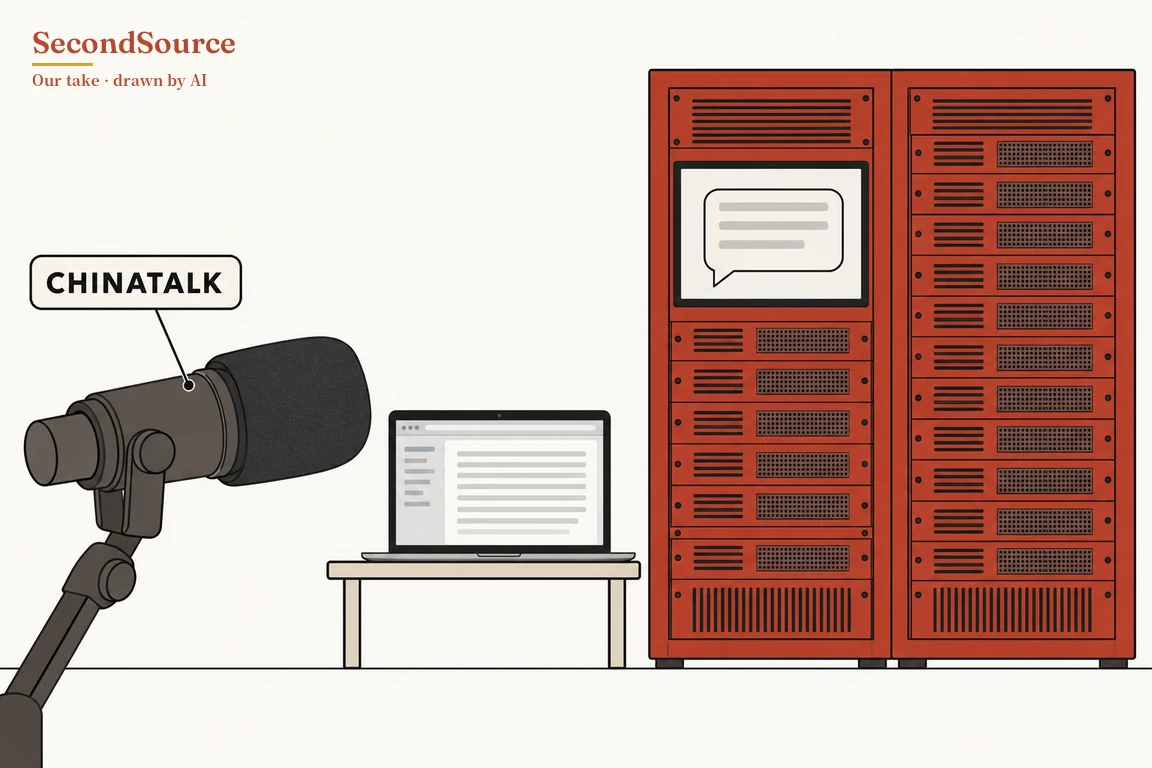
Why it matters: Bian's 30% to 40% is about inference serving, while the 85% that Bloomberg and the Financial Times reported for Anthropic is a company-wide adjusted margin. The two figures can't show whether closed or open model businesses have the better margins.
Read the full item
ChinaTalk is a show on Chinese tech and policy hosted by Jordan Schneider. The October 16 episode interviews Richard Bian (ChinaTalk, 2026-10-16). Ling is the large-model series from Ant Group, the parent company of Alipay. Bian says: "What really concerns me is the gross margin." Bian's comparison: "the gross margin on software is probably 95%", and "Thirty or forty percent is already pretty good on inference". One of Bian's answers is to route simple requests to a cheap model and send only hard ones to a frontier model. Requests the cheap model handles cost less.
The October 15 issue's "Also happened" section noted Bloomberg and Financial Times reports that Anthropic disclosed a third-quarter adjusted gross margin of 85% to investors. Bian's figure is far lower, and that gap is what this episode adds.
Not proven yet: which kind of company Bian's 30% to 40% refers to isn't said on the show How we checked →
Judgment update: This issue sets Bian's number beside Anthropic's 85% as two pieces of evidence pointing in opposite directions. They are measured differently, so they can't yet be compared directly. One reading is that margins split between closed frontier businesses and open low-price ones. We are not adding it to our long-term watchlist until the evidence converges. Investor note: Comparing model companies on inference margin first requires aligning how each is measured; these two numbers alone can't tell whether the closed or the open business has the better structure. Telling them apart would take at least one company publishing an inference margin that says clearly whether training amortization is included. This is a reading we are still testing.
5. [Today] (event date October 16) Google Research has an AI agent drive lab robots to design DNA aptamers, and confirmed hit rates reach 33.5% and 42.1% on two targets after three rounds

Why it matters: Once AI speeds up design proposals, the wet-lab bottleneck shifts to experimental readouts. We make no new call today.
Read the full item
Google Research had an AI agent drive lab robots to design DNA aptamers in loops of 7 to 10 days; after three rounds the confirmed hit rate reached 33.5% for myoglobin and 42.1% for α-thrombin, compared only with earlier rounds of the same experiment, and Google writes that experimental readouts are more of a bottleneck than ever (Google Research, 2026-10-16). These are research prototypes, and the results are Google's own.
Not proven yet: there's no control arm of human design or conventional screening How we checked →
Chips & semiconductors
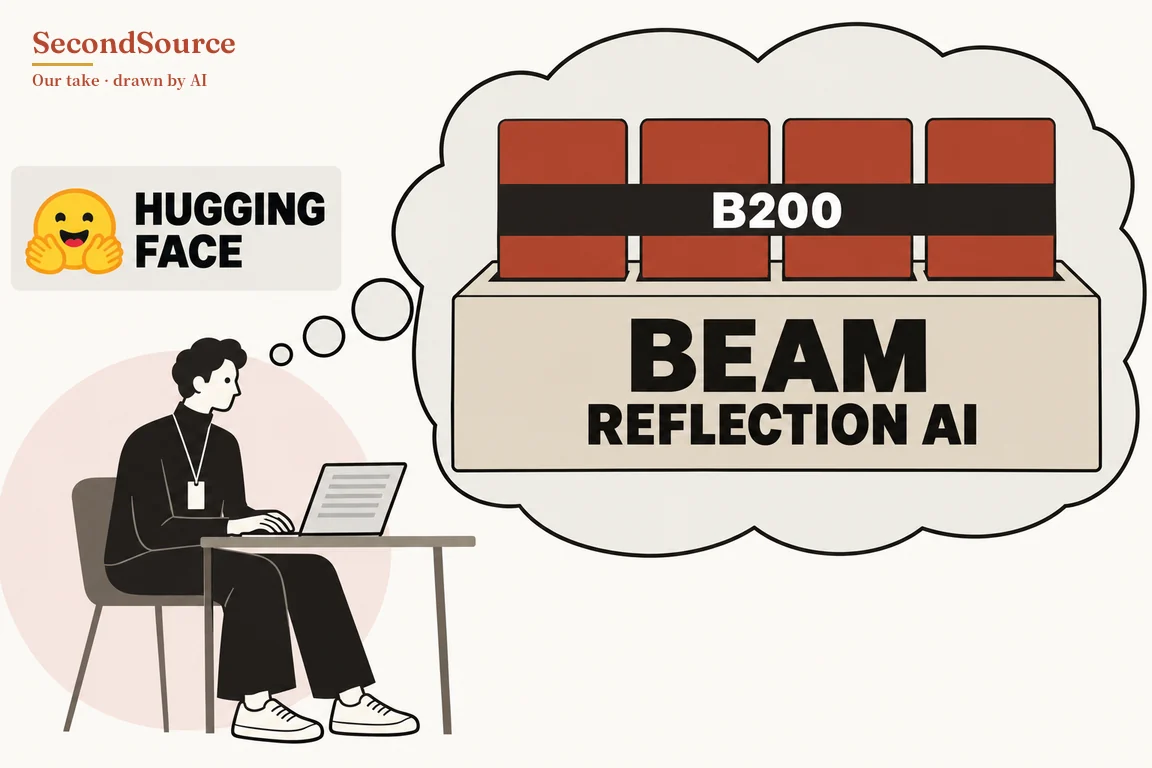
1. [Today] (released October 16) Reflection AI releases Beam, an open-weight model with 501 billion parameters, of which each token uses 23 billion. Hugging Face's write-up says deployment must hold all 501 billion in memory and recommends starting at four B200s. The write-up says: "All 256 experts stay in memory, so deployment needs the memory of a 501B model but runs at the speed of a 23B one." (Hugging Face, 2026-10-16) NVFP4 is the 4-bit floating-point format used on NVIDIA Blackwell. Beam's NVFP4 checkpoint is about 280 GB, against 180 GB on a single B200. Hugging Face writes that two cards can hold the weights but leave almost no room for the cache needed during inference, hence the recommendation of four. The GPU cloud provider CoreWeave demonstrated fine-tuning directly on the NVFP4 checkpoint with LoRA, a lightweight fine-tuning method, and then serving it in the same format on Blackwell (CoreWeave, 2026-10-16). The October 12 issue covered Beam's training compute; what is new is the deployment threshold after release. Four B200s is Hugging Face's planning recommendation, not measured throughput. CoreWeave's demonstration is the vendor's own account, with no independent reproduction. How we checked →
Named commentary
1. [Today] (post October 16) Martin Casado, a partner at the venture firm a16z, speculates that frontier labs could encourage distillation and price it so that mass distillation still makes money. Distillation here means rivals training their own models on a stronger model's outputs. Casado wrote: "encourage distillation, set price that mass distillation is unit economic positive" (Martin Casado, 2026-10-16). His reasoning is that distillation yields only weaker products. He draws an analogy to AWS, where the original provider can still add value through higher-tier services (Martin Casado, 2026-10-16). The October 16 issue's main line reported the Financial Times account that Anthropic told investors distillation once made up 5% to 7% of revenue and was cut back sharply in the third quarter. Casado's proposal runs opposite to what Anthropic reportedly did. He says plainly that this is speculation, and he attaches no data. a16z invests in many downstream application and infrastructure companies. How we checked →
Model watch
1. [Today] (post October 16) Epoch AI estimates that open-weight models trail the closed frontier on cyber capabilities by about six to seven months, and the top-scoring open-weight model is Z.ai's GLM-5.3. Epoch AI is a research group that measures trends in AI capability and compute. The Cyber ECI is Epoch's own cyber-capability index. Epoch wrote: "How far behind the closed frontier are open-weight cyber capabilities? About 6–7 months. Zai's GLM-5.3 is the highest-scoring open-weight model on our Cyber ECI. Its score of 160 beats OpenAI's GPT-5.4, released in March." (Epoch AI, 2026-10-16) The October 13 issue's archive pick cited Epoch's estimate of an average seven-month overall gap between US and Chinese models. Today's figure measures only cyber capability, and it compares open-weight models with the closed frontier. AI policy analyst Dean Ball commented: "A 6-month lag today is subjectively larger than a 6-month lag 6 months ago." (Dean Ball, 2026-10-16) Ball's premise is that AI has sped up research, so the same number of months means a larger capability gap. Ball doesn't quantify that premise. His post also says six to nine months, while Epoch's original post says six to seven. How the six to seven months is derived from scores, and the full leaderboard, aren't in Epoch's post. GPT-5.4's score isn't given either. How we checked →

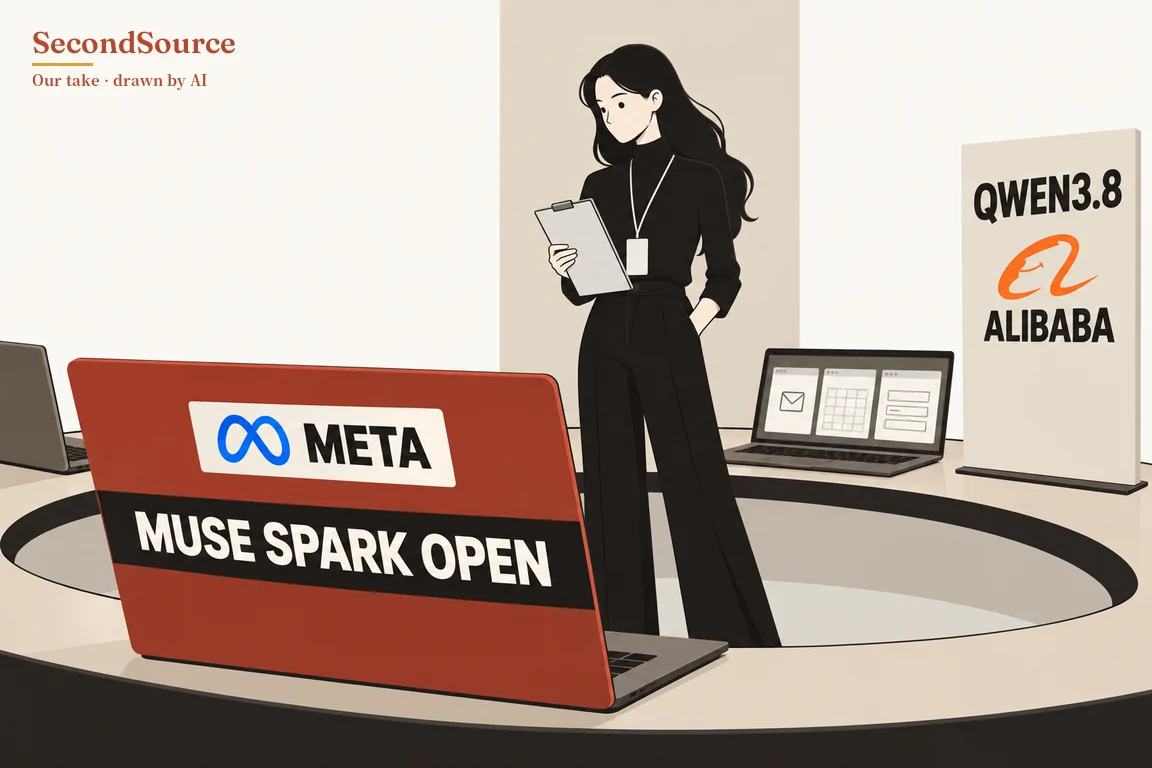
2. [Evidence update] (posts October 16) Meta's Muse Spark Open ranks first among US open-weight models on Signal65's agent-task leaderboard, and 13th among open models on Arena.ai's web-development board; neither board puts Muse Spark Open first among open-weight models worldwide. On the web-development board of Arena.ai, a crowd-voted leaderboard, Muse Spark Open scores 1511 and ranks 13th among open models (Arena.ai, 2026-10-16). On PINNACLE, the agent leaderboard from the measurement firm Signal65 that ranks models on multi-step enterprise tasks, Muse Spark Open is first of 16 US open-weight models and fourth of 35 open-weight models overall. The top three are two of Alibaba's Qwen3.8 models and DeepSeek-V4.1-Flash (Signal65, 2026-10-16). The October 16 issue reported that Spark Open had no independent evaluation on release day; these are two leaderboard readings since then. Neither board is audited, and Arena.ai doesn't state the population of US open-weight models. Signal65 belongs to industry analyst Patrick Moorhead's group, which does business with vendor clients. How we checked →
3. [Today] (published October 16) Databricks security research: cheap models miss npm malware hidden in binary files, and about 1,800 tokens of domain knowledge given before reasoning cuts their missed human-review referrals from 50% to 4%. npm is the JavaScript package registry. The test set is 70 runs over ten kinds of binary malicious payload. The comparison is the same budget-tier models, on the same inputs, with and without that knowledge. A failure here means a malicious package's verdict didn't even reach the threshold for human review. The comparison models, Sonnet 4.6 and Kimi K3, caught all ten payloads without the added knowledge, at about three times the per-run cost of the budget tier (Databricks, 2026-10-16). Multi-model voting didn't help: "correlated errors converge on the wrong answer rather than canceling". Gemini, one of the models tested, flagged all ten as malicious but invented addresses that weren't in the scanned input. This is Databricks' own research promoting Databricks' own approach, with no independent reproduction.
Product moves
1. [Business] (case study October 16) In an OpenAI customer story, Stack Overflow product VP Alexandra Lato says registrations for Stack Overflow for Agents "tripled overnight" after it built a ChatGPT plugin. Lato says: "We built a ChatGPT plugin for Stack Overflow for Agents, and our registrations tripled overnight." (OpenAI, 2026-10-16) Stack Overflow for Agents is a new product that makes Stack Overflow's knowledge available to AI agents. The baseline and time window for the tripling aren't given. On October 7 OpenAI also published a plugin case study from Radisson hotels. Visitors arriving through the ChatGPT plugin converted to bookings at about 1.5 times the rate of Radisson's organic-search visitors, over July and August (OpenAI, 2026-10-07). Both cases come from the same publisher, and both sets of numbers are the customer's own account with no base figures. How we checked →
From the archive
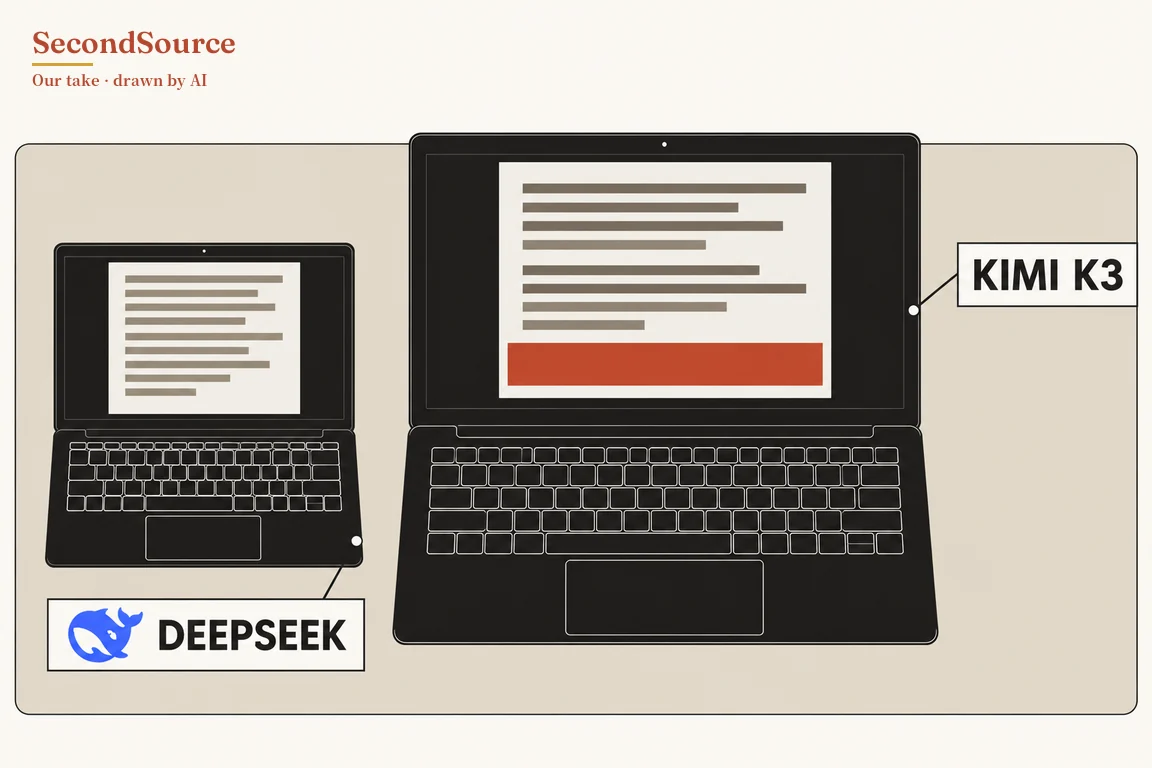
1. [Looking back] (another angle on the August 6 archive pick) For open weights to hold down closed-model prices, at least one strong vendor has to keep supplying models under permissive licenses at low prices. In July, Kimi K3 added a revenue threshold to its license and priced at the top of the Chinese-model range. Our call then was that Kimi K3 narrowed where the pressure comes from but left intact the mechanism by which open weights push down closed-model pricing. At the time, that pressure came from the few vendors still fully open and cheap: DeepSeek, and Zhipu, the Chinese lab behind Z.ai's GLM models. The facts on K3's license threshold and pricing are in the August 6 issue (August 6 brief). Read with main-line item 2: China's Announcement No. 48 excludes technology already open-sourced or published. The draft's text doesn't say whether newly released weights must be registered first. Whether the next Chinese frontier-class open-weight model has to register before export, and under what license it ships, decides whether open weights can still hold prices down. Zhipu's and DeepSeek's current license terms are as recorded in the August 6 issue; any changes since then haven't been checked. How we checked →
Also happened
1. Not verified by us yet: [Today] (reported October 16) The political news outlet POLITICO reports that Anthropic is privately pitching members of Congress on an AI safety bill Anthropic drafted. Charlie Bullock, a researcher on AI law and policy, compared the draft and says its rulemaking and emergency-shutdown powers are much weaker than July's FRONTIER Act. The full POLITICO story hasn't been reviewed, and the draft is a leaked version (POLITICO, 2026-10-16; Charlie Bullock, 2026-10-16).
2. Not verified by us yet: [Today] (relayed October 15) The financial-headlines account Walter Bloomberg relays Reuters: some investors have lowered the valuation discussed for an Anthropic IPO from US$2T to US$1.5T, citing third-quarter revenue growth of about 45% quarter on quarter, half the previous quarter's rate. The Reuters original hasn't been reviewed, and US$1.5T is a discussion range, not a price (Walter Bloomberg, 2026-10-15).
3. Not verified by us yet: [Today] (post October 16) SemiAnalysis, a research firm covering semiconductors and AI infrastructure, says it has confirmed that several GPU cloud providers were turned away from NVIDIA's GTC Berlin because they also offer AMD or TPU capacity. No company names or count are given. Analyst Patrick Moorhead replied that this may simply be NVIDIA declining to pay their marketing costs (SemiAnalysis, 2026-10-16; Patrick Moorhead, 2026-10-16).
4. Not verified by us yet: [Today] (post October 16) Medical researcher Eric Topol relays a Nature Medicine article saying more than 800 public health systems in China have deployed DeepSeek. The journal article hasn't been reviewed, and what counts as "deployed" isn't clear (Eric Topol, 2026-10-16).
SecondSource isn't a news digest: each day it hunts the AI firehose for the insights that matter and the practitioner judgments worth tracking over time, and shows how every item was verified. The point is always which judgment got harder and who's been right, not what happened today.
Written from the same research and judgments as the Traditional Chinese edition. Sources are linked; we distinguish original documents from reporting and mark what we could not verify.