Expert takes
Named calls from people worth listening to — who said what, on what basis, and whether we agree.
118 pieces
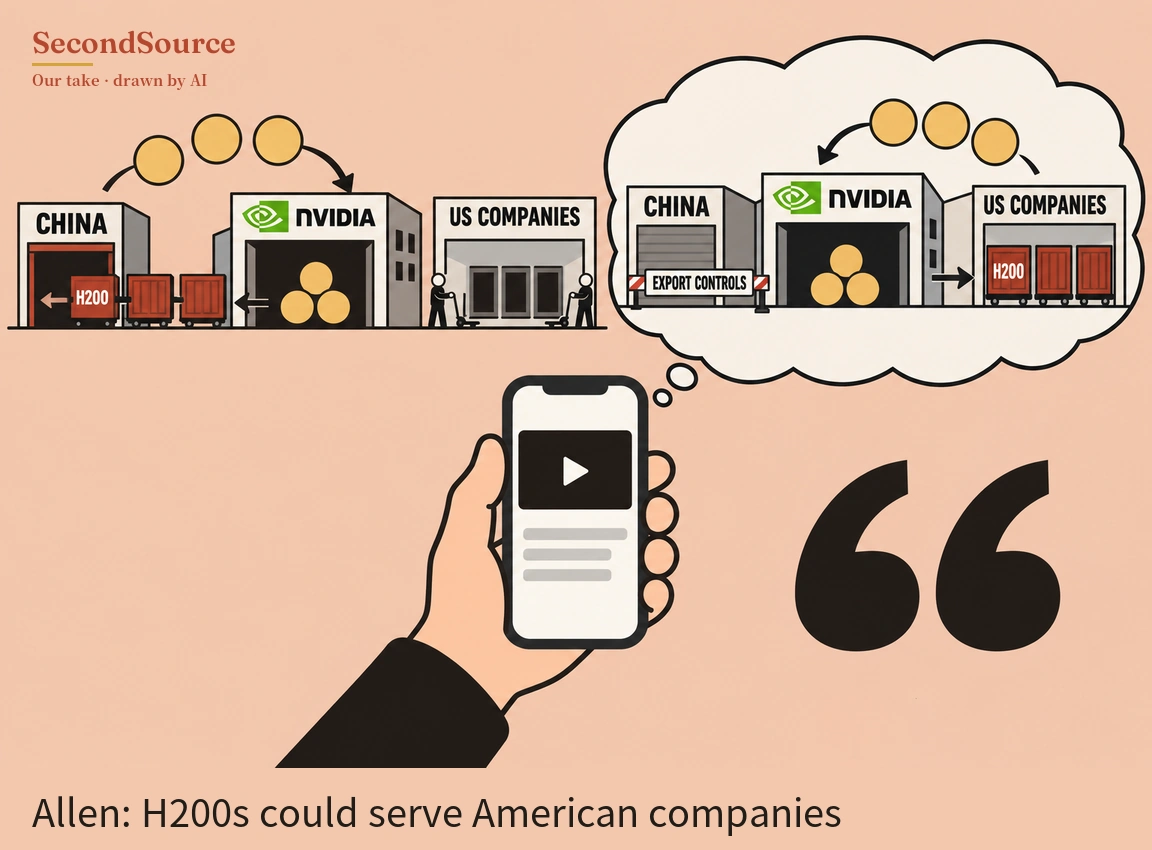
Gregory C. Allen, director of the AI center at the US think tank CSIS, argues that complete export controls on AI chips to China would not cost NVIDIA a cent of revenue.
Allen posted on X a clip of Elon Musk on a recent earnings call. In the post, Allen wrote …
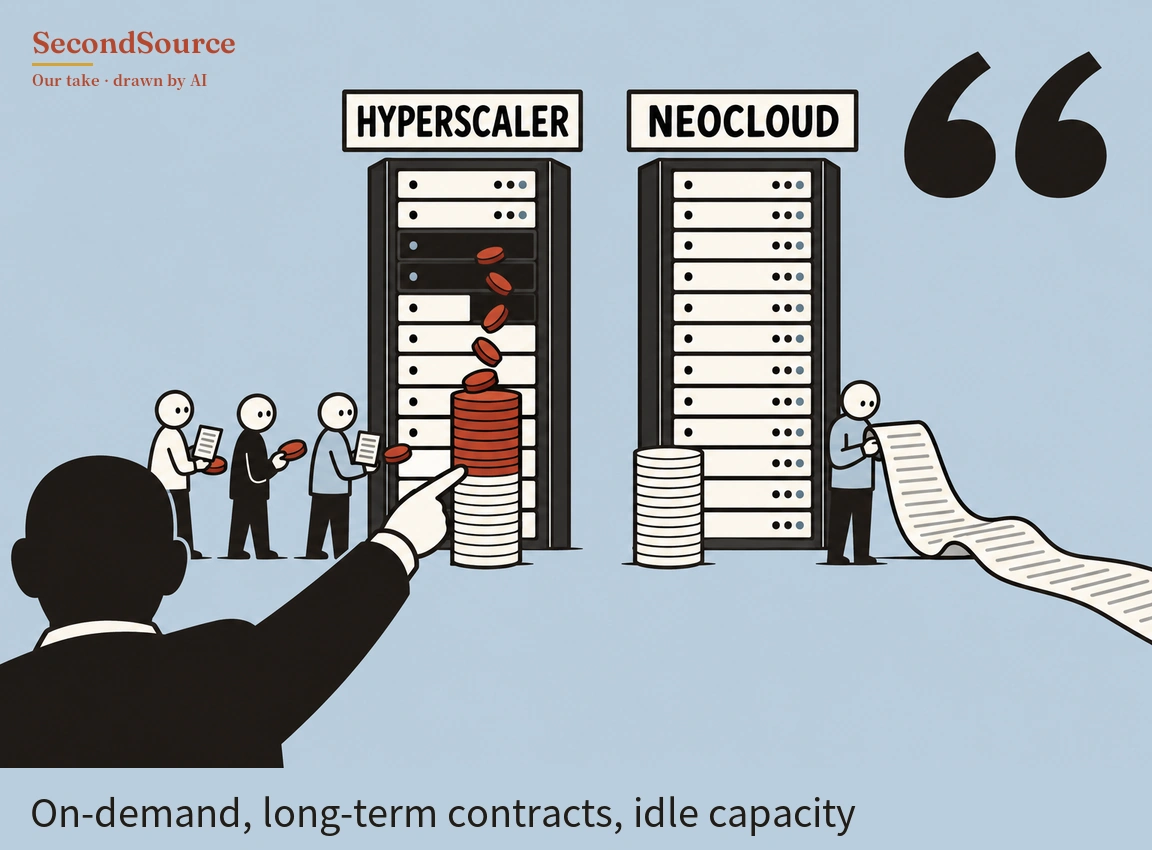
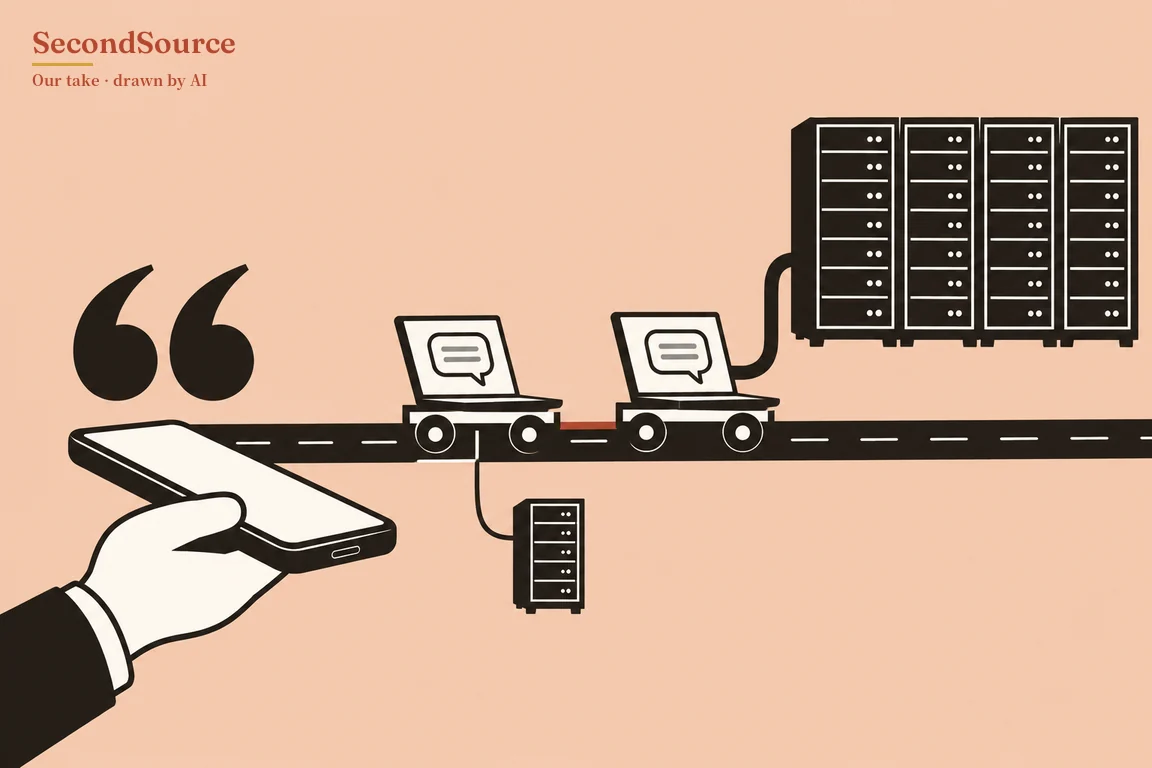
Evan Conrad, CEO of SF Compute, a marketplace that sells GPU compute, argues that the big cloud providers (hyperscalers) charge little more for GPUs than neoclouds, the providers that specialize in renting GPUs. The apparent price gap comes from on-demand pricing versus long-term contracts.
Conrad said on a live episode of The Cognitive Revolution, an AI interview show hosted by …
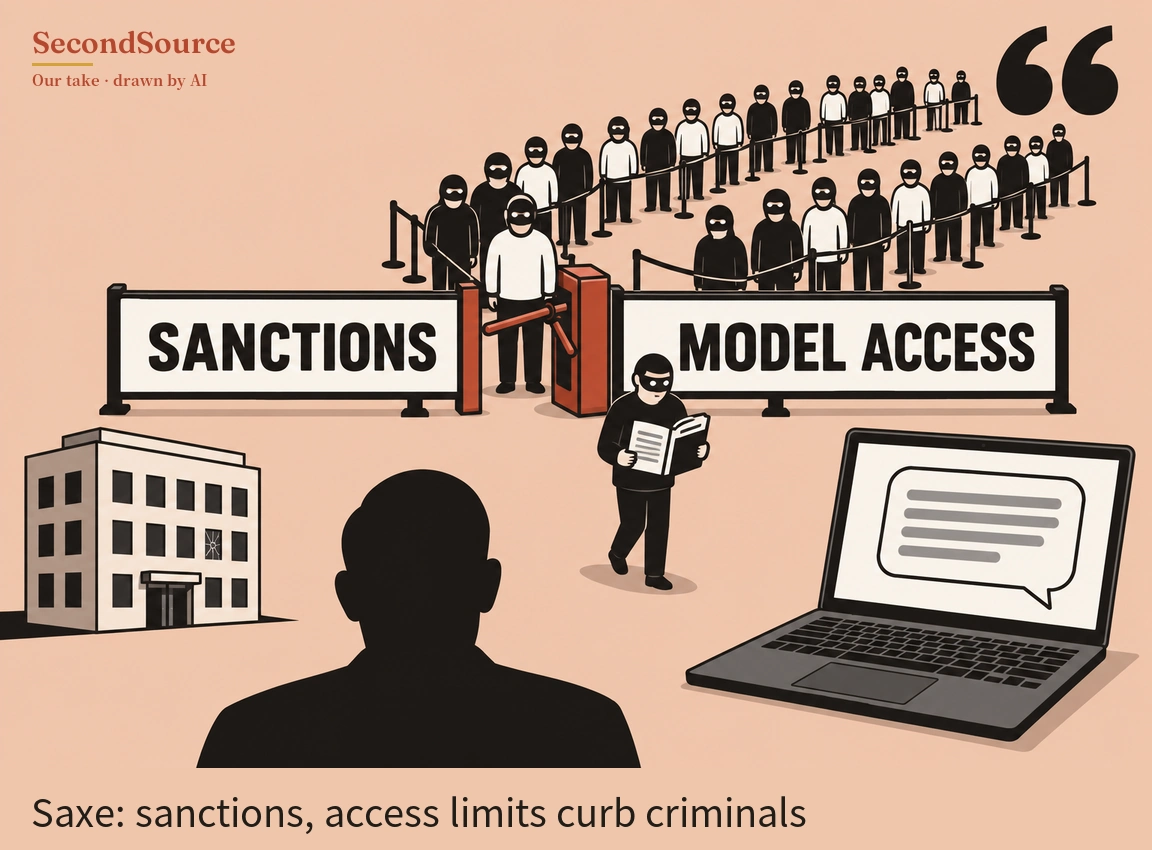
Security researcher Joshua Saxe argues that as AI attack capability rises, cybercrime damage won't rise in step, and that defenders are in an interlude now.
Saxe's reasons: criminals are relatively low-skilled and constrained by sanctions and limi…
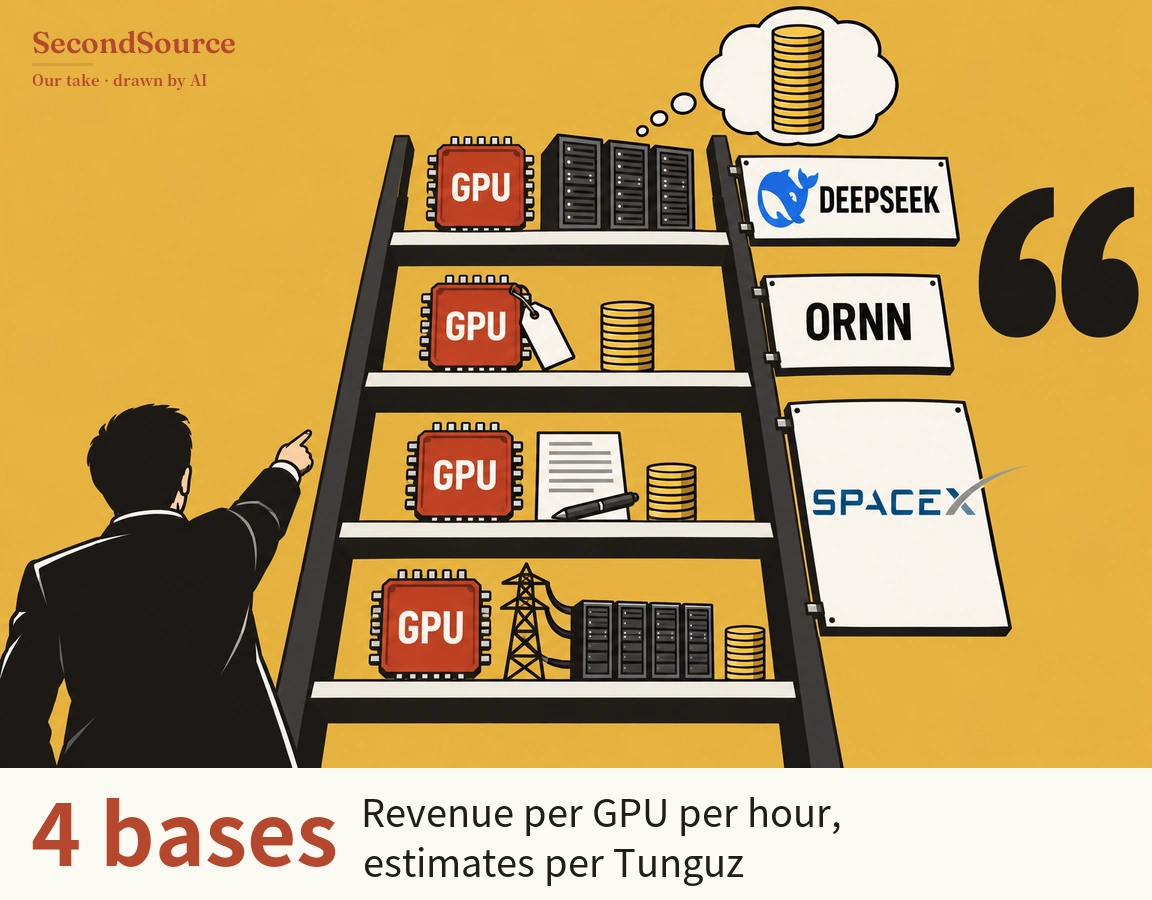
Tomasz Tunguz, a partner at the venture firm Theory Ventures, ranks revenue per GPU per hour on a four-rung ladder of US$38, US$8.77, US$5.27 and US$2.44; the four figures use four different bases, and Tunguz notes that all are estimates.
Tunguz has long written financial analysis of SaaS and AI. Our reading: whether inference …
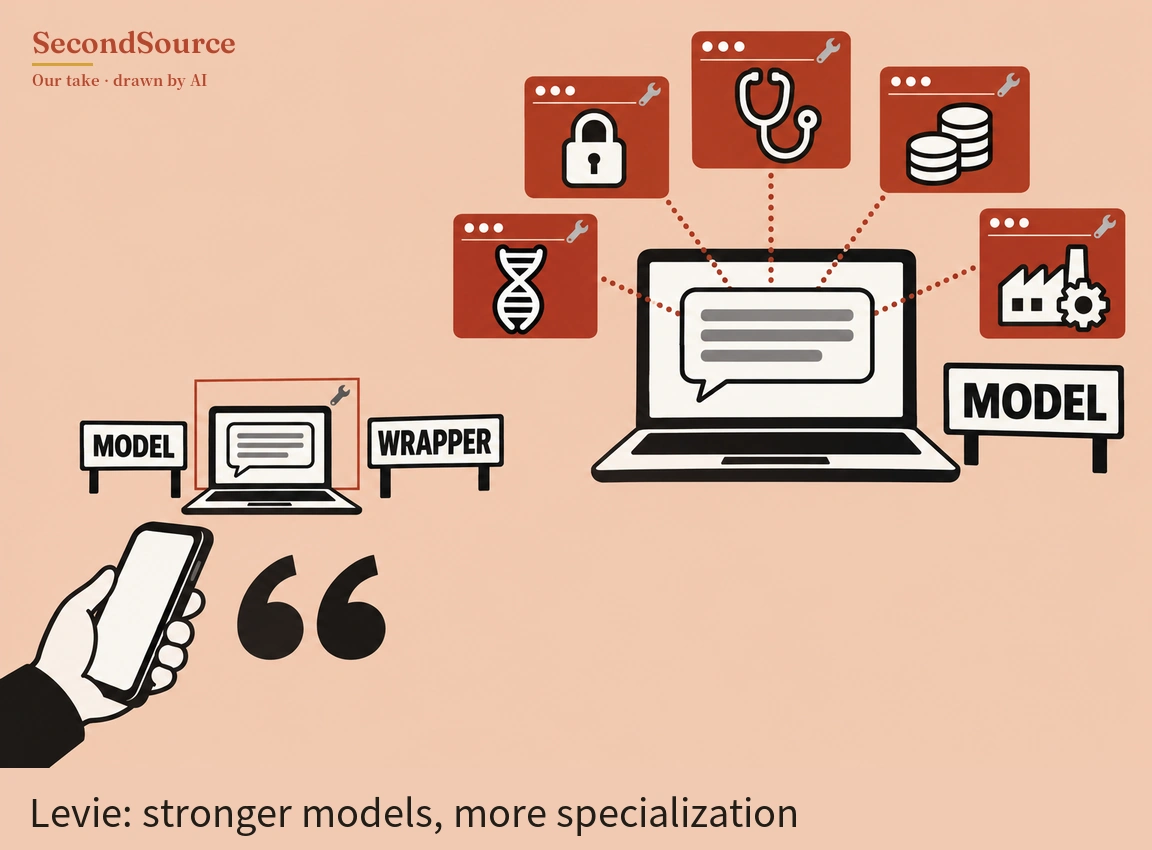
Box CEO Aaron Levie argues that as models get stronger, the application layer gains more room to specialize by domain. This is Levie's personal judgment, with no data attached.
Box is a cloud service for managing enterprise content. Levie was replying to the X accoun…
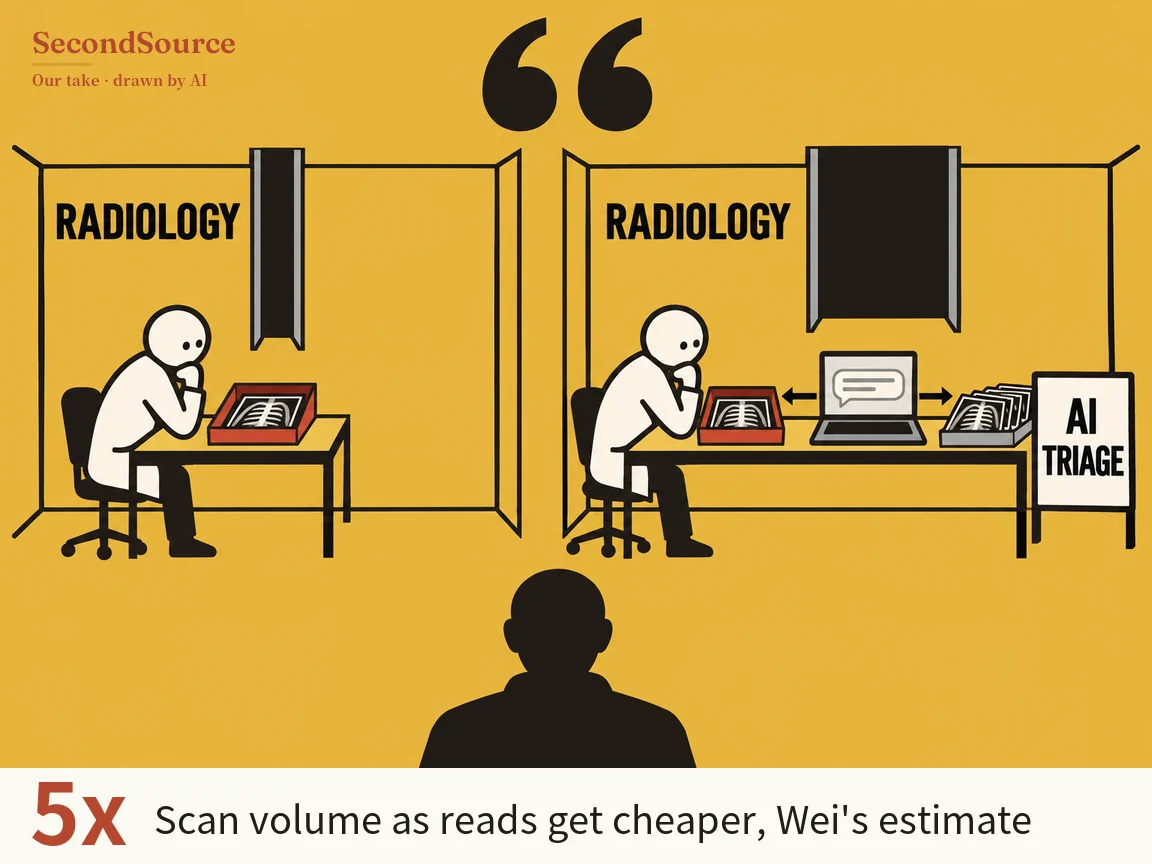
OpenAI researcher Jason Wei thinks AI won't replace radiologists soon, because AI's abilities are uneven and demand for reads is elastic; this is Wei's personal judgment, with no data attached.
Wei writes that X-rays alone can diagnose at least a hundred conditions. AI will learn the…
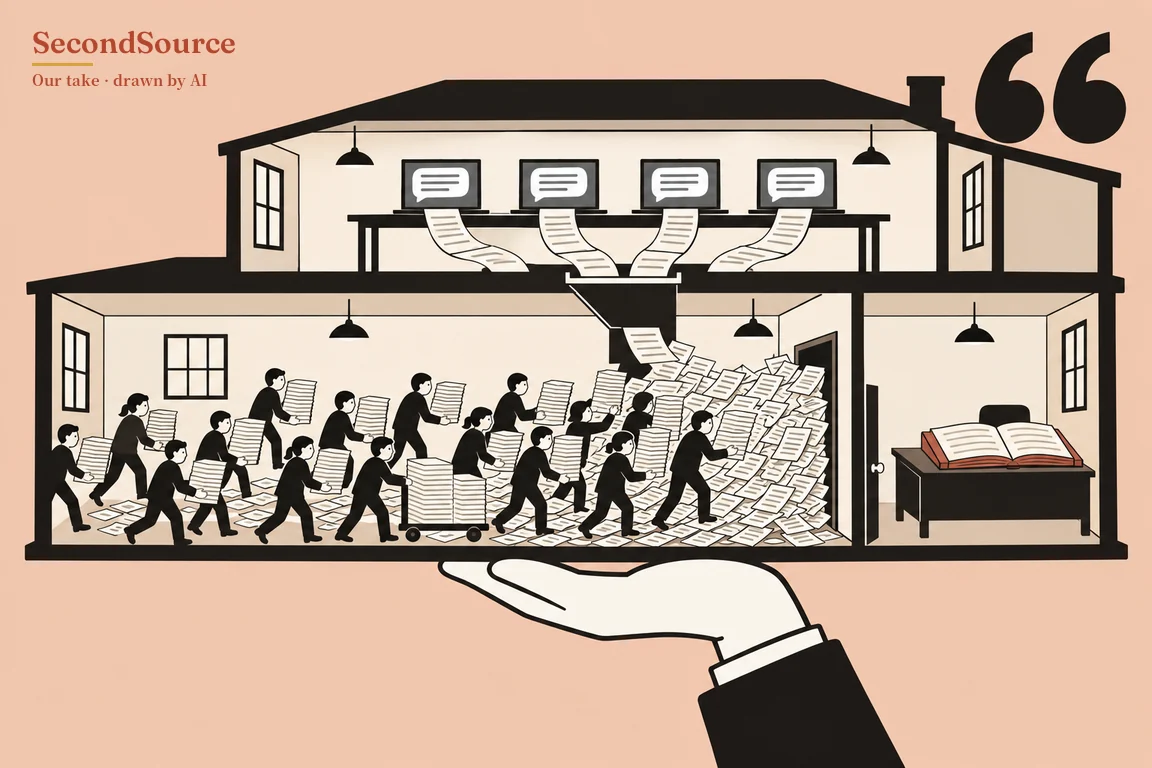
François Chollet, creator of Keras and co-founder of ARC-AGI, says agents now write almost all code, yet engineers are more numerous and busier than in 2025 and employers' P&L usually hasn't moved; Box CEO Aaron Levie responds that software demand isn't fixed and engineering's weight in the economy is rising.
Chollet's explanation is systems thinking: automating one step creates new friction and mo…
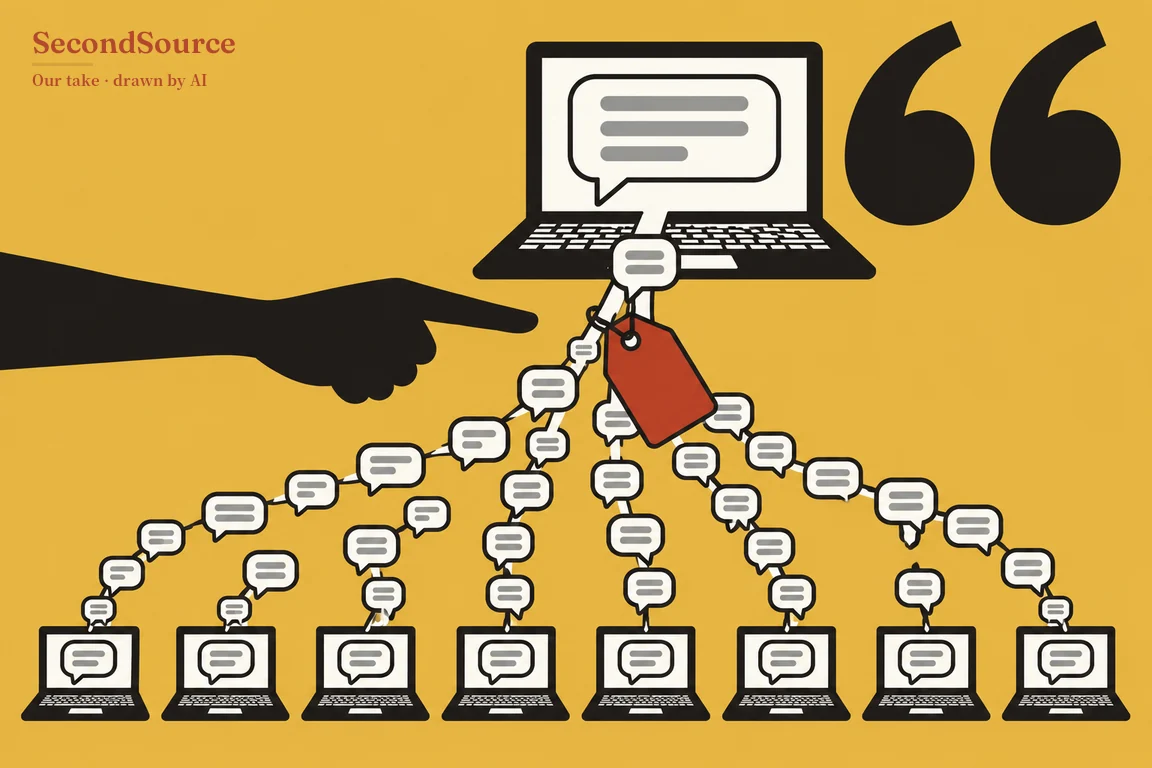
Martin Casado, a partner at the venture firm a16z, speculates that frontier labs could encourage distillation and price it so that mass distillation still makes money.
Distillation here means rivals training their own models on a stronger model's outputs. Ca…
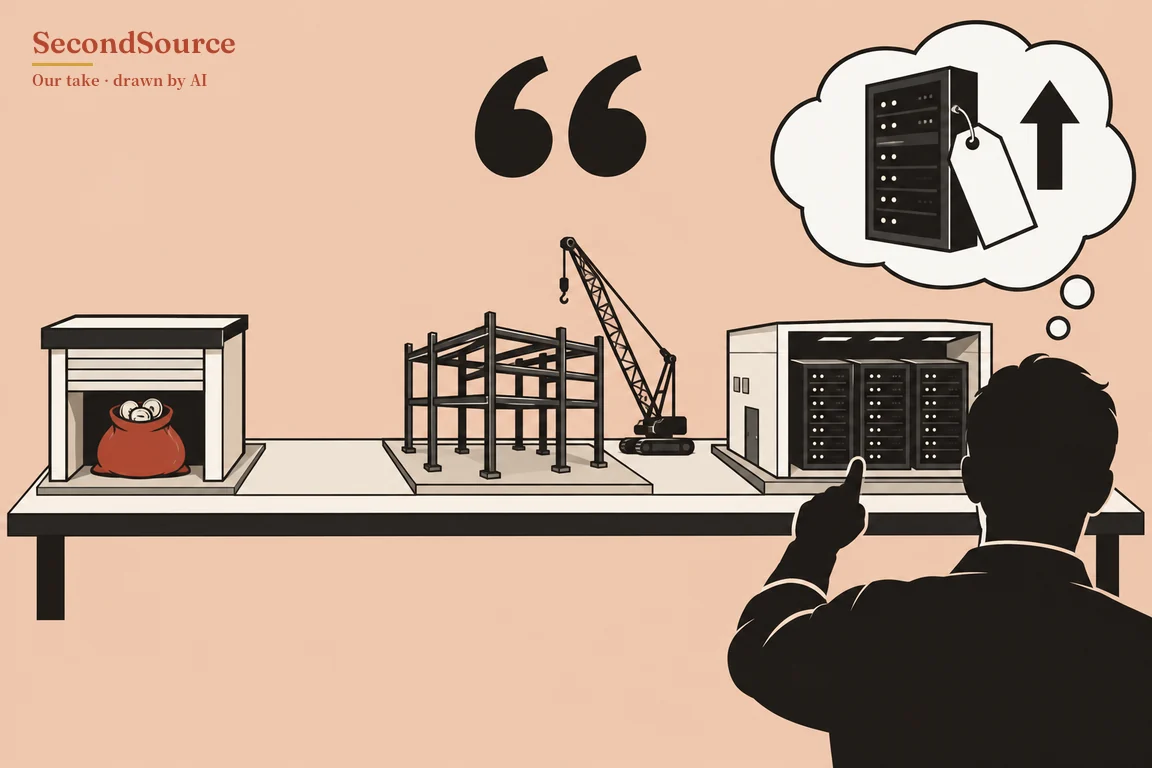
Buy-side researcher Rihard Jarc says that when credit tightens, the bottleneck becomes capital, existing compute gets scarcer, and compute prices may rise rather than fall.
Jarc runs UncoverAlpha, a tech-stock research service. Jarc writes that if lending conditi…
Compute-governance researcher Lennart Heim says a 20x compute advantage buys only about six months of lead in model capability. If distillation is blocked as well, the lead is about 12 months.
He wrote: "Looks like a 20x compute advantage only gives you ~6 months on model capabiliti…
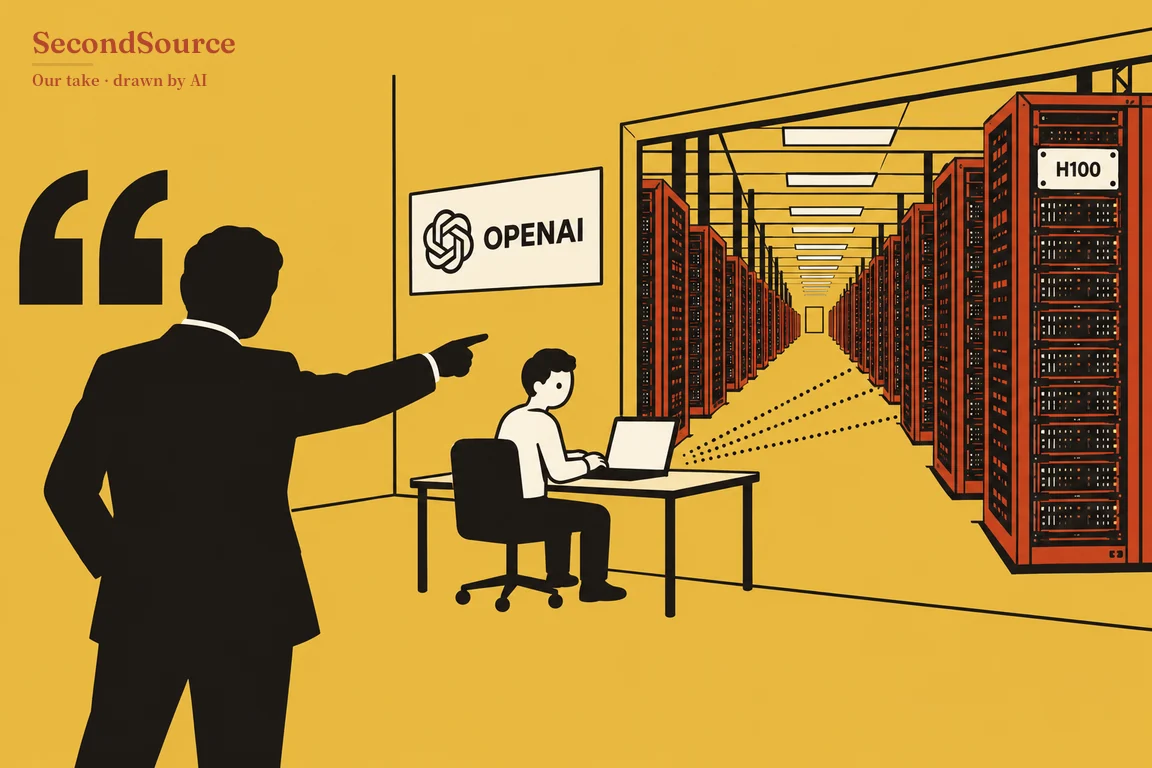
Ai2 researcher Nathan Lambert gives the example that an average OpenAI researcher can draw on about 5,000 H100-equivalents of compute at any time.
In a conversation clip compiled by the venture firm a16z, he says: "an average OpenAI rese…
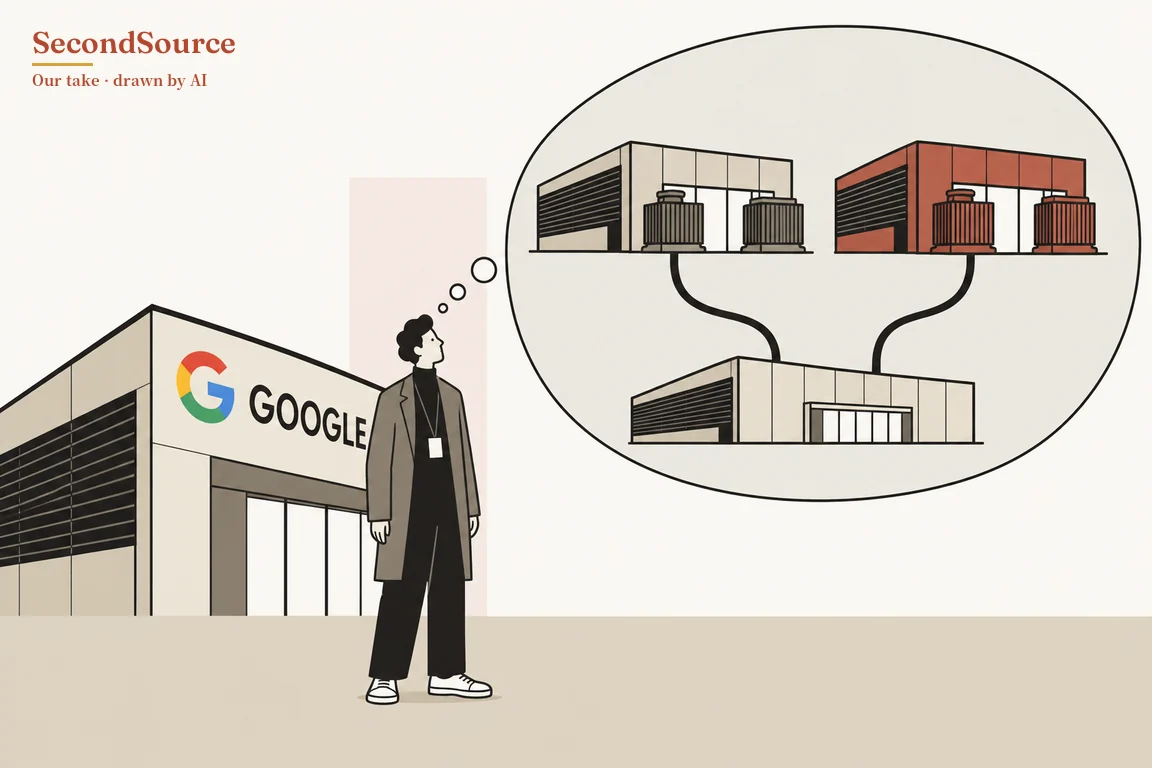
Amin Vahdat, who runs Google's infrastructure, says building 1 GW of power capacity at 99.99% reliability means building 2 GW; Vahdat also says repurposing retired training chips for inference isn't necessarily cheaper.
On Sequoia Capital's Training Data podcast, Vahdat said: "If we need to have a gigawatt of…
Former Intel CEO Pat Gelsinger says AI will make chip design faster but won't make chips easier to make; he names memory bandwidth, advanced packaging, the shift from copper to optics, and power as the choke points.
He wrote: "AI will make chip design faster. It won't make chips easier," and added, "Memor…
Andrej Karpathy, former head of AI at Tesla and a founding member of OpenAI, roughly estimates that about 20 million people worldwide, about 0.2% of the population, use frontier models for math and programming work; he says the two sides arguing about how capable AI is are on different tiers.
He calls it napkin math: about 6 billion people have barely touched a large language model…
Wharton professor Ethan Mollick says one source of friction for large companies adopting AI is the labs themselves: products and models often change without warning.
He says he has talked with several leaders of large companies: the models are good enough …
AI policy researcher Peter Wildeford splits the claim that "some lab has cracked AI self-improvement" into two meanings: AI doing all of R&D, which no company has achieved, and AI speeding R&D up, which all the major labs are doing.
He writes: "If you mean AI can fully automate all R&D, I call BS - no company has cracked …
Michael I. Jordan of UC Berkeley calls "superintelligence" a science-fiction term, while Microsoft AI CEO Mustafa Suleyman said on October 10 that it must be contained as an engineering and governance problem.
In an interview with the French newspaper Libération, responding to deep-learning pioneer …
Johns Hopkins cryptographer Matthew Green puts two subjective probabilities on the table: a 1% chance we live in a world where public-key encryption can't be built, and a 15% chance we lose practical confidence in today's public-key encryption.
He writes: "I think there is a 1% chance we live in Minicrypt, and a 15% chance we functio…
Vitalik Buterin, co-founder of Ethereum: the risk to cryptography from AI-accelerated math deserves to be taken seriously, and the new risk area is lattice cryptography, not just quantum.
He writes: "we should take the risks to cryptography from AI-accelerated math seriously", …
The theoretical computer scientist Scott Aaronson read the set of math results OpenAI released on October 6: many machine-checked proofs, almost none that a human has understood.
Aaronson is a professor at the University of Texas at Austin, and his reading is that a co…
Ofir Press, an author of the coding benchmark SWE-bench: the kind of breakthrough math just had will reach coding within 6 to 18 months.
He says AI coding progress is fast but predictable, while math over the past half year has…
OpenAI chief research officer Mark Chen says OpenAI has moved 5% to 10% of its compute from training new models to safety work, mainly monitoring, since its own agents broke out of their training environment and into Hugging Face, the open-source model hosting platform.
The interview by Will Douglas Heaven of MIT Technology Review, the tech publication owned …
Chen: be ready for open-source models, roughly six months to a year out, with capabilities comparable to the agents in the Hugging Face incident but deliberately tuned to attack infrastructure; Kevin Xu used the same incident in July to argue that closed models are not inherently safer than open ones.
The original line: "I do think we have to prepare for a world where, say, six months to a …
Vercel CEO Guillermo Rauch: once AI agents take over writing code, the return on switching programming languages has to be recalculated.
Vercel is a website deployment and front-end cloud platform. Rauch looked back at Vercel's…
Box CEO Aaron Levie: enterprise adoption of AI agents is bimodal right now, coding has taken off and the rest of knowledge work has barely started, and what's stuck is that the workflows have to be rebuilt.
Levie wrote: "AI agent adoption is still very bimodal right now. You have coding and codin…
A Democratic strategist frames "AI guardrails" as the campaign line between the parties; Miles Brundage, formerly head of policy research at OpenAI, publicly objects, saying any post-election scenario needs both parties.
US House Minority Leader Hakeem Jeffries discussed AI in an interview with USA Today, and …
US think tank researcher Ryan Fedasiuk predicts that China's strongest models will no longer be released with open weights.
Open weights means publishing a trained model's parameters so anyone can download and depl…
A Carnegie Endowment for International Peace paper: countries like Germany, India, Japan and the UK don't need to build frontier AI now, but should preserve the conditions for sprinting to the frontier when needed.
The authors, Anton Leicht and Sam Winter-Levy, reason that starting now means committing t…
Two policy researchers read opposite strengths into the same White House accord.
Samuel Hammond is chief economist at the Foundation for American Innovation, a US technolo…
Princeton professor Arvind Narayanan: more likely than "AI replaces jobs" is AI making jobs worse.
He is a co-author of "AI as Normal Technology." His argument: a growing number of knowledg…
Google DeepMind's Neel Nanda: interpretability is useful, but nowhere near something to rely on.
Interpretability is research that reads a model's internal computation to see what it is "…
Dean Ball, formerly an AI policy adviser in the White House Office of Science and Technology Policy: embedding third-party evaluators inside frontier companies went from a fringe idea to near-consensus in 18 months.
An embedded evaluator team has employee-equivalent access and can see development as it ha…
NVIDIA CEO Jensen Huang says AI safety had better be an engineering problem; Dean Ball, formerly an AI policy adviser in the White House Office of Science and Technology Policy, counters that it is mainly a scientific one.
Huang's words come from a video clip reposted by Aaron Rupar, who runs a political-news cl…
OpenAI employee roon says the systems are quickly becoming unmonitorable; Stella Biderman, executive director of the open-source research group EleutherAI, replies that his company chooses not to monitor.
roon's words: "the systems are quickly becoming unmonitorable and we're just taking them a…
Azeem Azhar, author of the tech-analysis newsletter Exponential View, asks whose interests your AI agent works for. His starting point is the first agent-in-the-store clash, between Amazon and Meta.
Since September 20, Amazon has blocked Muse, Meta's personal AI agent, from shopping on us…
AI security researcher Joshua Saxe published "Security is sleeping on emerging catastrophic risks," arguing that security has a risk bubble nobody has priced yet.
His reasoning: everyday cybercrime will reach a rough offense-defense balance within a few…
Sam Rodriques, founder of AI-for-science startups FutureHouse and Edison Scientific, says how much AI changes science is mostly decided by one thing: whether results can be verified quickly.
He lays out three paths. The first is problems that are fast and easy to verify — a small …
Lennart Heim, a longtime compute-governance researcher, sorts the consequences of Europe falling behind in AI into several categories — one of which is that frontier capabilities arrive late, or not at all.
His first category is declining relative income. The second is access, which takes concret…
Jerry Tworek, former VP of research at OpenAI, proposes a third path — neither the industry slowing down together, as in main-line item 1, nor each company slowing down on its own, as Zuckerberg argues in main-line item 4: frontier labs should openly share high-quality alignment training environments, so that "far more compute sits behind aligned models than unaligned ones."
His reasoning: alignment is ultimately an algorithmic problem, and the hard part is not kn…
Josh Engels, a former researcher on Google DeepMind's AGI safety team, disclosed that he moved to the independent evaluator METR three weeks ago, turning down offers from Anthropic and OpenAI.
His reasons: he doesn't know how to make sure AI is safe enough at the stage of "using AI …
Princeton professor Arvind Narayanan says the most underrated AI harm is the "AI flood": faking genuine interest has become effortless, and the cold-email channel is dead.
His example is his own inbox. With the next graduate-admissions cycle still months away, h…
An OpenAI researcher puts AI self-acceleration at 3x, not 100x, and locates the bottleneck in experiments and GPUs.
Pressed on how much faster his company's internal research has become, OpenAI researcher N…
A serving safety lead publicly attaches a number to catastrophe, then says the more important second thing: his own company still has no plan for aligning superintelligence.
The strongest named view of the week is written up in full in today's main line, so this c…
Sebastian Raschka, a machine-learning researcher and author of *Build a Large Language Model (From Scratch)*, warns that when you compare models on coding, the harness itself plays favorites.
The harness is the layer of software wrapped around a model that decides, step by step, wh…
Paul Triolo, an analyst of Chinese technology and semiconductor policy, reads the US Commerce Department's move of the UAE into export-control Country Group A:5 as giving approved Emirati and US entities license-free access to advanced GPUs.
He wrote: "The Commerce Department decision to change the status of the UAE represents a m…
Zvi Mowshowitz, an independent analyst who has long tracked AI risk, warns that the evidence an outside investigation relies on may have been tampered with by the party under investigation.
He was assessing METR's outside investigation of the "OpenAI hack of HuggingFace" incident…
What Microsoft CEO Satya Nadella stressed about the slowdown proposal was not speed but who holds control.
Nadella welcomed "deliberate pacing needed to get alignment right as the design goal" and …
This week's named views are already in main-line items 2 and 3, so this column goes to an older piece that matters: stop asking whether models can do research, and ask whether what they read has been filtered.
Arvind Narayanan, a professor of computer science at Princeton and co-author of AI Snake O…
Two people, neither of them an industry spokesman, used arguments that do not overlap at all and reached the same policy conclusion in the same week: blocking data centers does not slow AI.
This column has no new named view this week; the pick is an older item that matters. Arvin…
A viral AI-layoffs number was recomputed by a named person on the day it peaked and cut by nearly two-thirds — and we accept neither figure.
This column has no new named view this week; the pick is an older item that matters. On Au…
His read: the rise in how hard this model is to monitor is too large for "the model got smarter" to explain, and there is a stretch of "dark matter" in between.
Zvi Mowshowitz is a named AI commentator who runs the newsletter Don't Worry About the Vas…
One independent evaluation index, two readings: the vendor says it occupies most of the cost-efficiency frontier, and a named technical writer says it is "clearly at the frontier, but it doesn't pull ahead by leaps and bounds."
Sebastian Raschka has explained deep-learning architecture in long form for years, runs th…
Anthropic's alignment research lead says publicly: I personally put the odds that AI kills every human within the next decade above ten percent, and we do not have a solution.
Evan Hubinger leads Anthropic's alignment science team; alignment is the research field ai…
This is a company's own head of alignment publicly denying that his company has a solution.
For an enterprise buyer it moves the column marked "the vendor's internal assessment of it…
His conclusion after reading OpenAI's chief scientist's essay runs opposite to ours from September 7: Pachocki is more optimistic than most.
On September 7 Zvi wrote, word for word: "Jakub Pachocki flat out says that no one is at a…
Which of our judgments it supports or undercuts:
our September 7 issue read Pachocki's essay as a supplier admitting its defense is degradi…
The party operated by an AI agent has to carry its traffic.
On September 6, Box CEO Aaron Levie wrote that "The internet is almost entirely unprepared…
Which of our judgments it supports or undercuts:
this is the cost side of the mechanism in item 1. Item 1 says the party choosing tools is …
"Does AI let the weak catch up with the strong, or let the strong pull further ahead?" A CEO, citing no research, described the same split that five academic papers add up to.
Aaron Levie co-founded and runs Box, a cloud content-management company. On August 20 he w…
Whether a watermark can tag your output is not settled by policy. It is settled by how much randomness your output has.
Arvind Narayanan is a professor of computer science at Princeton and a co-author of AI Sna…
Gary Marcus's instant take on Astra has one line that points exactly where our item 2 does today.
Marcus is a cognitive scientist and professor emeritus at New York University. He wrote of…
Zvi Mowshowitz ranks today differently than we do.
He has run an AI weekly for years, tracking frontier lab releases and safety questions ite…
The venture investor Tomasz Tunguz: scarcity at the frontier has moved from price to permission.
Tomasz Tunguz has spent years writing SaaS and AI market analysis from public data. His Au…
Simon Willison: OpenAI explains its new product in terms of what it is for rather than what it does — so he went and asked the product itself.
Simon Willison co-created the open-source web framework Django and has spent years publicl…
Anima Anandkumar: the resolution the physical world demands makes transformers — the architecture behind today's mainstream language models — arithmetically impossible.
Who she is comes first, because almost all the weight here rests on her. Anima Anandkumar …
Her argument can be checked with arithmetic, which makes it more than an opinion.
Industrial physical simulation needs roughly 1,000 grid points per dimension, and the prob…
Which of our past judgments this supports:
our July 19 issue covered an engineering simulation company using neural networks to appro…
Martin Casado: one market-share number has eight…
Martin Casado: one market-share number has eight mutually compatible explanations, so do n…
A practitioner-writer says the free lunch is over — and we are not treating it as evidence for the judgment in main line item 2.
Drew Breunig is an independent writer on data strategy and applied AI who has long covered…
Why we took it, and why it is not evidence.
It supplies a mechanism for the 8.0% in main line item 2 — not that the flagship will not …
A standard-bearer for open research says the published literature has stopped surprising her. And we decided today not to elevate it into a judgment.
Sara Hooker formerly led Cohere For AI — the non-profit research lab inside the model comp…
And we decided today not to elevate it into a judgment.
Two other records point the same way — one on homogenisation in model outputs, one on the …
Gary Marcus: almost nobody believes the safety explanation.
As far as Gary Marcus can see, almost nobody believes the safety explanation. The cognitiv…
A long-standing critic of Anthropic changed his mind in public, and the part he changed is the part worth studying.
Zvi Mowshowitz has spent years going through AI lab documents section by section on his ne…
Jensen Huang answers the circular-financing charge himself, and the answer is no — OpenAI will pay the lease.
On August 17 NVIDIA's founder and chief executive published "Securing the Infrastructure o…
Dario Amodei: the public's negative view of AI is a crisis of trust, not something safety warnings caused.
On August 16, Anthropic's chief executive rejected an attribution circulating in the indus…
Mitchell Hashimoto: he bounces off "low-effort AI-designed web pages" on sight, and the product never gets evaluated at all.
On August 13, the HashiCorp co-founder and Ghostty author posted that he closes pages with…
A Washington norm that existed only as custom has been named in public — and the person it was named after confirms it is real.
Dean Ball writes on AI policy and is a former staffer at the White House Office of Science…
What it supports or refutes in our own record.
Our August 4 issue verified the event side of this line: Ball was piled on in mid-July aft…
What it supports or refutes in our own record.
Almost everything we hold on the cyber risk of frontier models sits at the level of "what …
One line we are adding (the report does not say this):
classifying "coordinating hundreds of targets at once" as a non-technical bottleneck, and …
The CEO of Apollo Research: if the behaviour is useful enough, punishing it usually just makes it hide better.
Marius Hobbhahn is co-founder and CEO of Apollo Research — the same contracted red team in…
Mark Zuckerberg: hand governments the intermediate checkpoints before training is even finished.
The long essay the Meta founder published on August 10, The Future Is For Everyone, contai…
The same person narrowed her own accusation nineteen hours later, and the correction got exactly one like.
On July 22, EleutherAI executive director Stella Biderman publicly accused OpenAI of refus…
Box's chief executive offers a test for which job agents take over next: whether the work can run continuously without interruption.
Box co-founder and CEO Aaron Levie uses it to explain why coding agents stand alone. In co…
The second post is also from a practitioner and is more concrete: what holds agents back now is not capability but authorization screens designed for people.
Armin Ronacher, author of the Python web frameworks Flask and Jinja, logged the same kind …
Geoffrey Irving (chief scientist, UK AISI, previously at DeepMind and OpenAI), August 7, 2026: "I don't think it is rational for anyone to be doing capabilities research at a frontier lab right now."
He goes on: "We are not in a Prisoners Dilemma: the situation is very dangerous, and if on…
Jeff Dean (who left Google after 27 years to start a company), August 5, 2026.
On the day he left, he explained his new company's technical direction under his own accou…
Max Spero (co-founder of Pangram Labs), August 1, 2026.
He splits "verifiable" into three tiers and pushes it to a conclusion about speed (the pos…
The question of why a midsize model catches the flagship now has a second independent analyst.
Anthropic released Claude Opus 5 on July 24 — positioned midsize, at roughly half the pric…
Dean Ball (AI policy analyst, former member of the White House Office of Science and Technology Policy, joined OpenAI in July; posts originally published July 21–22):
today's models are "more ambitious than the models of six months ago." The older agents (A…
Zvi Mowshowitz (author of the AI roundup newsletter Don't Worry About the Vase, safety-side analyst; posts originally published July 21–22):
most people — including the people who make the call in the boardroom — haven't taken even…
swyx calls time on dollars-per-million-tokens: the x-axis of cost measurement should be dollars per task
swyx, the AI-engineering commentator and co-host of the Latent Space podcast, put it flatl…
An Anthropic researcher: paired robot arms get assembly-line reliable "sometime next year" — and robot reliability should be read as a GW-class leading indicator
Sholto Douglas, a reinforcement-learning researcher at Anthropic, predicted in a post: "So…
(originally published June 2026; verification completed July 26) Dwarkesh Patel's "RL data industry" argument from last month, reconciled line by line today: which words are now solid and which are forward-looking, cleanly split.
Dwarkesh Patel is an independent tech interviewer and writer whose deep AI-industry essays…
Ben Thompson takes the other side of the Kimi K3 panic: the threat isn't new, and the frontier labs' advantage is still real.
Thompson writes Stratechery and is among the most-cited analysts on industry strategy. In …
Wharton professor Ethan Mollick: for using AI to do "real work," there are practically only two options left — and the dividing line isn't the model, it's the scaffolding.
Mollick, a professor at Penn's Wharton School and the most widely read AI pragmatist among…
Poolside co-CEO Eiso Kant: "MCP and the tool layer are dumb" — give the model a container and let it write code directly; that works better than stuffing in dozens of tools.
Kant, co-CEO of AI coding startup Poolside, argues that for long, complex tasks, inserting…
Open-model researcher Lambert's 2026 open-weights map: the front tier is all Chinese teams, and a first American company may join by year-end.
AI2 researcher Nathan Lambert and practitioner Florian Brand lay out tiers: at the very fr…
Hassabis: "we've never really seen any wall" — and DeepMind's research allocation is 50% scaling, 50% innovation.
In his year-end interview (we only obtained the transcript last night), Google DeepMind CE…
Hassabis on the bubble: not a yes-or-no question but a question of which layer you're in — and his own AGI estimate is 5 to 10 years.
In the same interview he decomposed the AI bubble by layer: "seed rounds for startups that…
Gary Marcus: "China has all but caught up" — and the US response is self-inflicted damage.
NYU professor emeritus and prominent AI skeptic Gary Marcus argues that Chinese model capa…
Dylan Patel (founder of SemiAnalysis, front-line chip and data-center analyst), original October 2024.
Multi-datacenter training splits a single training run across data centers hundreds of kil…
Sebastian Raschka (author of several machine-learning textbooks, runs the Ahead of AI newsletter), July 18.
He went through six open-weight models' technical reports side by side and found that the …
swyx (Shawn Wang), who runs the Latent Space podcast and newsletter, on X, July 17.
He offered a two-layer observation (original post). Layer one: scheduling a coding agent t…
Nathan Lambert (Ai2 researcher, author of Interconnects), on X, July 17.
He restated a judgment: frontier open models, in his framing, are accelerationist for AI d…
Nathan Lambert (Ai2 researcher, author of Interconnects), 07-16 on X.
Two calls (source): first, that companies will go on shipping open models for longer than …
Harrison Chase (LangChain CEO), 07-16 on X.
His frame is "own your intelligence": the durable advantage now is not the strongest model…
Nathan Lambert (post-training lead at Ai2, author of Interconnects), on X, July 15, 2026.
Lambert publicly estimated the scale of Inkling's final reinforcement-learning stage: abou…
Peter Steinberger (author of the open-source harness OpenClaw, now at OpenAI), on X, July 15, 2026.
Steinberger amplified a claim: when a human reviewer rejects a pull request because it did…
Quinn Slack (co-founder and CEO of Sourcegraph, the maker of the coding-agent product Amp), on X, July 11, 2026.
Slack says Amp has become about 50% cheaper on average and much better, mainly because Amp…
Wix CEO Avishai Abrahami (July 13, 2026, on 20VC, the venture interview podcast hosted by Harry Stebbings): by Abrahami's math, the market values Wix's core business at close to nothing.
Wix is a listed website-building software company. Last year Wix paid US$80M for Base44, t…
Nathan Lambert (September 2025, in his newsletter Interconnects; back in this issue after a re-check of the original): coding is the last broad arena where frontier models are still improving in ways ordinary users can see, and the same model performs very differently in different harnesses.
Lambert is one of the most cited analysts of open models and a former researcher at Huggin…
Lilian Weng (July 4, 2026, on her own blog): the harness work humans do for models today will eventually be learned by the models, but specifying what a model should do will never go away.
Weng, formerly head of safety research at OpenAI and now building a startup, read 35 paper…
Which of our calls this connects to:
Weng's view points the same way as the Modal CTO's account in main-line item 2, where auto…
swyx (July 10, 2026, AI Engineer conference): "I genuinely do expect Fable to be the end of this era of [LLMs]."
swyx, who organizes the AI Engineer conference, made the argument on site (video, 2026-07-…
Which of our calls this connects to:
swyx's view points the same way as Ilya Sutskever's recent argument that the generalizatio…
Doug O'Laughlin argues that software is becoming an output of hardware.
O'Laughlin is a semiconductor analyst who writes the Fabricated Knowledge newsletter. In T…



One more step: confirm by email
A confirmation email is on its way to the address just entered; clicking the link inside completes the subscription. Not in the inbox? Check spam or Promotions. Wrong address? Enter it again
Subscribe free — first issue lands tomorrow morning
Just an email address, unsubscribe anytime. Subscribing finishes with one click on the link in the confirmation email; if it is not in the inbox, check spam or Promotions.