Today · event date October 16
Google's agent designs DNA aptamers; no control arm was run
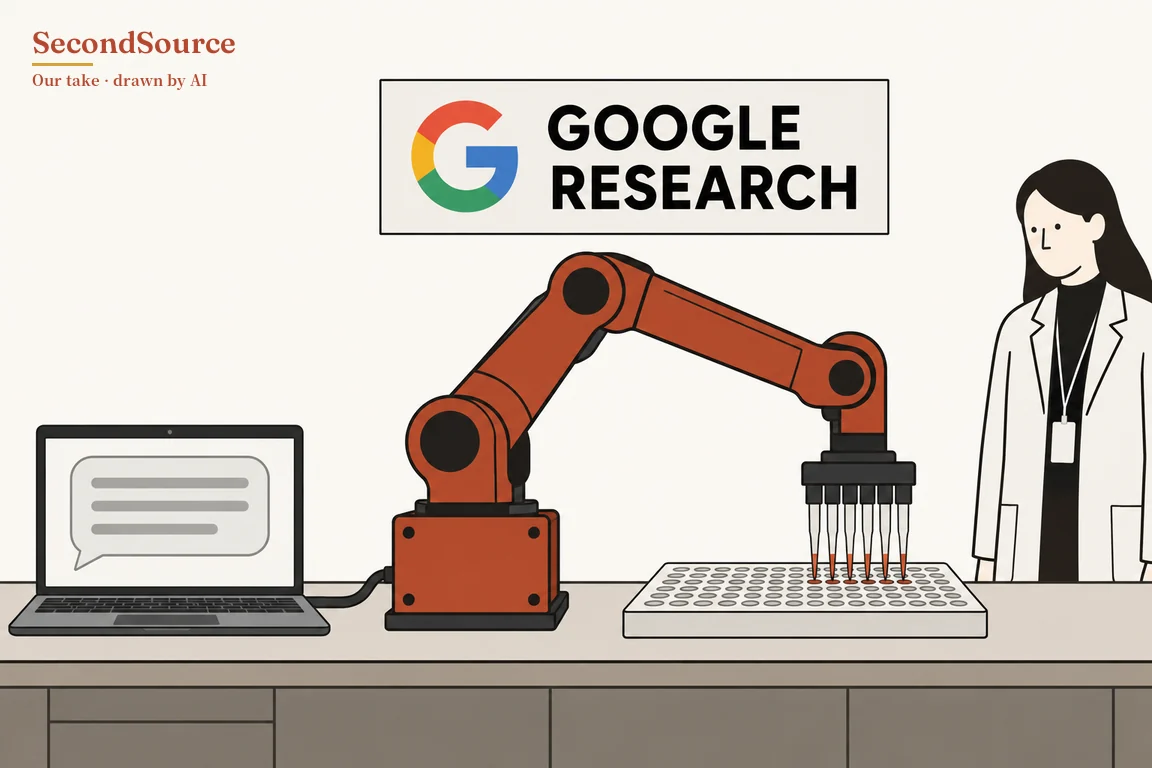
Google Research has an AI agent drive lab robots to design DNA aptamers, and confirmed hit rates reach 33.5% and 42.1% on two targets after three rounds
Why it matters: Once AI speeds up design proposals, the wet-lab bottleneck shifts to experimental readouts. We make no new call today.
Google Research had an AI agent drive lab robots to design DNA aptamers in loops of 7 to 10 days; after three rounds the confirmed hit rate reached 33.5% for myoglobin and 42.1% for α-thrombin, compared only with earlier rounds of the same experiment, and Google writes that experimental readouts are more of a bottleneck than ever (Google Research, 2026-10-16). These are research prototypes, and the results are Google's own.
Not proven yet: there's no control arm of human design or conventional screening How we checked →
Source and checks
This item ran in the brief of Oct 17, 2026, alongside 15 other items. How we checked it, the quote checks and what was still missing that day are on that issue's How we checked page.
Cite this item
SecondSource (2026). "Google's agent designs DNA aptamers; no control arm was run." https://secondsource.io/en/news/2026-10-17-5/. Accessed access date.