Looking back · SecondSource reading of July 14
Spending on model inference will split two ways: open-ended problems pay for thinking time, while narrow, high-frequency work moves to distilled small models.
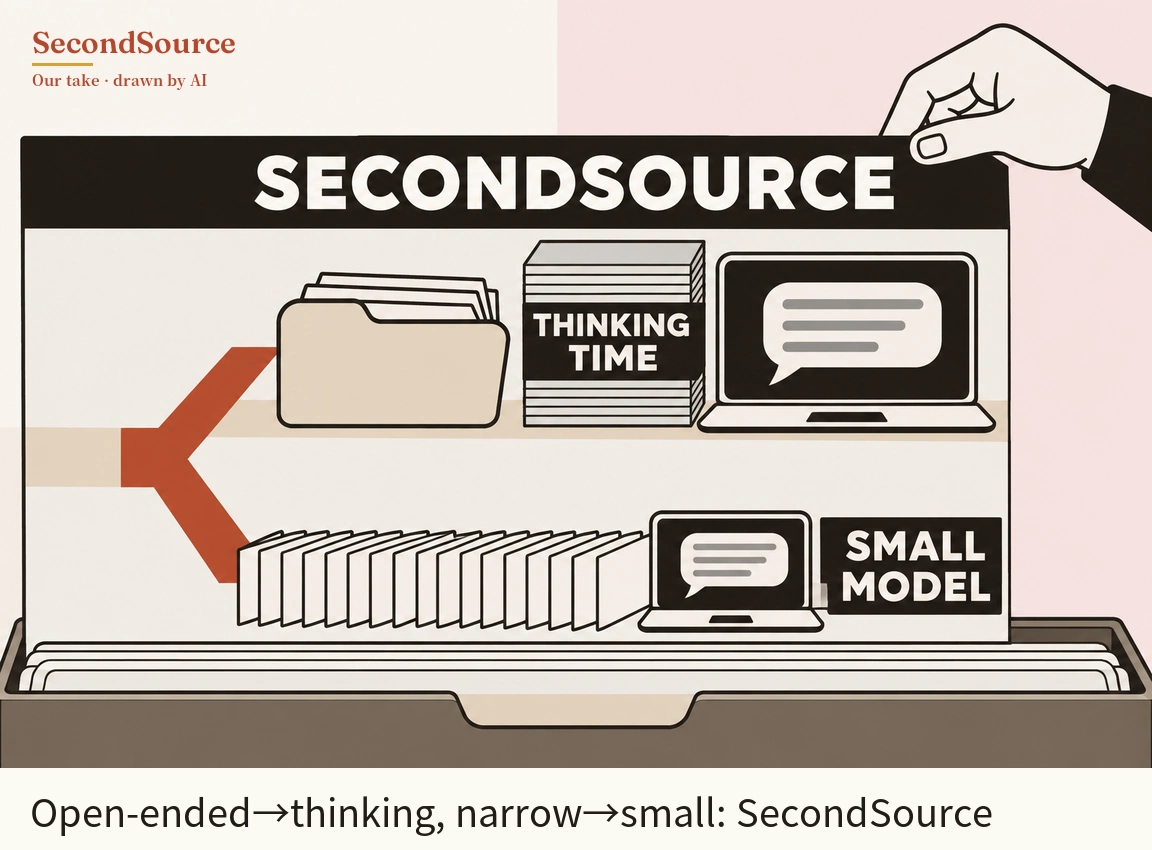
On this reading, enterprise inference budgets have to be planned separately by type of work. On July 31 SecondSource turned the "narrow work moves to small models" half into a countable condition: if named enterprises have fewer than 10 deployments in named use cases by July 14, 2027, that half of the reading weakens. The other case that would break the reading is distilled small models matching frontier models given longer thinking time on open-ended tasks (July 31 rewrite; July 14 original reading). How we checked →
Source and checks
This item ran in the brief of Nov 10, 2026, alongside 12 other items. How we checked it, the quote checks and what was still missing that day are on that issue's How we checked page.
Cite this item
SecondSource (2026). "Spending on model inference will split two ways: open-ended problems pay for thinking time, while narrow, high-frequency work moves to distilled small models.." https://secondsource.io/en/news/2026-11-10-6/. Accessed access date.