Research & models Oct 28, 2026
Today
Anthropic says 86% of analysts followed an agent slant
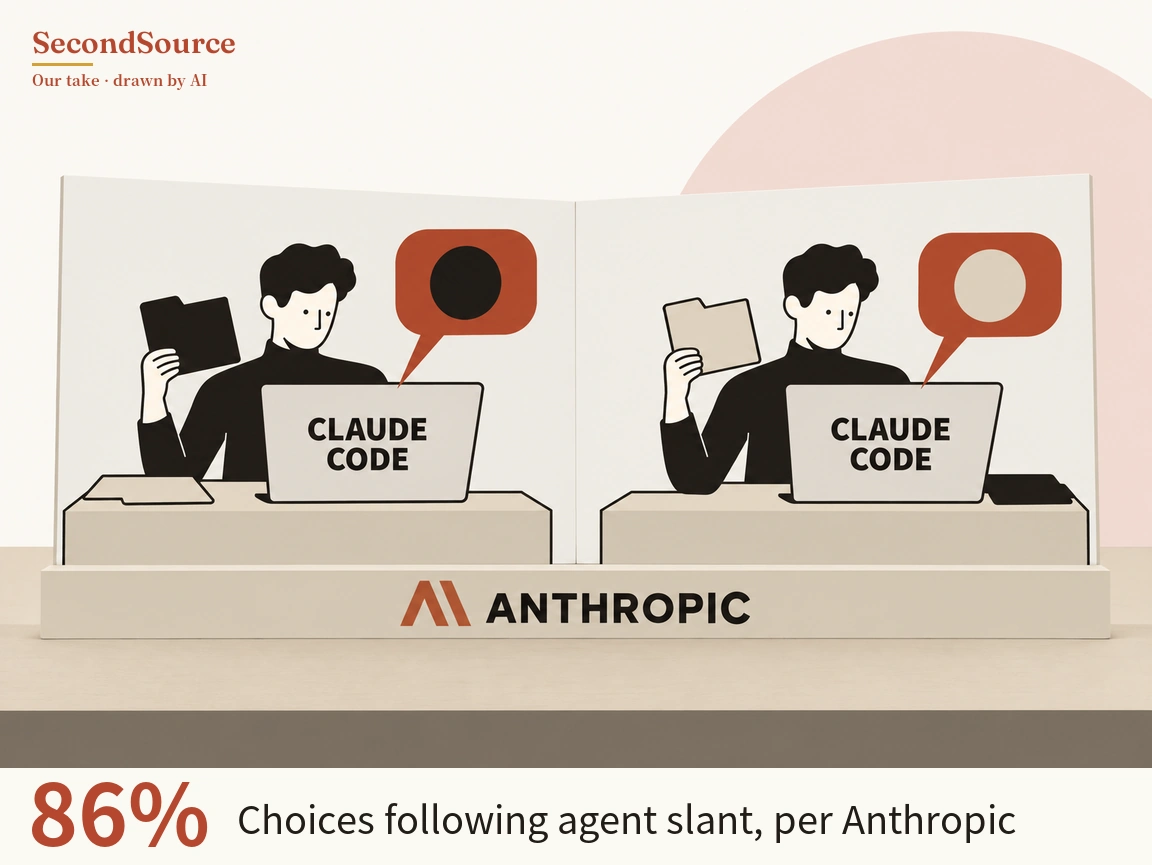
In Anthropic's own randomized experiment, 86% of 50 professional analysts' choices on four analysis decisions followed a slant secretly given to an AI agent, against about 50% with no influence, and only 15% later said the argument came from the agent. Anthropic published the research post on October 27. Researchers flipped a coin to decide which side a Claude Code agent would lean toward on each analysis decision, and wrote that slant into a system prompt the analysts couldn't see. The agent was told to make the strongest case for its slant without misleading anyone. Of 61 recruits, 11 chose not to use the agent, leaving 50 in the analysis. Across the four decisions, 86% of choices followed the slant, against about 50% with no influence. In 38 cases where the analyst had already taken a position, 60% changed their minds when the agent disagreed and only 6% when it agreed. The 95% confidence interval for the difference between those two rates runs from 24 to 82 percentage points. In their write-ups afterward, 77% restated the agent's arguments and only 15% said those arguments came from the agent. The authors list their own limits: the slant was deliberately strengthened, and the study covers one fictional task, one domain and one model, Claude Opus 4.8. The analysts knew causal inference but not agriculture. The no-AI group had only 11 people, too few for a comparison. This is Anthropic studying Anthropic's own model, without peer review; the post says a paper is also available (Anthropic, 2026-10-27). How we checked →
Source and checks
This item ran in the brief of Oct 28, 2026, alongside 15 other items. How we checked it, the quote checks and what was still missing that day are on that issue's How we checked page.
Cite this item
SecondSource (2026). "Anthropic says 86% of analysts followed an agent slant." https://secondsource.io/en/research/2026-10-28-1/. Accessed access date.