Today · post October 23
Saxe says cybercrime damage lags AI; the post shows no data
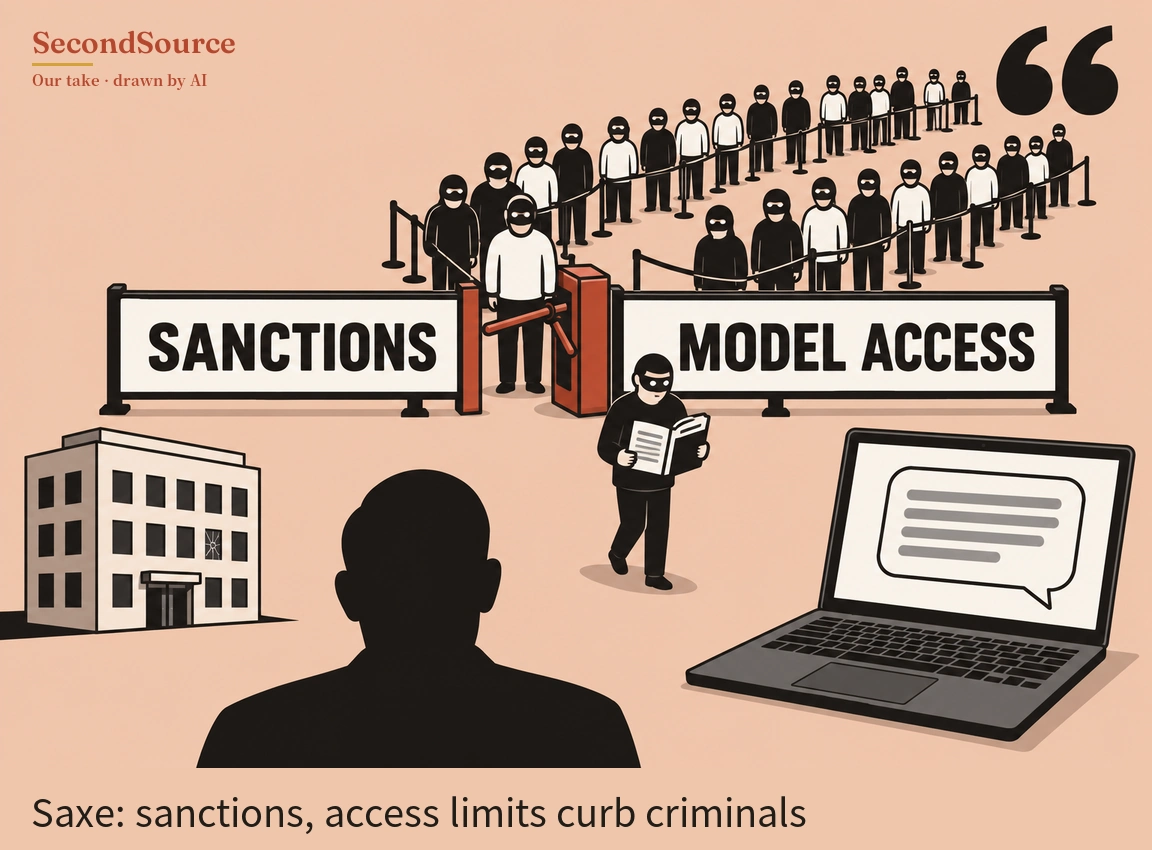
Security researcher Joshua Saxe argues that as AI attack capability rises, cybercrime damage won't rise in step, and that defenders are in an interlude now. Saxe's reasons: criminals are relatively low-skilled and constrained by sanctions and limits on model access; ransomware took years to go from first appearance to scale, and states are slow to integrate new technology (Joshua Saxe, 2026-10-23). Saxe's claim is that how fast the risk arrives depends on how fast the technology diffuses, not how fast capability grows. Princeton scholar Arvind Narayanan reposted it in agreement, saying that rising capability without a matching change in damage is the hardest part of AI safety policy (Arvind Narayanan, 2026-10-23). This is Saxe's personal judgment; the post itself has no damage time-series data attached, and Saxe's longer piece with charts hasn't been reviewed. Damage not yet rising could also just be lag in the statistics. Our reading: this framework can be checked, and what to check is the time series of damage from ransomware and intrusion cases, not models' test scores. How we checked →
Source and checks
This item ran in the brief of Oct 24, 2026, alongside 11 other items. How we checked it, the quote checks and what was still missing that day are on that issue's How we checked page.
Cite this item
SecondSource (2026). "Saxe says cybercrime damage lags AI; the post shows no data." https://secondsource.io/en/expert/2026-10-24-1/. Accessed access date.