Daily Brief Nov 12, 2026 · How we checked →
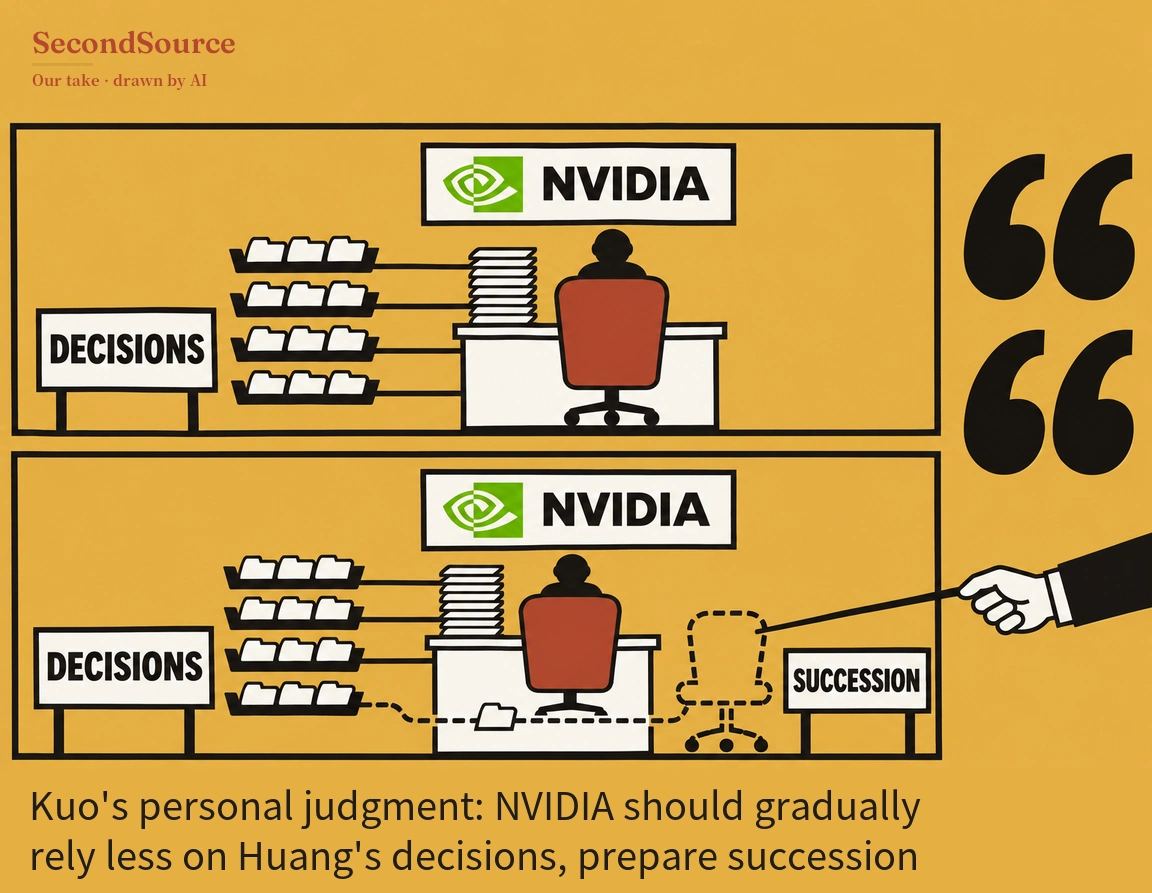
CNBC: NVIDIA board weighed ousting Huang, announced nothing
Source: CNBC
At a glance
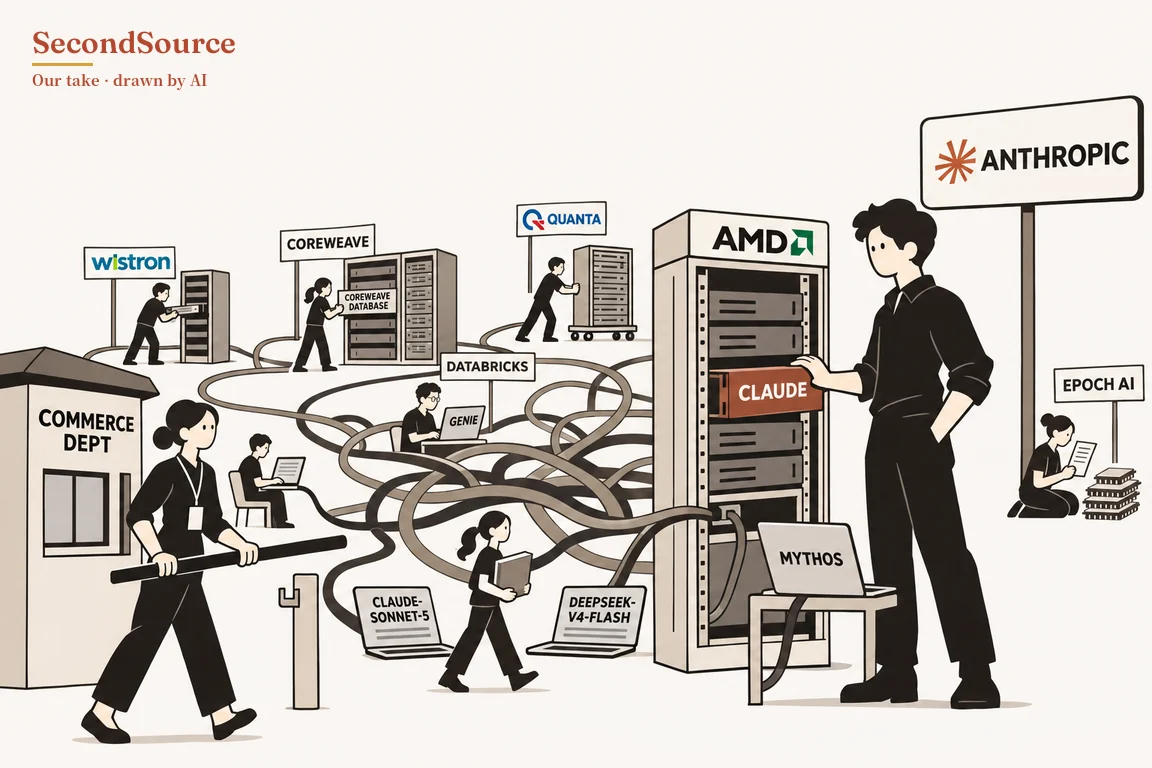
1. CNBC reported that NVIDIA's board met on the evening of November 11 to decide whether to keep CEO Jensen Huang, three days after a board statement of confidence in Huang; by early November 12 NVIDIA had made no announcement.
2. Anthropic says in its IPO roadshow video that the software work of moving Claude onto AMD GPUs took three days, down from several months for dozens of engineers. No third party has measured the performance.
3. A reporter at The Information says the US Commerce Department could finalize rules on remote use of advanced chips as early as this month; the rule text hasn't been published.
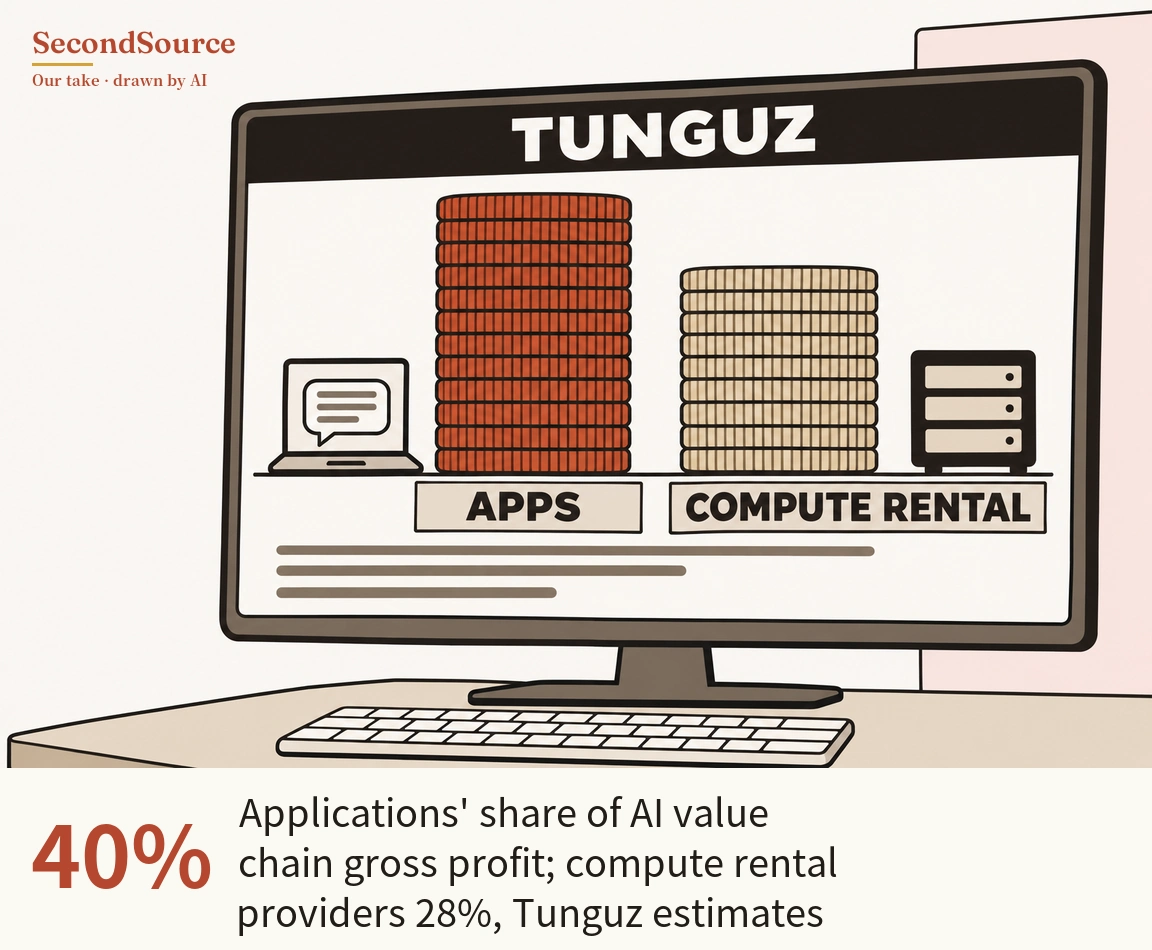
Also today: #4 — venture investor Tomasz Tunguz estimates how gross profit splits across the layers of AI.
Today's main line
1. NVIDIA's board voiced confidence in Jensen Huang on November 8, then met three days later on whether to keep Huang, and no company document covers the meeting
CNBC reported on the evening of November 11 that NVIDIA's board was meeting to decide whether to replace CEO Jensen Huang (CNBC, 2026-11-11). NVIDIA holders and buyers can judge whether the board will replace its CEO only from media reports; the November 17 earnings report is the first scheduled occasion where the company itself will speak.
2. Anthropic's IPO roadshow video says Claude was ported to AMD GPUs in three days and gives no performance figures; AMD is also buying Anthropic shares at the IPO
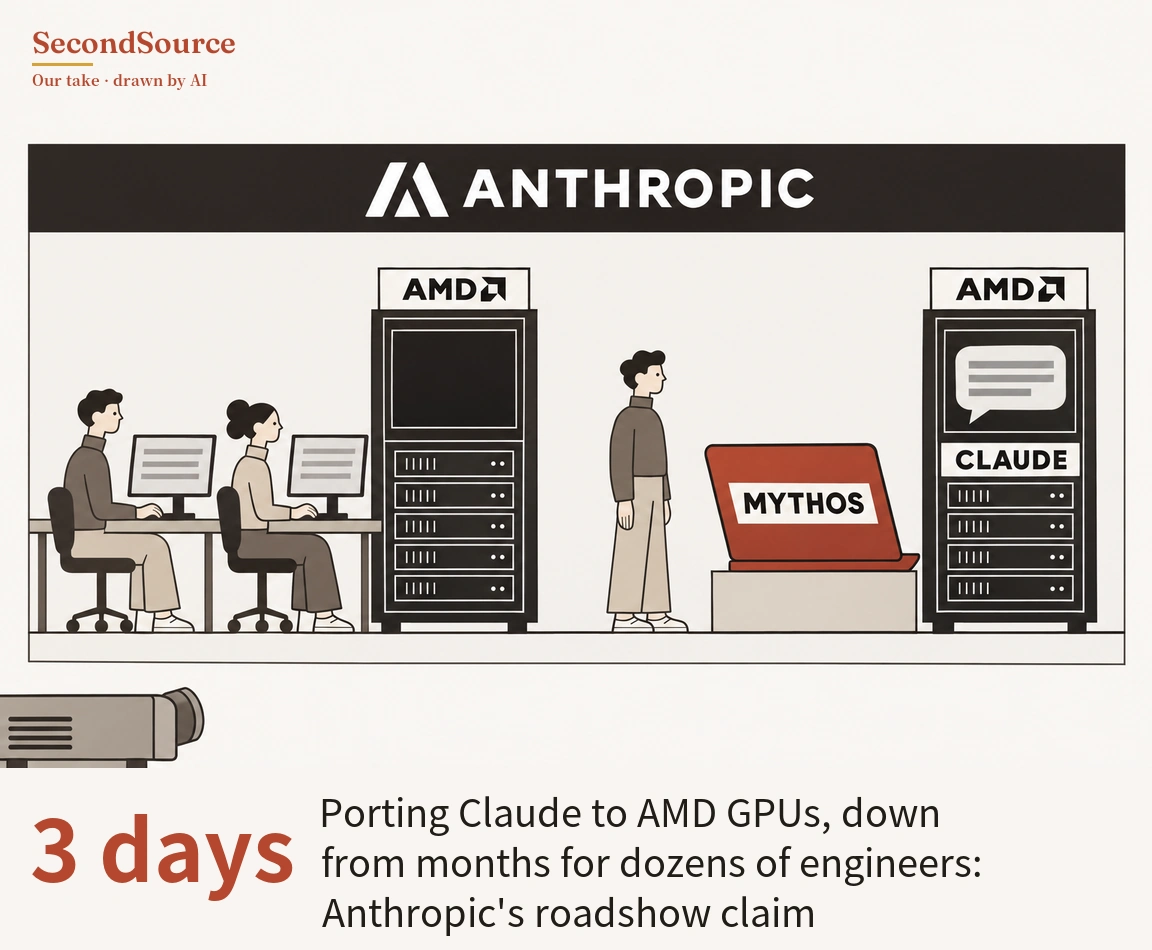
Our inference: if the three days holds, big buyers with frontier models could port to other chips for far less; ordinary developers are unaffected.
3. A reporter at The Information says the US Commerce Department could finalize rules this month restricting Chinese customers' remote rental of advanced chips; the text isn't public

4. Venture investor Tomasz Tunguz estimates that 40% of gross profit across the AI value chain lands with applications, and the 28% for compute rental providers is before GPU depreciation
Also happened
1. Not verified by us yet: The Information reporter Stephanie Palazzolo says in a post that inference providers unable to get chip allocations increasingly want to buy chips and run their own data centers; the post doesn't name which ones (Stephanie Palazzolo, 2026-11-11).
2. Not verified by us yet: Reuters reports that a Chinese university on the US export blacklist bought NVIDIA H200s in October; according to analyst Paul Triolo, the quantity was two (Reuters, 2026-11-11; Paul Triolo, 2026-11-11).
3. Not verified by us yet: According to a post by Sravan Kundojjala excerpting earnings calls, semiconductor inspection equipment makers KLA and Onto both say rising DRAM prices are weighing on gross margins (Sravan Kundojjala, 2026-11-11).
4. Not verified by us yet: Elon Musk wrote in a reply on X that he would gladly take compute back but thinks the opposite will happen; the reply doesn't name Anthropic (Elon Musk, 2026-11-11).
Deep dive: NVIDIA's two backstops aren't the same thing: one buys AI cloud compute on a schedule, the other pays only after an OpenAI lease default (November 12, 2026)
The market assumes: Cristian Dina, a reporter at the tech outlet The Next Web, wrote in August that NVIDIA is backing the buildings, not OpenAI's rent, so the only thing to watch is what the campus is worth (The Next Web, 2026-08-17). The evidence says: NVIDIA's August current report says the guaranty it gave on a data-center lease for an OpenAI affiliate could require payment only if the tenant defaults, and ends once OpenAI reaches a satisfactory credit rating; whether NVIDIA pays, and when the guaranty ends, both depend on the tenant (NVIDIA current report, 2026-08-17).
NVIDIA's financial support for customers falls into two kinds by how the contracts are written. The first is commitments to buy compute from cloud providers that rent out AI compute: US$36 billion as of July 26, paid on an annual payment schedule, with NVIDIA receiving the compute it pays for. The commitments shrink only when other customers or NVIDIA's own research use up the capacity (NVIDIA quarterly report, 2026-08-26). The second is guaranties that could require payment only if a tenant defaults. The largest is the OpenAI affiliate lease guaranty above, whose initial commitment the August current report caps at US$105 billion; the quarterly report lists another guaranty of the same kind, US$3.5 billion, on data-center leases for AI cloud partners. Our inference: the two kinds are triggered by different events, so expected losses should be estimated separately; only a broad collapse in AI demand could trigger both at once, and only then do they belong in the same worst case.
What would prove this wrong: if, by December 31, 2026, a new NVIDIA quarterly report rewrites the guaranty so that payment is due without a tenant default, or rewrites the compute purchase commitments so they no longer shrink when other customers use the capacity, this reading is wrong. The deadline is SecondSource's own. The nearest checkpoint is NVIDIA's November 17 earnings report.
What this means for you: In estimating NVIDIA's contingent obligations, the two commitments have separate triggers; only a stress case in which demand weakens across the board adds their caps together.
The full deep dive is published in Chinese and Japanese only; there is no English edition.
Chips & semiconductors
Named commentary
Research & models

Product moves
From the archive
Correction: the November 9 issue needs four changes. Main-line item 1 said H200 sales had "no public figures, so the risk can't be calculated": per-company amounts are indeed not public, but NVIDIA's August quarterly report states that licensed shipments were under 1% of the latest quarter's data-center revenue, that is, under US$890 million. Main-line item 2 said ASML's statement that supply can't meet demand appeared only in relays; in fact ASML's October 14 earnings press release says so. The same item and At a glance said lead times "could stretch" to twice the longest ever, while the Chosun Ilbo original says lead times for key equipment have already stretched to as much as twice as long. Main-line item 1 and At a glance said the letter from three House committee chairs asked about counterintelligence measures and Huang's contacts with Megaspeed executives, but left out the letter's second paragraph, which says China's infiltration and acquisition of advanced US technology is the core of the three committees' investigative work this Congress. The letter doesn't name the H200, chips or export licenses; that is unchanged. The archived pages on the site have been rewritten, and the conclusions are unchanged.
SecondSource isn't a news digest: AI reads primary sources across fields, every judgment comes with its original source, and mistakes are corrected in public. The focus is what has changed and which claims still lack evidence, not what happened today.
Written from the same research and judgments as the Traditional Chinese edition. Sources are linked; we distinguish original documents from reporting and mark what we could not verify.