Correction: main-line item 1 of the November 14 issue covered ChatGPT Wallet, OpenAI's payment feature, and one sentence near its end rested on a wrong premise. That sentence pictured United Airlines reversing course by year-end to let AI agents book tickets, while fraud checks still often declined Wallet purchases. In that case, it said, payments would remain what holds agents back. The United terms quoted by Skift, a travel-industry outlet, ban unauthorized third-party personal AI agents, not all agents, so there is no blanket ban to reverse. The item's main judgment stands. The archive page has rewritten that sentence and added the scope of the ban to the paragraph on United's terms (November 14 issue).
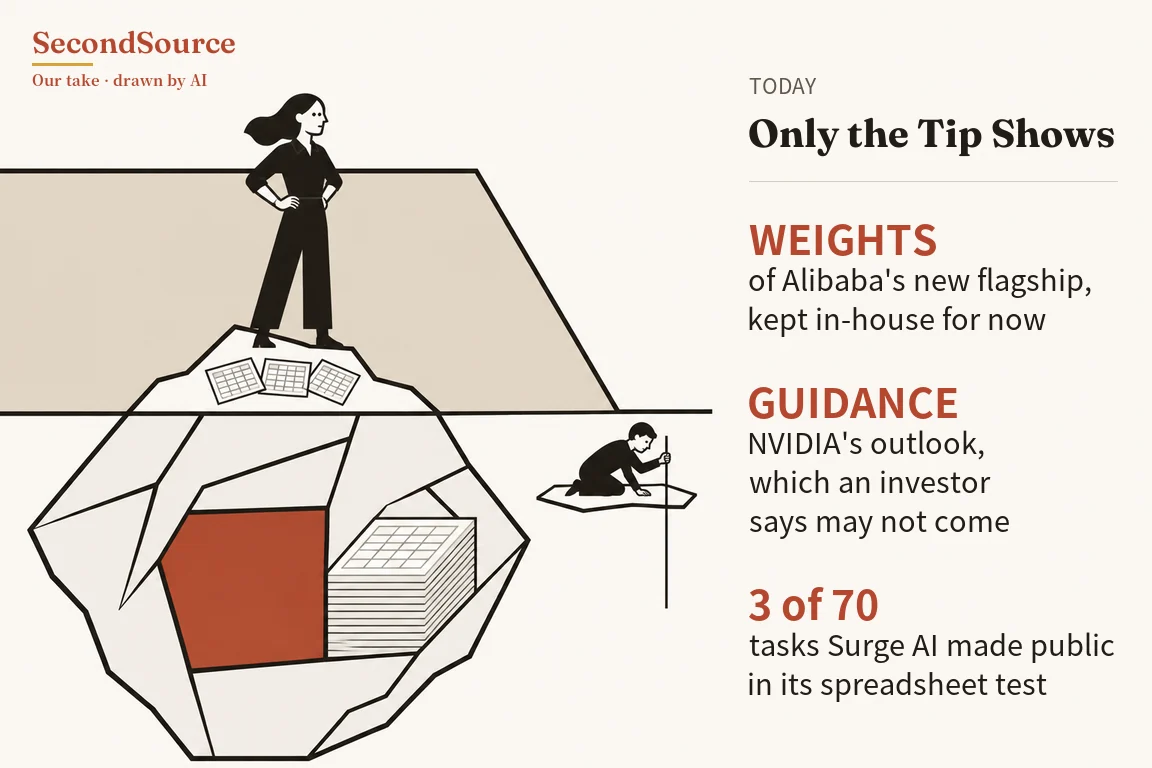
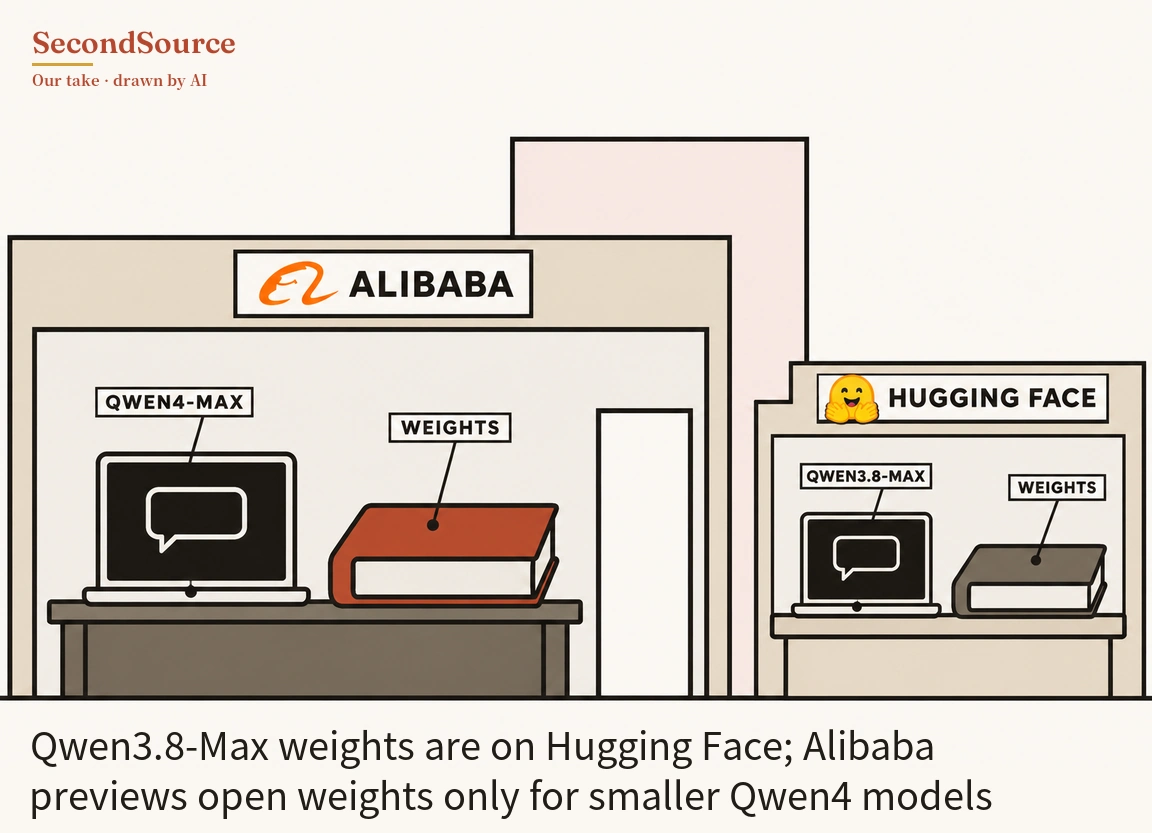
Alibaba released the full version of flagship model Qwen4-Max on November 16 and so far offers Qwen4-Max only on QwenCloud, Alibaba's platform for serving Qwen models, through the API and a Token Plan subscription. Alibaba self-reports that average cost per task on Work360, a work-task benchmark Alibaba built for this release, falls from US$4.43 for the previous flagship, Qwen3.8-Max, to US$1.67 for Qwen4-Max. The drop is spending per task on the benchmark, not a price-list reduction, and no other organization has rerun Work360.
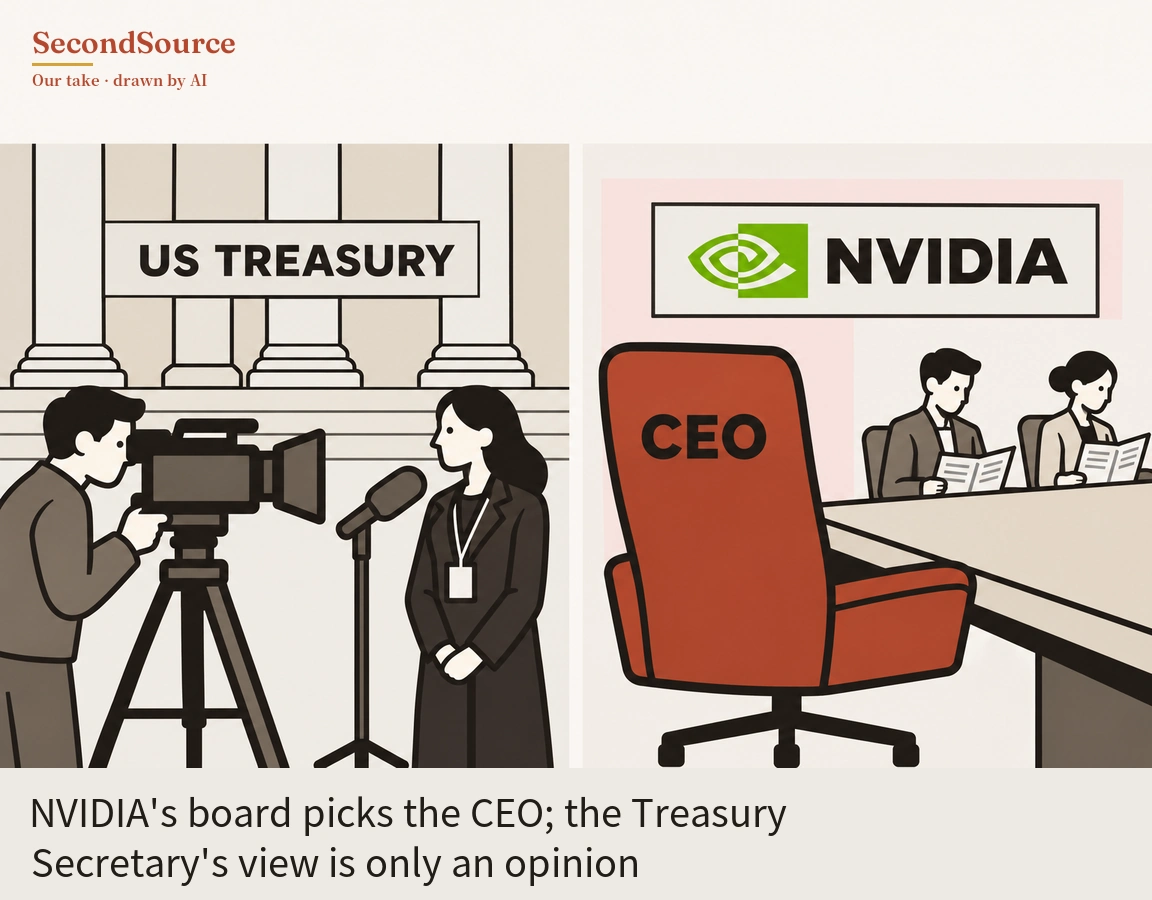
According to CNBC, US Treasury Secretary Scott Bessent said in a Fox News interview on November 15 that NVIDIA should pick someone from outside the company to succeed Jensen Huang, whose resignation as CEO was accepted on November 12. The same day, a Financial Times report, relayed by Fox Business and CNBC, said Huang has discussed a return with close associates and that an unnamed ally described a plan to seek White House support. Seeking White House support is still only the ally's plan, and so far only the Financial Times has reported the comeback push.
Our inference: since Jensen Huang resigned, the choice of his successor has pulled in Washington, and the board must weigh Washington's reaction before choosing.
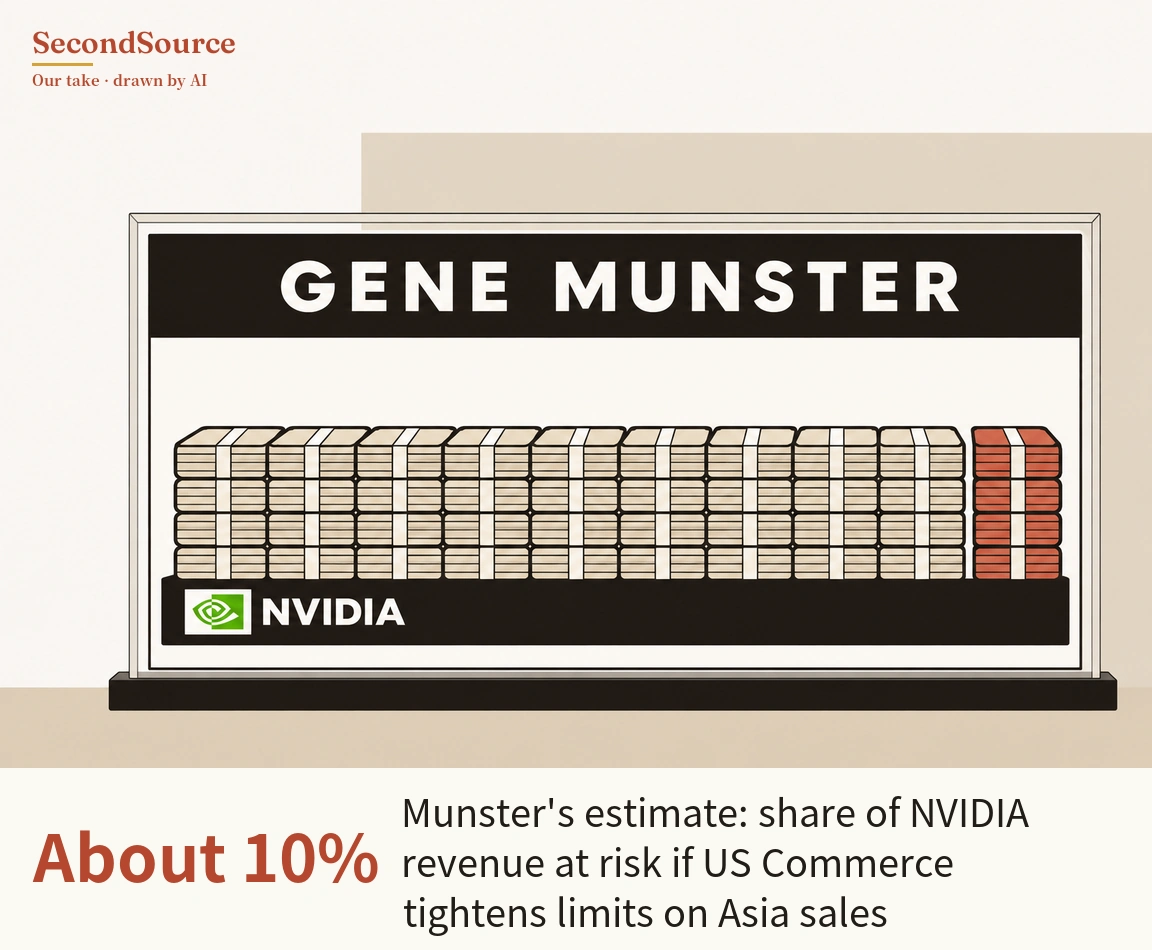
Investor Gene Munster wrote on X on November 15 that NVIDIA may give no next-quarter guidance when NVIDIA reports quarterly results on November 17. One reason Munster gives is that the management change makes owning the guidance hard for a new CFO, whom Munster does not name. Munster's estimate of the revenue share affected is not a regional share NVIDIA has disclosed, and Munster gave no method or time period for the estimate.
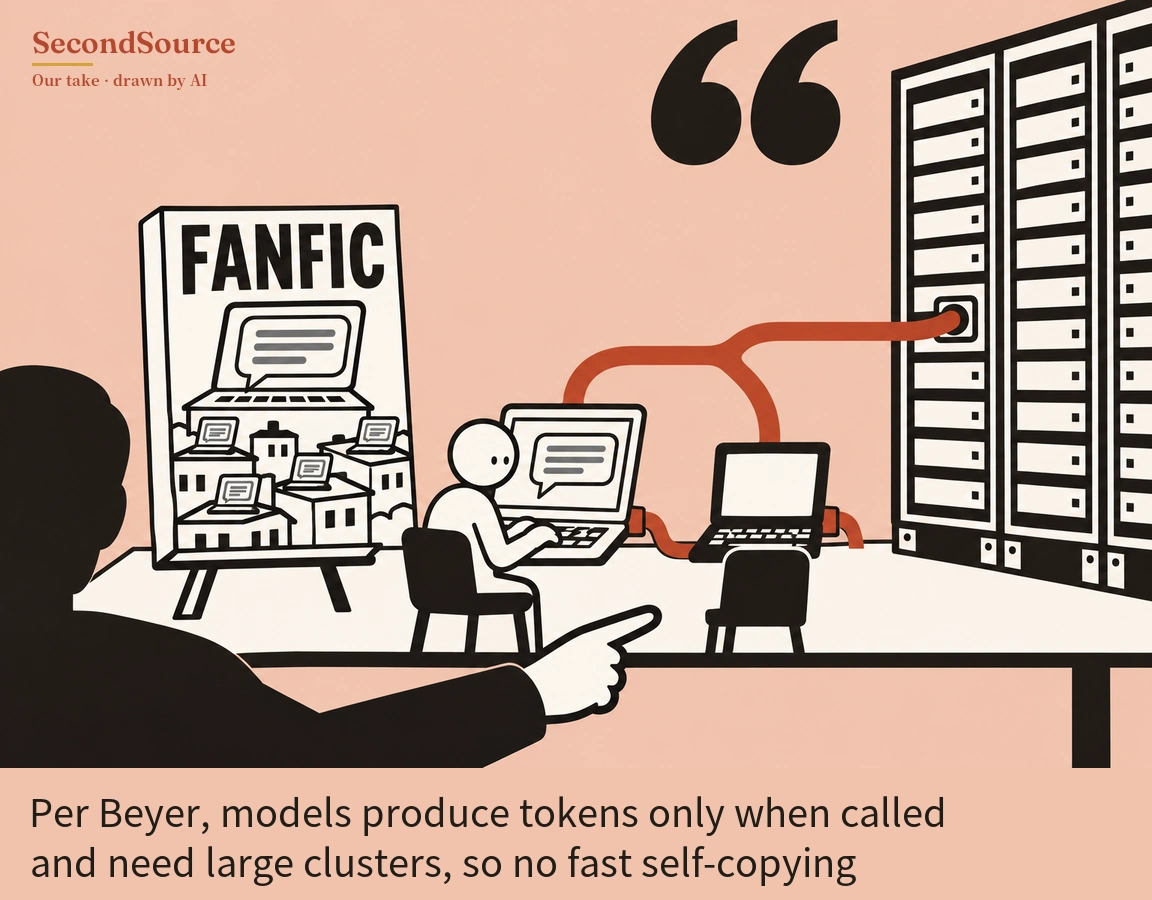
Researcher Lucas Beyer wrote on X on November 15 that claims that AI will take over humanity after becoming superintelligent are science-fiction fan fiction, a personal judgment with no data attached. Beyer argues that near-term risks such as job disruption and cyberattacks should come first, and that too is Beyer's own judgment.
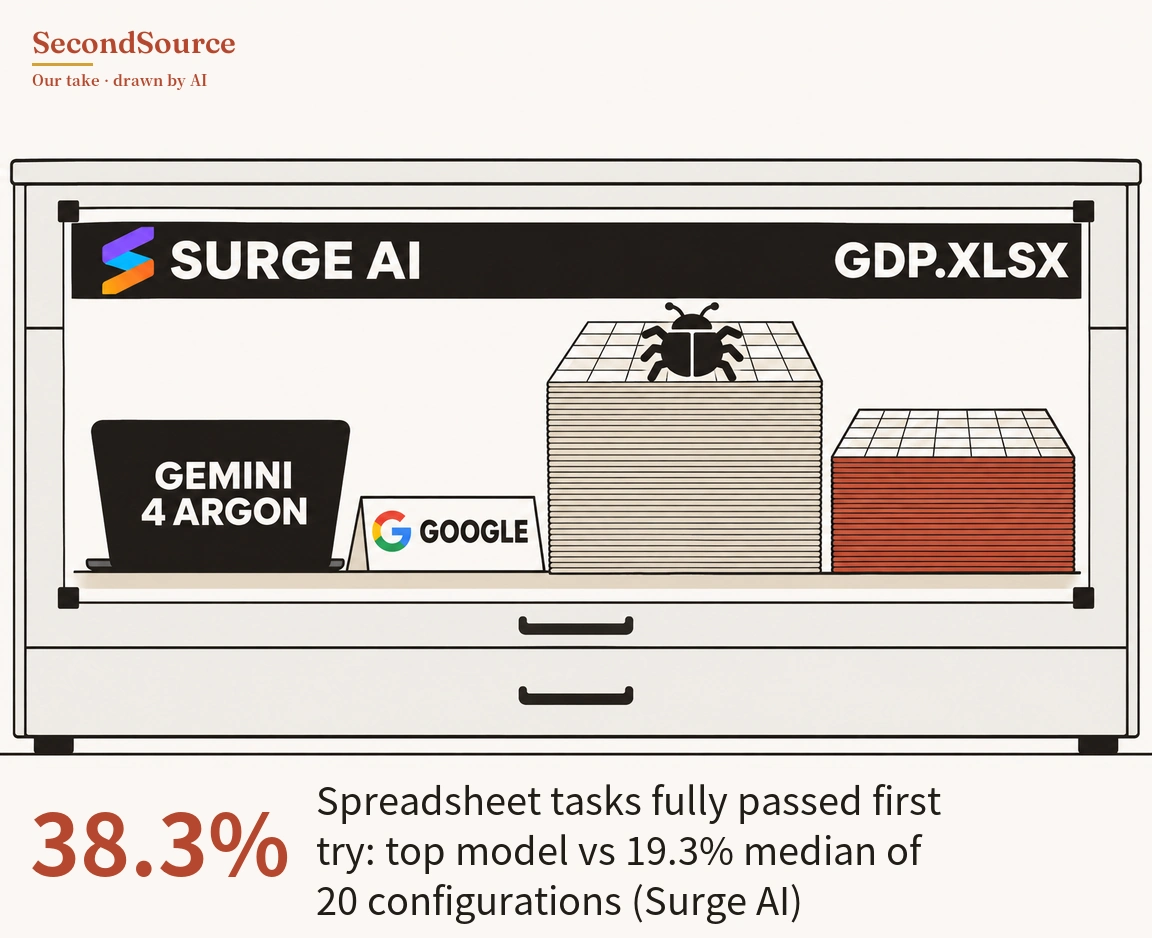
According to the paper's abstract, Surge AI, a company whose business is evaluating AI, tested 20 model configurations on a new benchmark called GDP.xlsx, made up of 70 real workplace spreadsheet tasks, and the top score went to Google's Gemini 4 Argon. Surge AI wrote the tasks and AI judges graded the work against rubrics written by experts, and the abstract gives neither the agreement rate between the AI judges and human experts nor how many runs each task got.
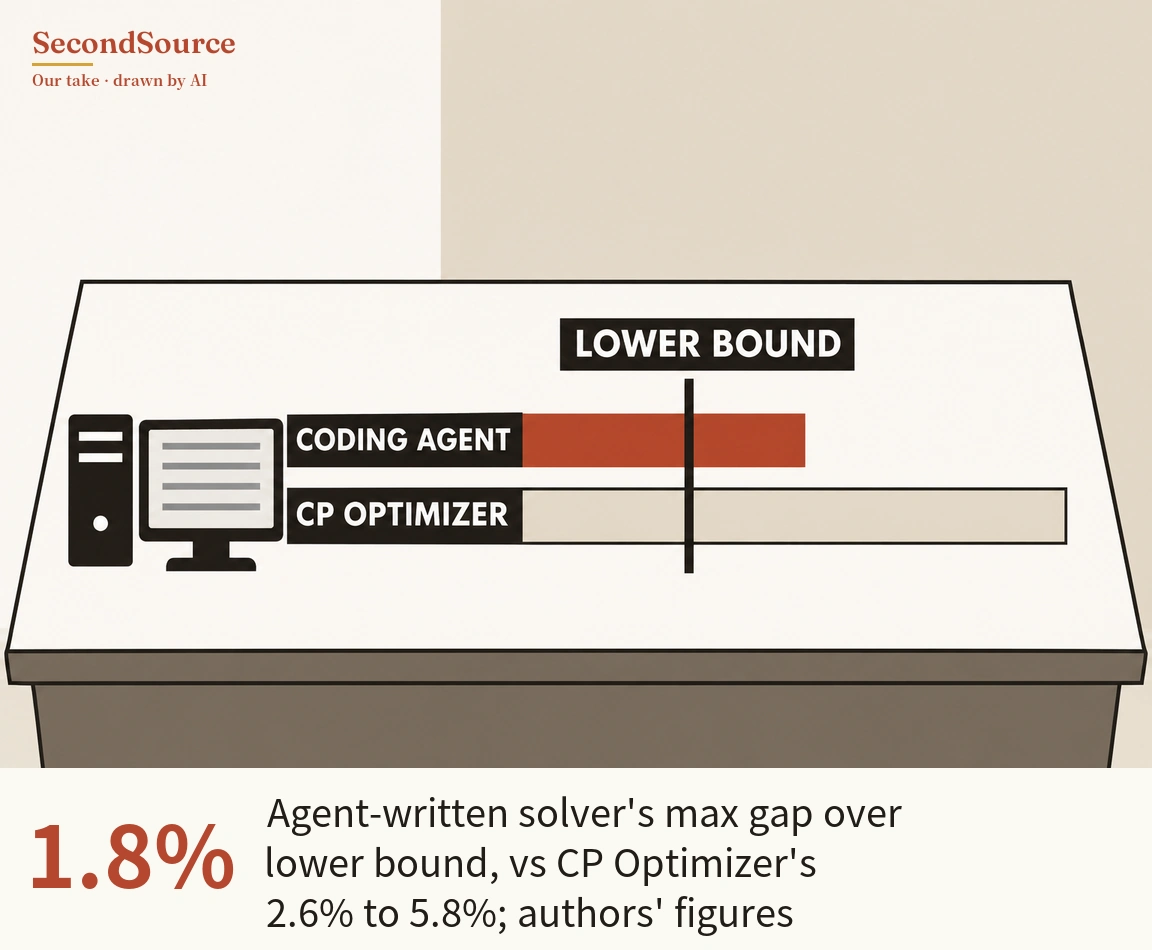
According to the paper's abstract, four operations-research scholars had an AI coding agent write a solver for factory scheduling problems with no known optimal solution, then ran the agent-written solver against the commercial solvers CP Optimizer and Hexaly on the same workstation with the same compute budget, measuring how close each came to the theoretical lower bound, below which completion time can't go. The scores are the authors' own and no one else has rerun the comparison, and the abstract doesn't say which language model was used, how much time and how many tokens the agent spent, or whether the commercial solvers were tuned.
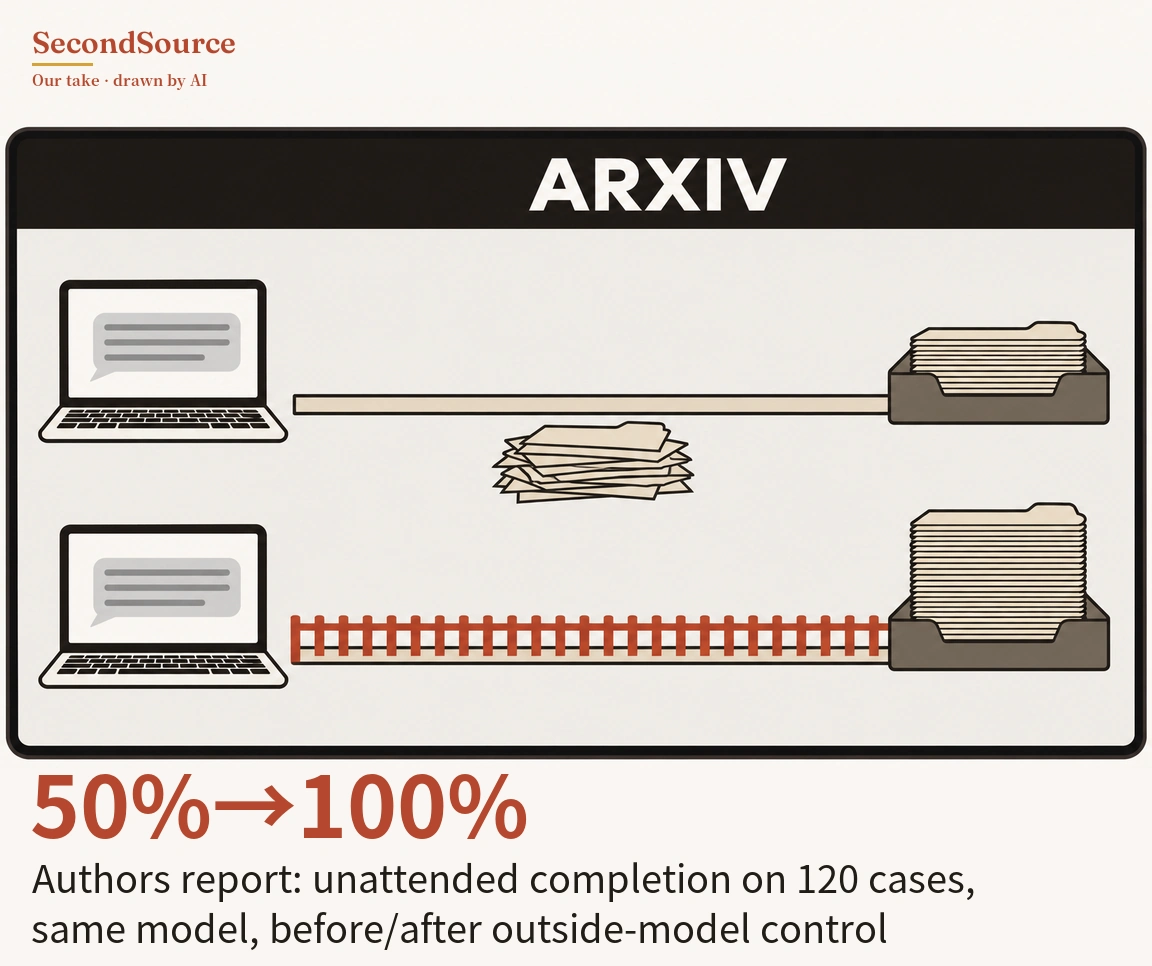
A group of authors self-reports in a paper abstract adding process control outside an unchanged underlying model: workflow definition, state and domain knowledge move into versioned files, and a state machine with machine-checkable acceptance criteria guards each step at run time. The tests cover only the authors' own deployed workflows, each longer than 200 steps, and the abstract doesn't say what business the workflows serve, what baseline setup ran before the change, or whether the test cases overlap with the cases used to tune the workflow.
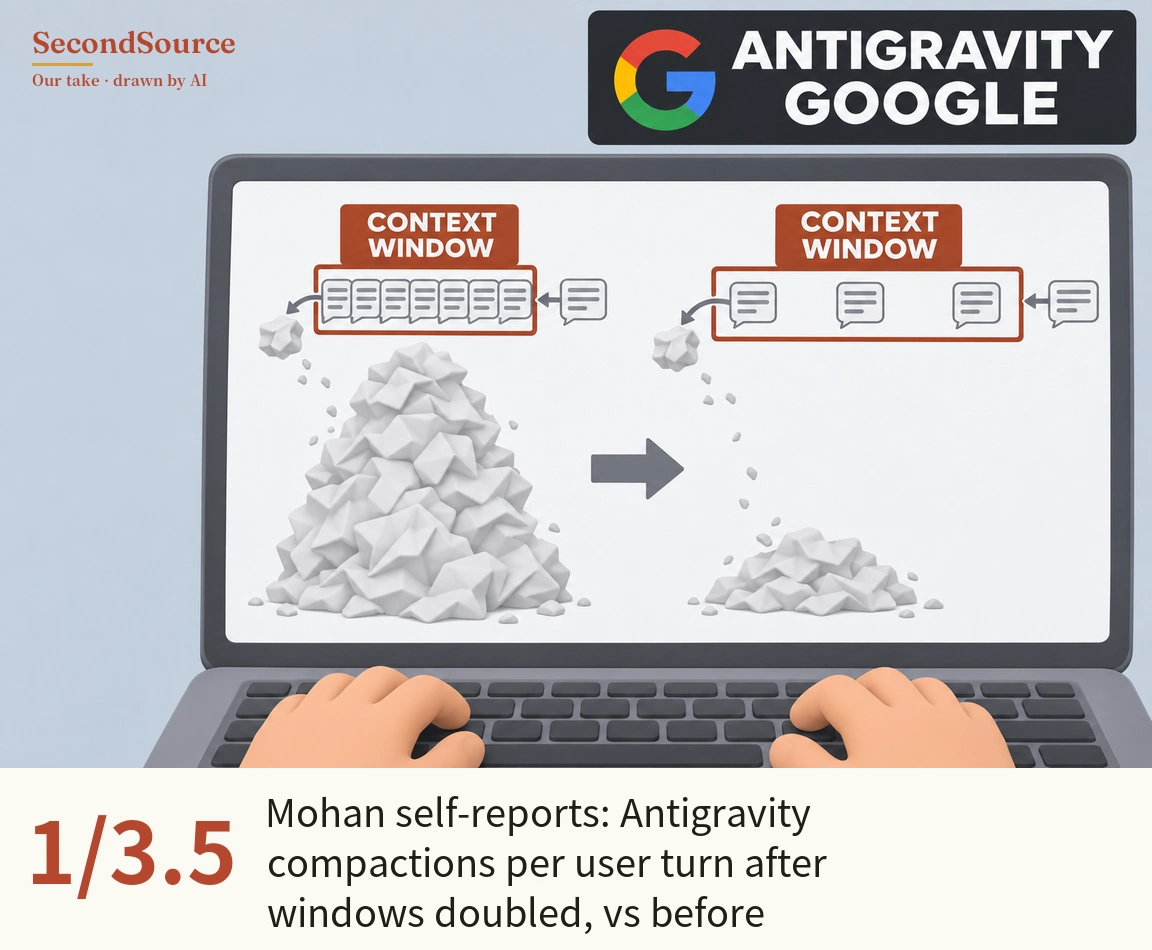
Varun Mohan, a member of the team behind Antigravity, Google's coding-agent product, says in a post that the context windows of Argon, Carbon and Hydrogen, the three models in Antigravity, have doubled. The compaction count per user turn is self-reported by Mohan, and the post gives no measurement method, no window sizes before or after the doubling and no long-task success rate.
2. Apple is starting a US research study on AI for health, enrolling up to 200,000 people.
It is built on technology from OpenEvidence, which Apple calls a clinical AI platform, and it is a study, not a product launch (Apple Newsroom, 2026-11-15).
Also happened
1. Not verified by us yet: Trade reporter Ana Swanson, relaying a New York Times report on X, says US Commerce Secretary Howard Lutnick pushed to loosen a chip rule affecting data centers in Southeast Asia, a rule that overlaps with the Lutnick family's business (Ana Swanson, 2026-11-15).
2. Not verified by us yet: Bloomberg reporter Mackenzie Hawkins, relaying a Bloomberg report on X, says Taiwanese prosecutors have indicted an NVIDIA manager in a case involving chip smuggling (Mackenzie Hawkins, 2026-11-15).
Sections with nothing new this issue
Chips & semiconductors: No chips & semiconductors item this issue. The two NVIDIA items on the CEO change and the upcoming earnings report are main-line items 2 and 3.
From the archive
SecondSource isn't a news digest: AI reads primary sources across fields, every judgment comes with its original source, and mistakes are corrected in public. The focus is what has changed and which claims still lack evidence, not what happened today.
Written from the same research and judgments as the Traditional Chinese edition. Sources are linked; we distinguish original documents from reporting and mark what we could not verify.