In Microsoft's internal test of Cobalt 200 on chip-design software, Xcelium, the tool that simulates chip designs, reaches 4.15 times the per-logical-core throughput of Cobalt 100.
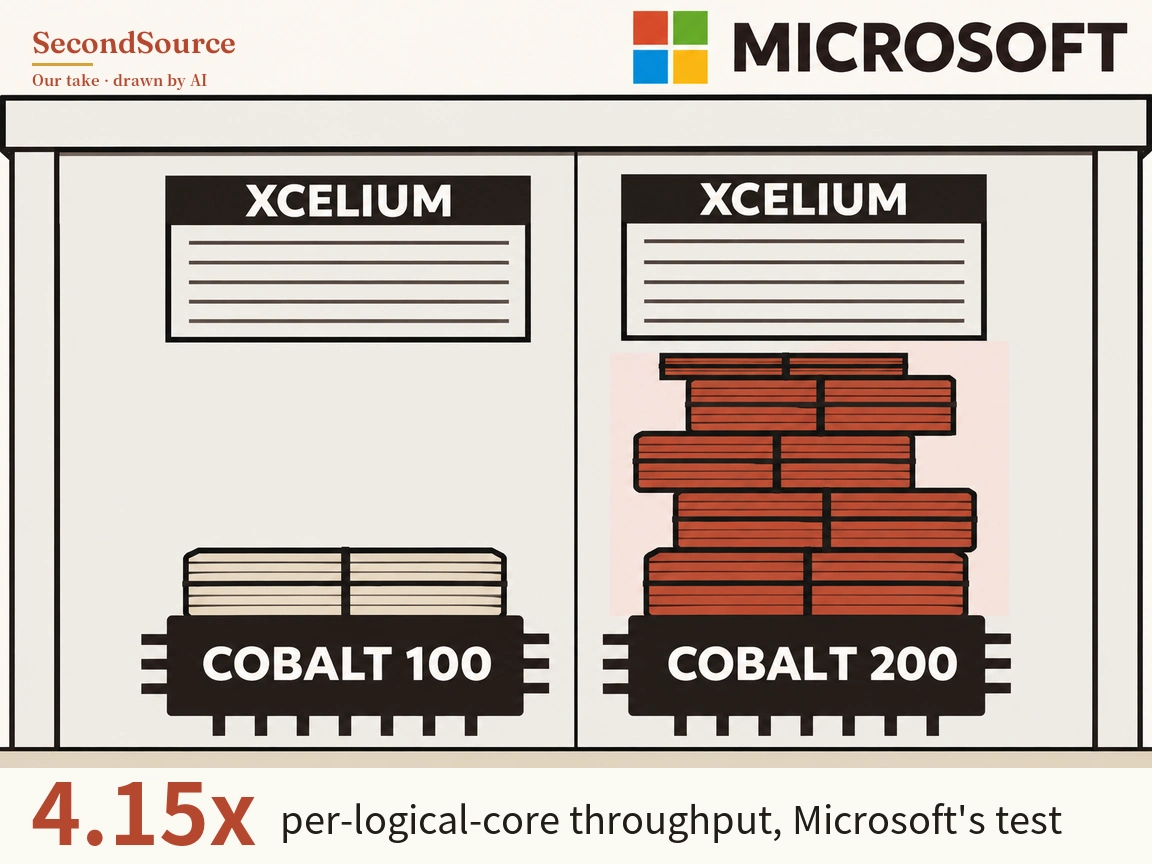
Microsoft shows its own chip-design flow can run on Arm, but this is an internal test and no per-dollar performance was published. Tools from Cadence, Synopsys and Siemens run unmodified. Against the best x86 test machine, Cobalt 200 leads by 11% to about 44%. Those results are normalized per logical core, which favors machines without hyperthreading (Microsoft, 2026-11-05). How we checked →
Source and checks
This item ran in the brief of Nov 6, 2026, alongside 17 other items. How we checked it, the quote checks and what was still missing that day are on that issue's How we checked page.
Cite this item
SecondSource (2026). "In Microsoft's internal test of Cobalt 200 on chip-design software, Xcelium, the tool that simulates chip designs, reaches 4.15 times the per-logical-core throughput of Cobalt 100.." https://secondsource.io/en/news/2026-11-06-6/. Accessed access date.