Daily Brief Nov 1, 2026
OpenAI reportedly cuts raise to US$20B, per the FT
At a glance
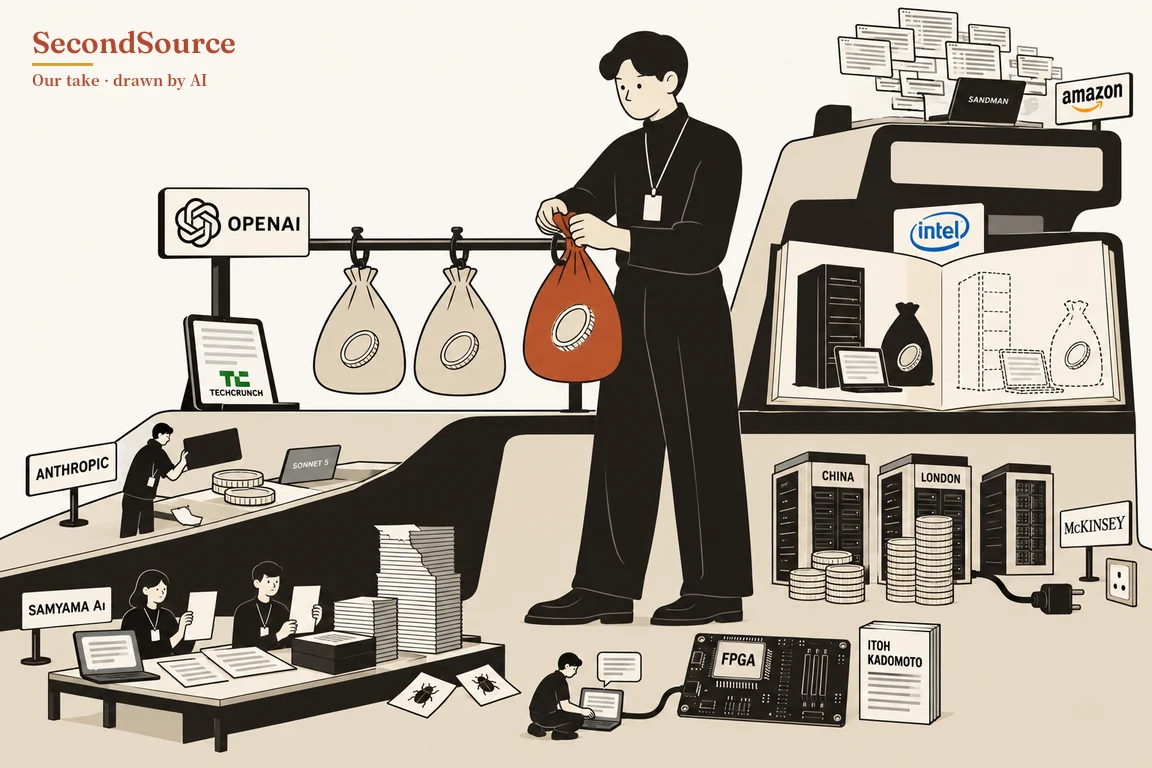
1. The Financial Times reports that OpenAI cut this round's target from US$30 billion to US$20 billion; CNBC had already reported the US$1.25 trillion valuation, before new money, on October 22, ahead of this week's selloff.
2. Intel's data-center segment grew 78% year on year in the third quarter, yet fourth-quarter revenue guidance of US$15 billion to US$16 billion sits below the third quarter's US$16.5 billion; Intel's CFO expects the segment that includes PCs to fall more than 20% from the third quarter.
This week's column: Claims & Receipts
Every Sunday: one AI claim making the rounds, checked against the original documents.
No new claim was added for checking this week; this issue only returns to three older calls that came due.
OpenAI's system card, Anthropic's enterprise share, the US-China AI gap: can these three older calls be settled?
The short version: SecondSource rechecked three calls that came due, and none of the three can be judged, because the named sources published no new figure, or published a document that doesn't answer the question.
How to use it. OpenAI's October 26 system card gives no cause, so it can't explain why the model's abilities changed. This check covers three older calls, not a claim newly making the rounds this week.
Will OpenAI's next system card explain why models can reason without writing a chain of thought? Can't judge: a system card is the safety and capability document published with a model. The October 26 GPT-6.1 Terra system card says only that the model is less able than its predecessor to rewrite, on instruction, its chain of thought, the reasoning draft a model writes before answering, and gives no cause. Reasoning without writing a chain of thought is a separate matter, and the card never mentions it. SecondSource's October 22 call was narrower: that this card would give a cause for the rewriting ability alone. The card gave no cause at all. OpenAI's September GPT-6 Astra system card said the change in rewriting ability was not specifically caused by architecture changes, and this card doesn't repeat that sentence. Answer check →
Will Anthropic's enterprise market share fall to 35% or below? Can't judge: this question waits on the next enterprise report from Menlo Ventures, a venture firm that is also an Anthropic investor. The question originally ran to September 30 and got 30 more days, to October 30, and Menlo Ventures' article index still lists no new edition. The latest remains the December 2025 report, which estimated Anthropic's share of the enterprise large-model market at 40%, the baseline for this question. Answer check →
Will the US-China frontier AI capability gap land between 4 and 14 months the next time Epoch AI publishes it? Epoch AI, which calculates this gap in months, had published no new figure by October 31, so this can't be judged. The designated page still shows the January 2026 version. Converted from Epoch AI's capability index, that version has Chinese frontier models trailing US ones by 7 months on average, with a smallest gap of 4 months and a largest of 14. Answer check →
All of SecondSource's calls and their verdict dates → the full ledger
Today's main line
1. [Today] OpenAI's target reportedly falls from US$30 billion to US$20 billion, and the US$1.25 trillion valuation was in print eight days before that report
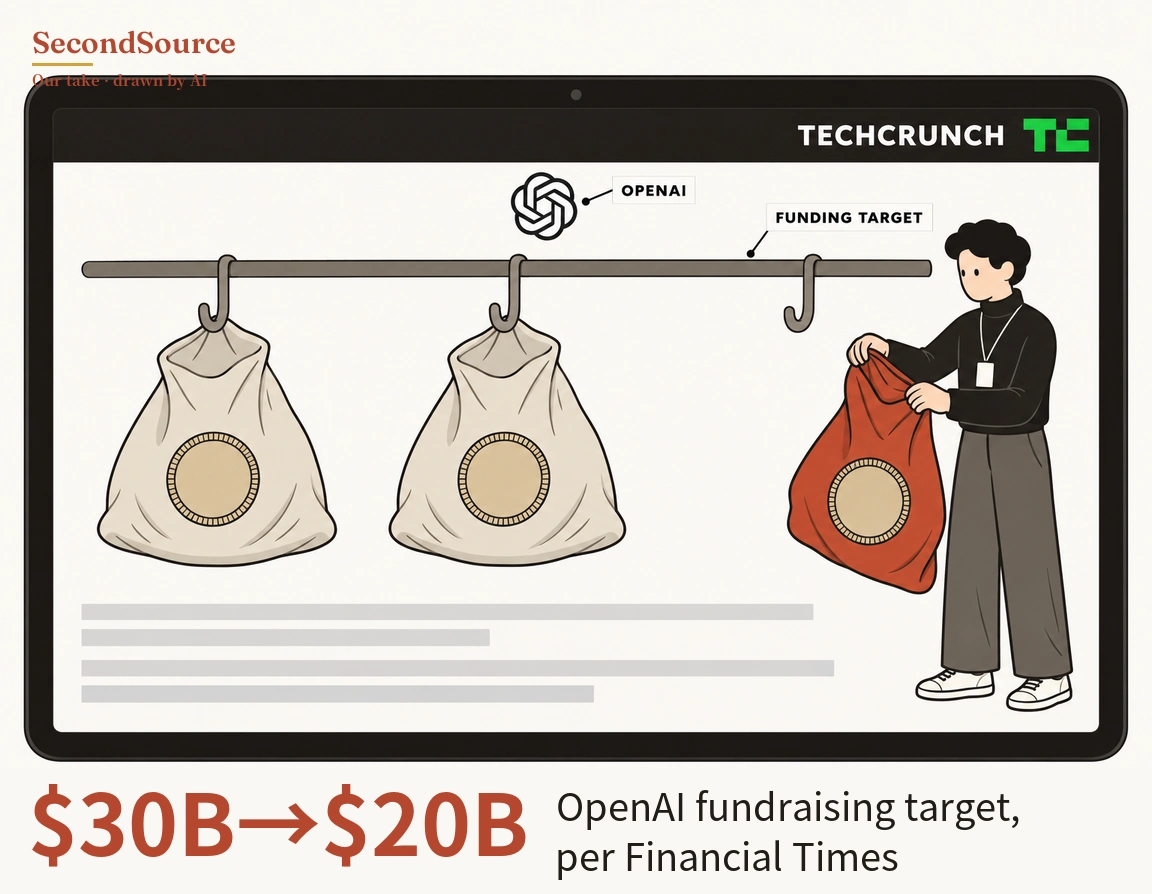
Why it matters: Our inference: this week's change is in OpenAI's fundraising target. OpenAI's US$1.25 trillion valuation is so far only an asking price, not a transaction price. Late-stage funds deciding whether to use it as the benchmark for the next round have to wait for the first close's price.
Chips & semiconductors
1. [This week] (October 29 earnings) Intel's data-center segment grew 78% year on year in the third quarter, and fourth-quarter total revenue guidance of US$15 billion to US$16 billion is still below the third quarter's US$16.5 billion.
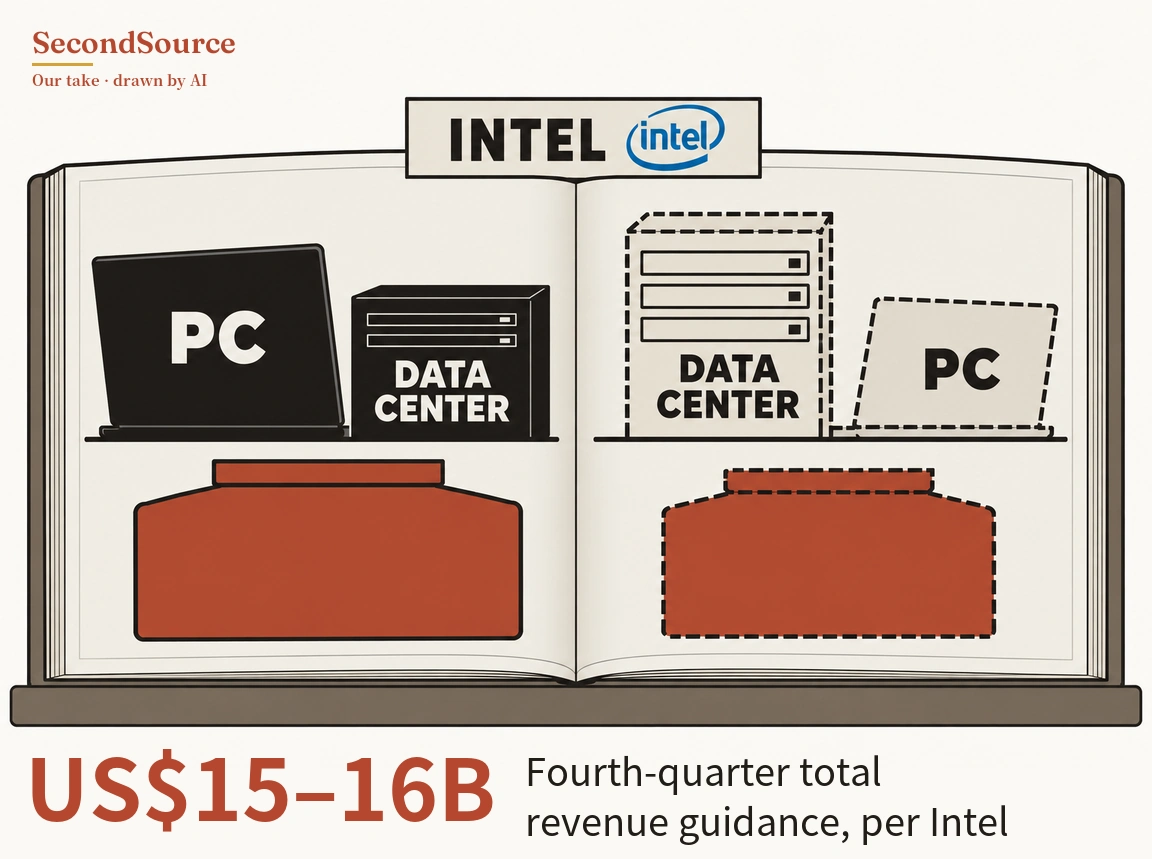
Zinsner attributed PC weakness to memory shortages and limited IT budgets. The newsletter AINews wrote the cause as AI demand pushing up memory costs (AINews, 2026-10-30). In the remarks cited here, Zinsner doesn't directly make that link.
Next to watch: Intel's fourth-quarter report next January, whether the data-center segment reaches about US$8.4 billion (US$7.3 billion plus 15%) and whether the segment that includes PCs falls more than 20%. If that segment's drop is far smaller than 20% and total revenue tops the US$16 billion high end of guidance, this inference has to change. AMD also sells into both markets, and its next-quarter figures serve only as a comparison. How we checked →
Named commentary
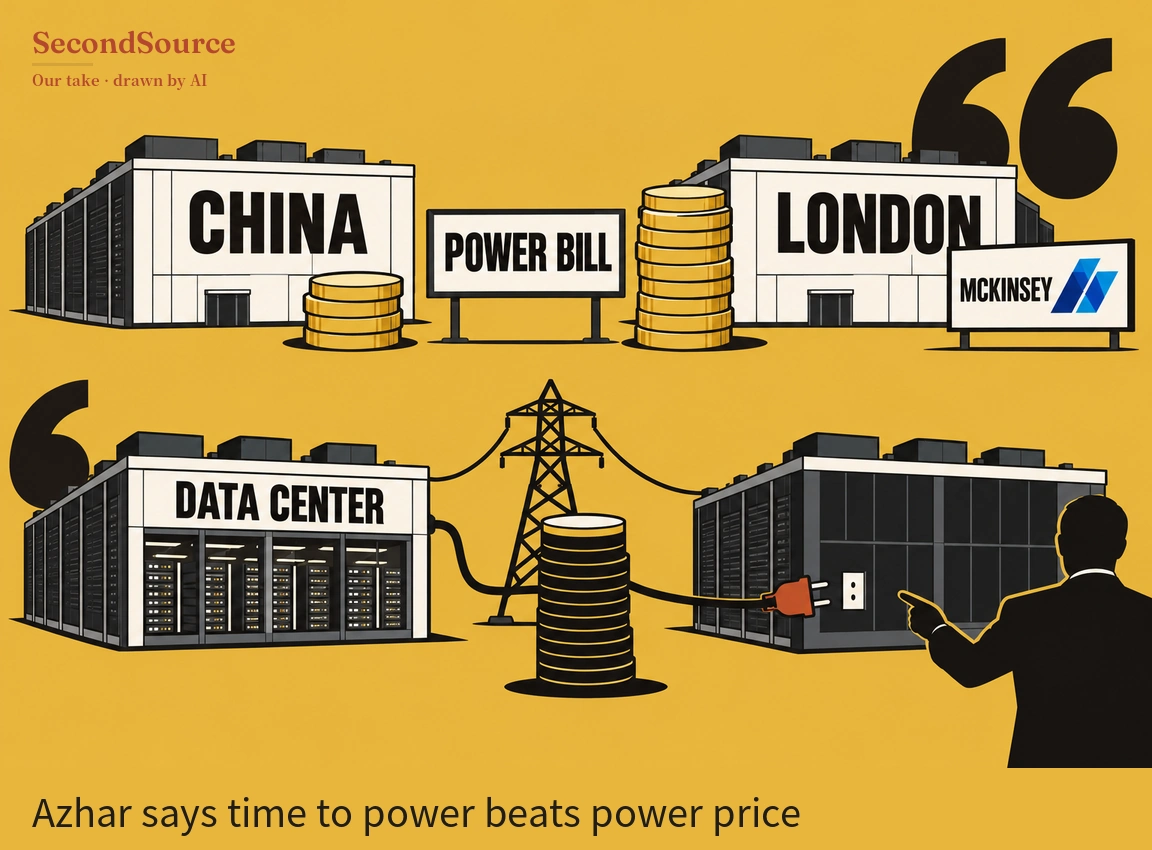
1. [Today] Azeem Azhar, author of Exponential View, rebuts McKinsey: data centers compete on how fast they can get power, not on the price of power.
Research & models
1. [This week] (preprint, arXiv 2610.39641) Two authors at Samyama AI, which builds research knowledge graphs, hand-checked 41 model rulings and found 9 fully correct.

Read the full item → How we checked →
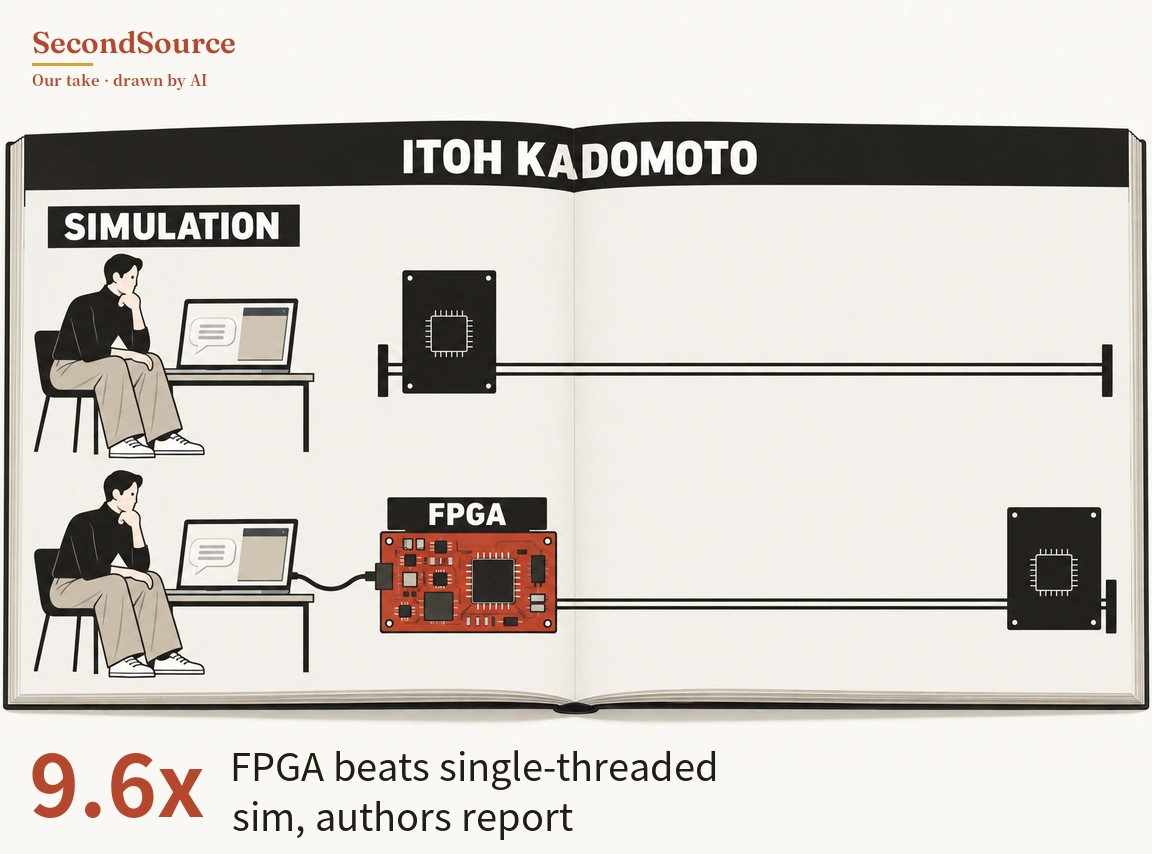
2. [This week] (preprint, arXiv 2610.39570) Leo Itoh and Junichiro Kadomoto self-report that an agent testing the same CPU design on an FPGA finished 8,000 CoreMark iterations, build time included, 9.6 times faster than single-threaded RTL software simulation.
Read the full item → How we checked →
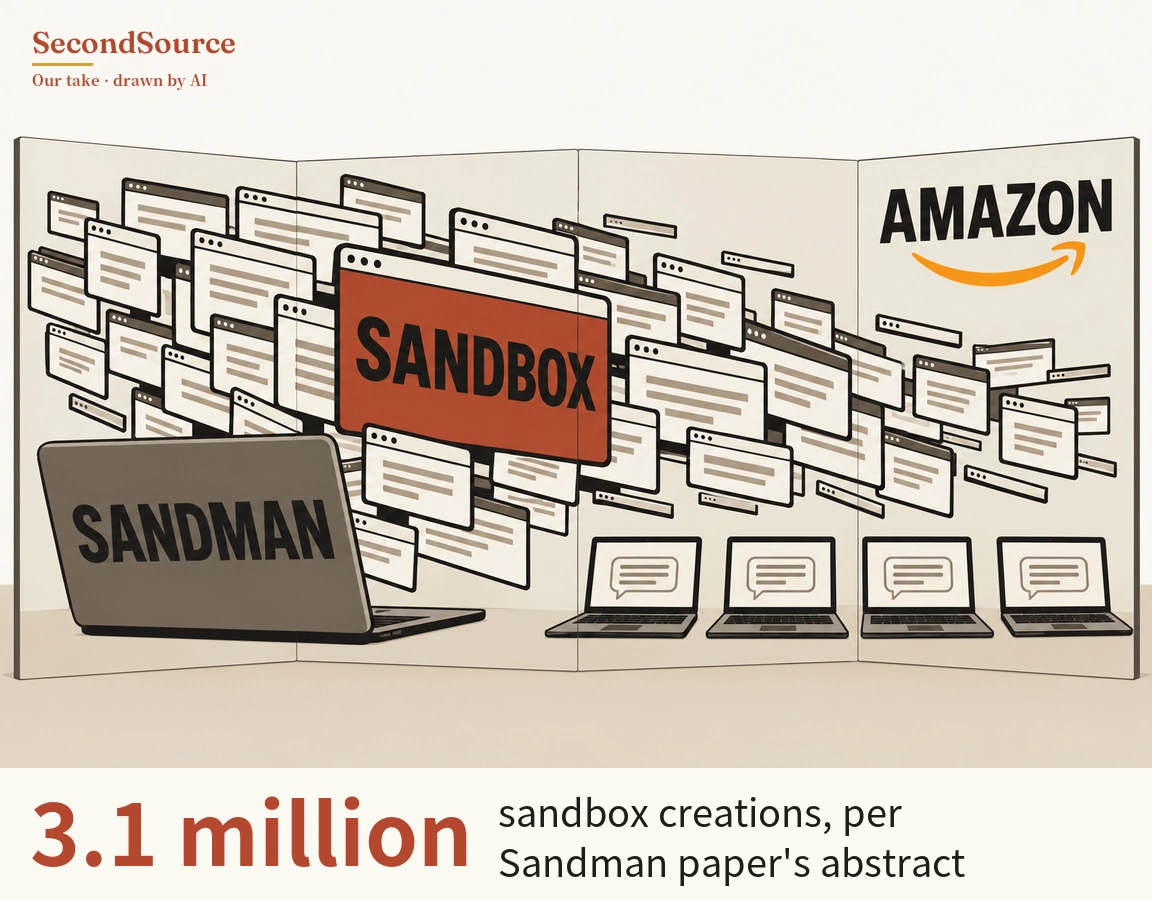
3. [This week] According to the paper's abstract, Amazon's sandbox service Sandman, built for training tool-using agents, created 3.1 million isolated execution environments (sandboxes) across four training campaigns in October.
Nothing new this issue in: Product moves.
From the archive
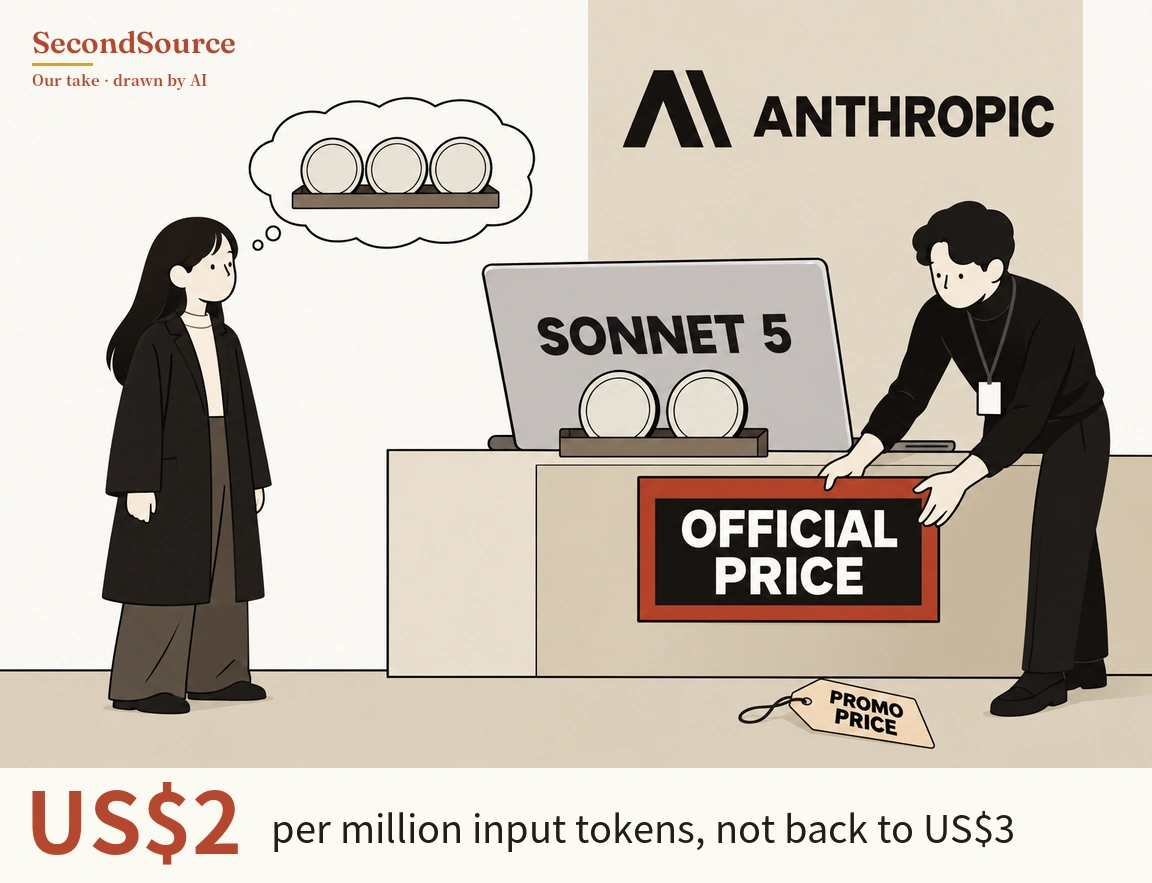
1. [Looking back] (SecondSource call, July 31) SecondSource put the odds at about 85% that Claude Sonnet 5 would return to its original price after the promotion ended, and the price didn't go back.
Also happened
1. Not verified by us yet: [Today] The X account Robocurve self-reports that two copies of the same AI, kept isolated, exchanged a secret word through robots and cameras. The post gives neither the number of attempts nor a success rate (Robocurve, 2026-11-01).
Academic papers, 112: 26 read, 33 screened out (8 of them before fetching), 53 not yet read. Social-platform posts, 80: 20 read, 55 screened out, 1 logged only, 4 not yet read. Second paper feed, 12: none read yet. Blogs, 5: 3 read, 1 screened out, 1 logged only. Linked articles (6), newsletters (3) and show transcripts (2): all read.
Intel's filing is not among those 220; it was looked up directly at the US Securities and Exchange Commission. Last night's collection pulled 237 original X posts from 374 accounts. These 237 are a separate count and can't be divided by the 80. @teortaxesTex alone accounted for 47 of the 237, followed by @elonmusk and @TheStalwart.
One-time catch-up. The show-transcript catch-up totals 770 pieces and the linked-article catch-up 61 pieces, dated through October 30. None of it was used in this issue.
Still missing today. The gap that most affects judgment is the amount, price and terms of OpenAI's first close, none of which has been published; OpenAI didn't respond to TechCrunch's request for comment. One show episode from last night has no official page that could be found. This issue has no macro section.
Tracked sources. The long-term roster currently has 529 named sources: 302 on social platforms, 90 shows, 51 news outlets, 48 blogs, 48 paper authors and 46 newsletters, with the rest spread across earnings reports, keynotes and other channels. The same source may be tracked on several channels, so the channel figures add up to more than 529. These are counts of tracked sources and can't be added to the piece counts above; the 374 accounts actually pulled last night are also not the same population as the 302 social-platform sources on the roster. Representative names include Daniel Kokotajlo, Sergey Levine, Arvind Narayanan and Chris Lattner on social platforms; Terence Tao and Lilian Weng among blogs; and Sam Altman, Dario Amodei and Demis Hassabis among show interviewees. This issue uses 20 outside sources in the body. Only outside links actually cited in the body are counted, and links to SecondSource's own site are left out; these 20 are a separate count from the 529 tracked sources. Taiwanese-side sources total 143, with 43 added in October; Taiwanese media, Taiwanese companies' official channels and local reporters in Taiwan count, while foreign outlets relaying Taiwanese media do not.
SecondSource isn't a news digest: AI reads primary sources across fields, every judgment comes with its original source, and mistakes are corrected in public. The focus is what has changed and which claims still lack evidence, not what happened today.
Written from the same research and judgments as the Traditional Chinese edition. Sources are linked; we distinguish original documents from reporting and mark what we could not verify.