Daily Brief Nov 2, 2026
White House withholds AI framework; a court hasn't ruled
At a glance
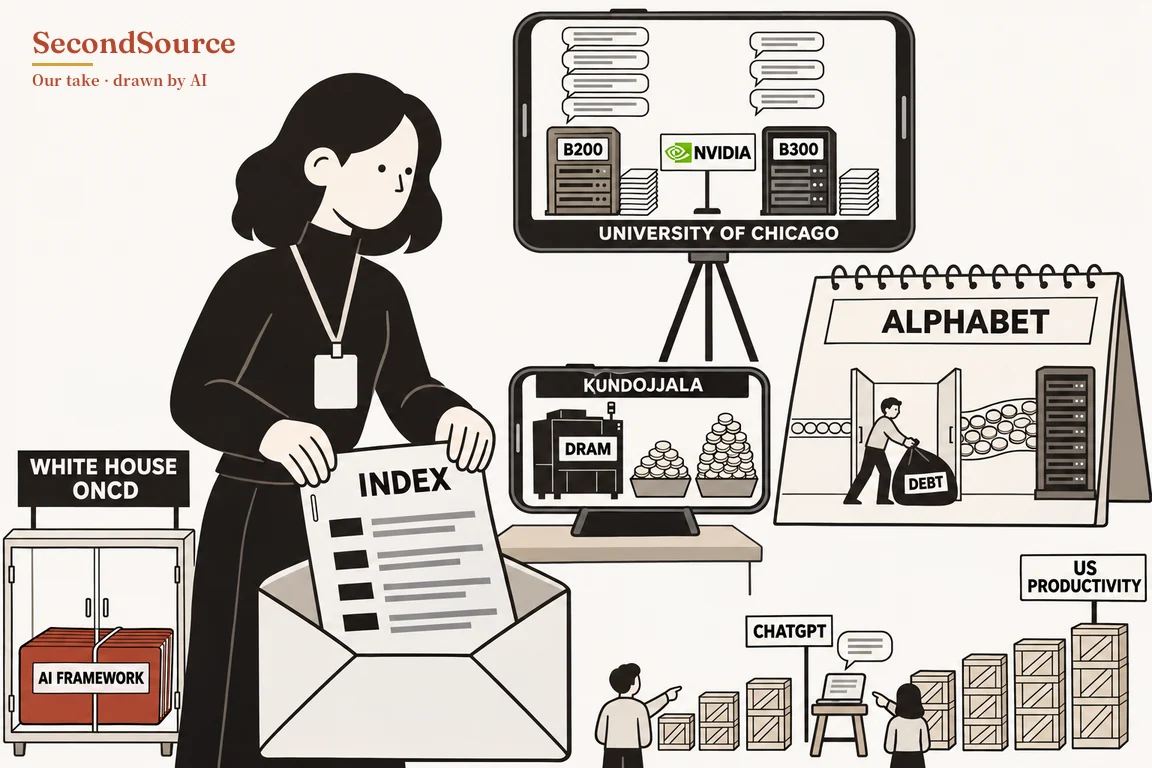
1. In a records lawsuit, the White House withheld all 60 pages on its voluntary AI framework. Most of the 28 letters to AI labs listed in its filing confirm which trusted partners may use a new model before general release.
2. Only one analyst, Sravan Kundojjala, has estimated that the top five chip-equipment makers' third-quarter DRAM equipment revenue rose 80% year on year.
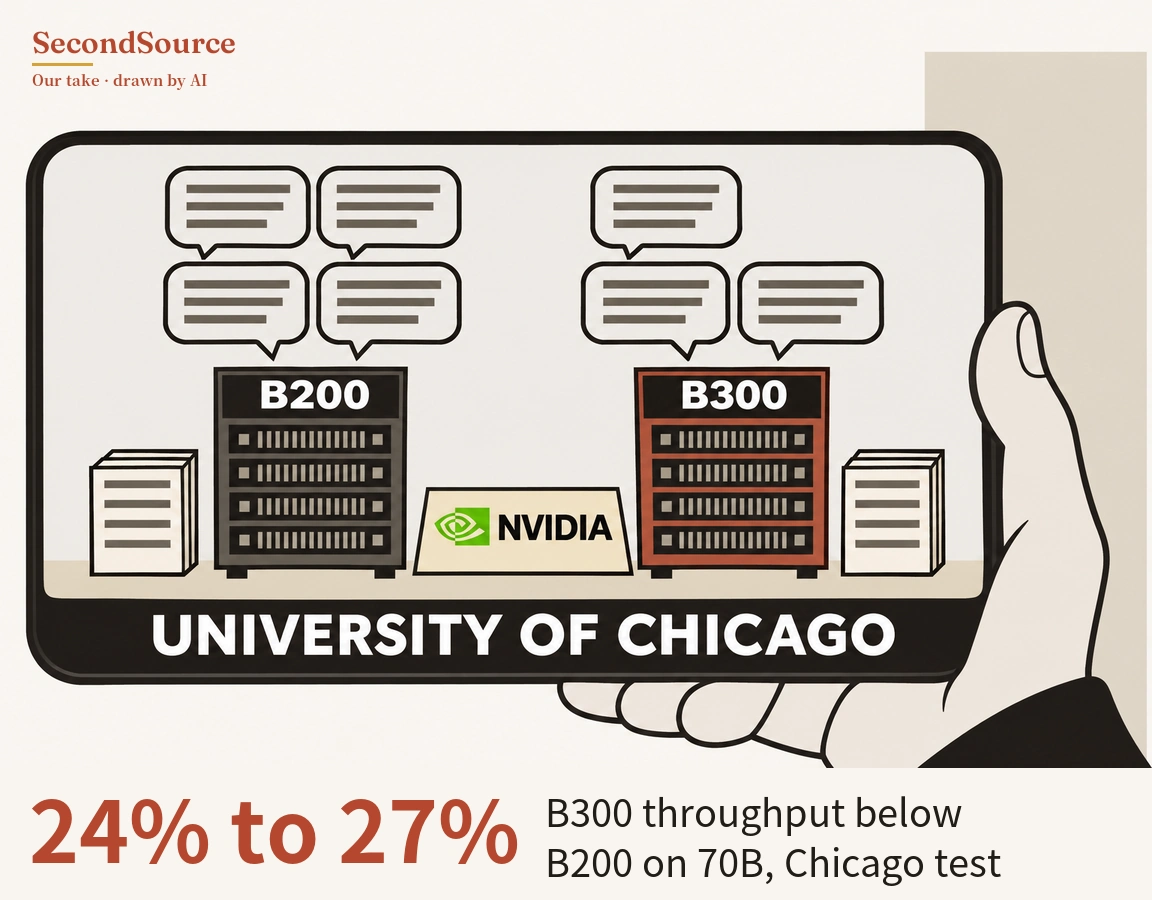
3. A University of Chicago team measured NVIDIA's B300 running a 70B Llama-3 model at 24% to 27% lower throughput than the previous-generation B200; so far only this one team has measured it.
Today's main line
1. The White House withholds all 60 pages on its voluntary AI framework, and most of the 28 letters on its withholding list confirm which trusted partners may use new models before general release(letter dated October 30)
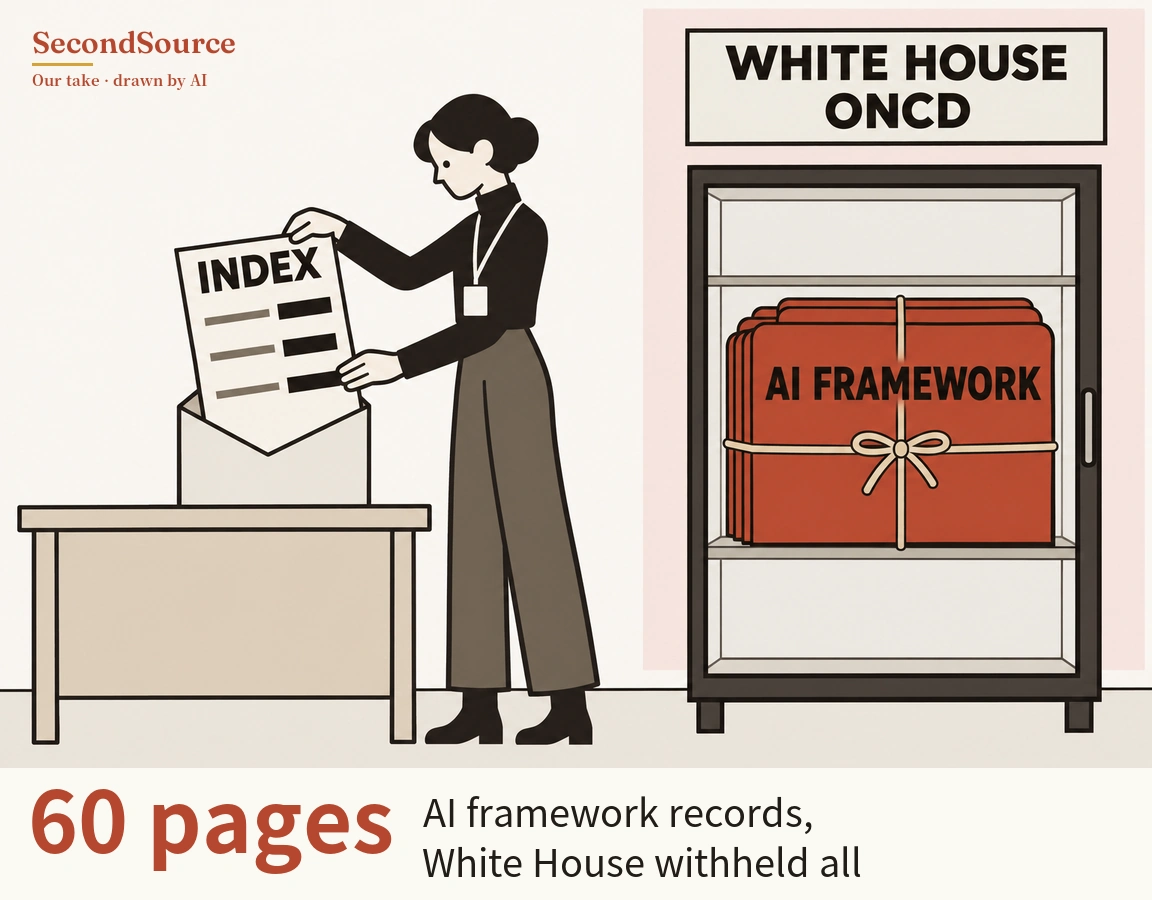
The White House Office of the National Cyber Director (ONCD) withheld all 60 pages of records on its voluntary AI framework on October 30, in a Freedom of Information Act lawsuit. Our inference: AI labs have sent at least some of their early-access customer lists to the government before a new model's launch, so a company joining a lab's preview should assume its name may reach the White House.
The withholding list the government is required to attach names 28 letters sent to AI labs, one by one.
The government's stated reason for withholding says the labs supplied these lists.
The clearance letters began before the framework file's date.
2. Analyst Sravan Kundojjala estimates the top five chip-equipment makers' third-quarter DRAM equipment revenue rose 80% year on year, and Tokyo Electron raised its forecast for next year's equipment market
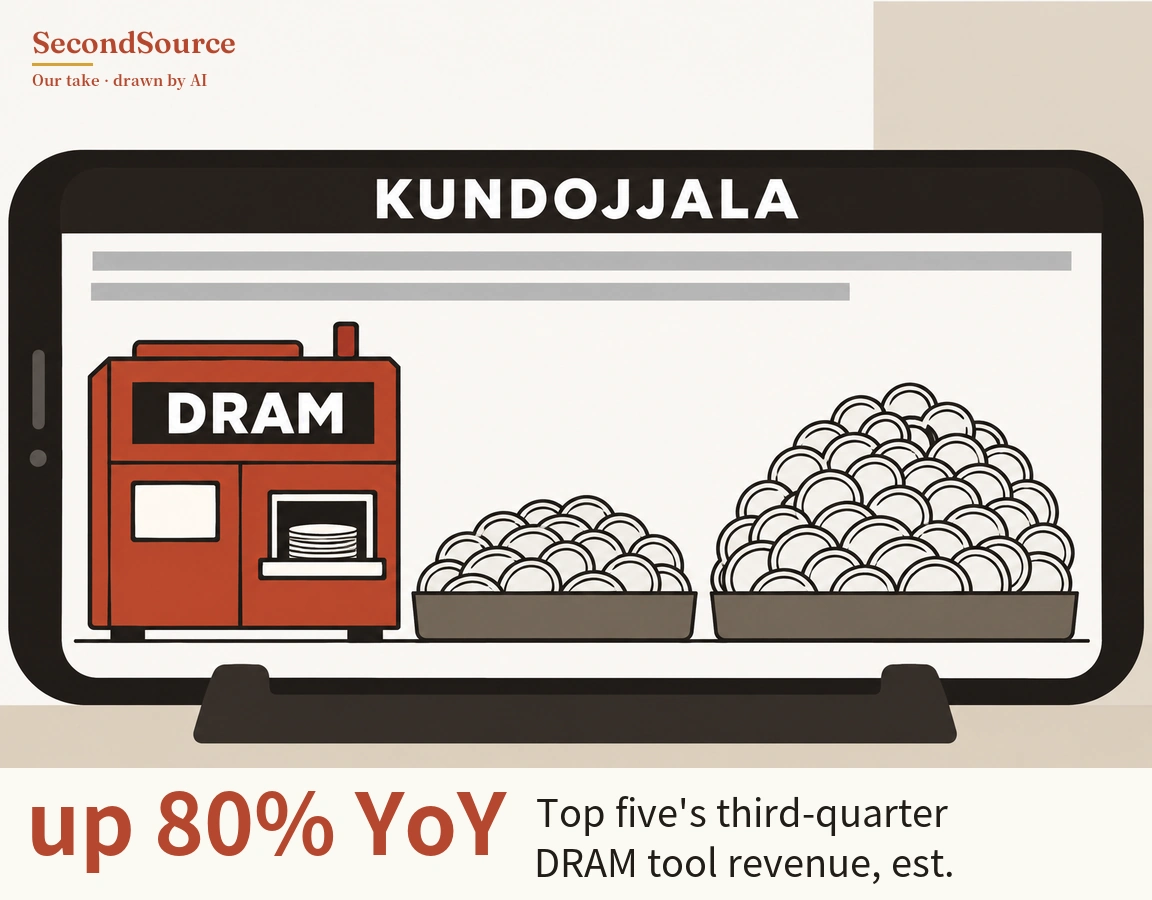
Semiconductor analyst Sravan Kundojjala estimated on November 1 that the top five semiconductor equipment makers' DRAM equipment revenue in the third quarter was 80% higher than a year earlier. Our inference: memory chips are already short, and tools sold now add chips only after installation and ramp-up, so memory buyers such as PC makers should not expect the shortage to ease right away.
The five makers' combined third-quarter figure is a record and shows no sign of slowing, Kundojjala writes.
Tokyo Electron, Japan's largest semiconductor equipment maker, lifted the industry's spending outlook as well.
NAND flash memory is tight as well.
Chips & semiconductors
No chips & semiconductors item this issue. The memory-equipment story is main-line item 2.
Named commentary
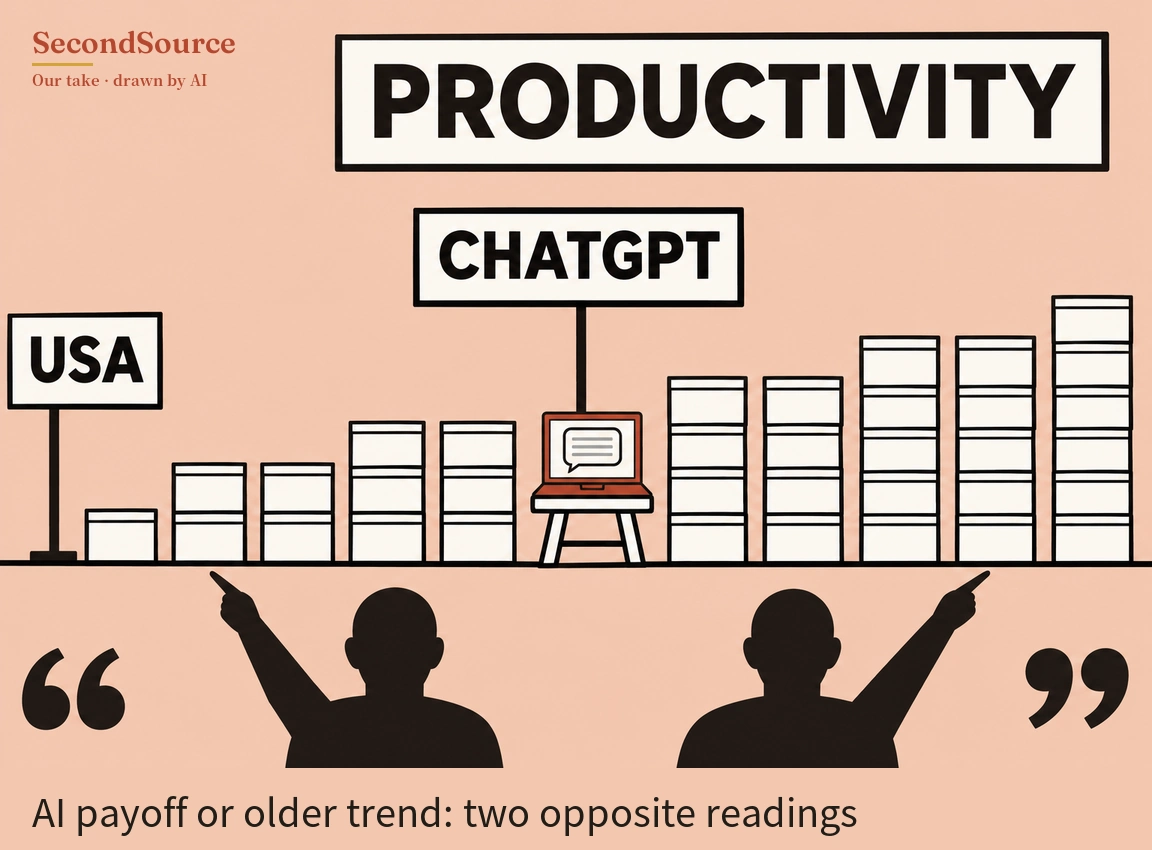
1. John Burn-Murdoch, chief data reporter at the Financial Times, and investor Gavin Baker read the same set of charts on the US post-pandemic productivity rebound and reach opposite conclusions.
Research & models
1. The University of Chicago's Research Computing Center measured NVIDIA's B300 running a 70B Llama-3 model at 24% to 27% lower throughput than the previous-generation B200.(preprint, arXiv 2610.41919)
From the archive
1. [Looking back] (SecondSource call, July 24) Alphabet's third-quarter free cash flow was negative US$9.07 billion, and in the same quarter it raised US$28.7 billion net from bond issuance.
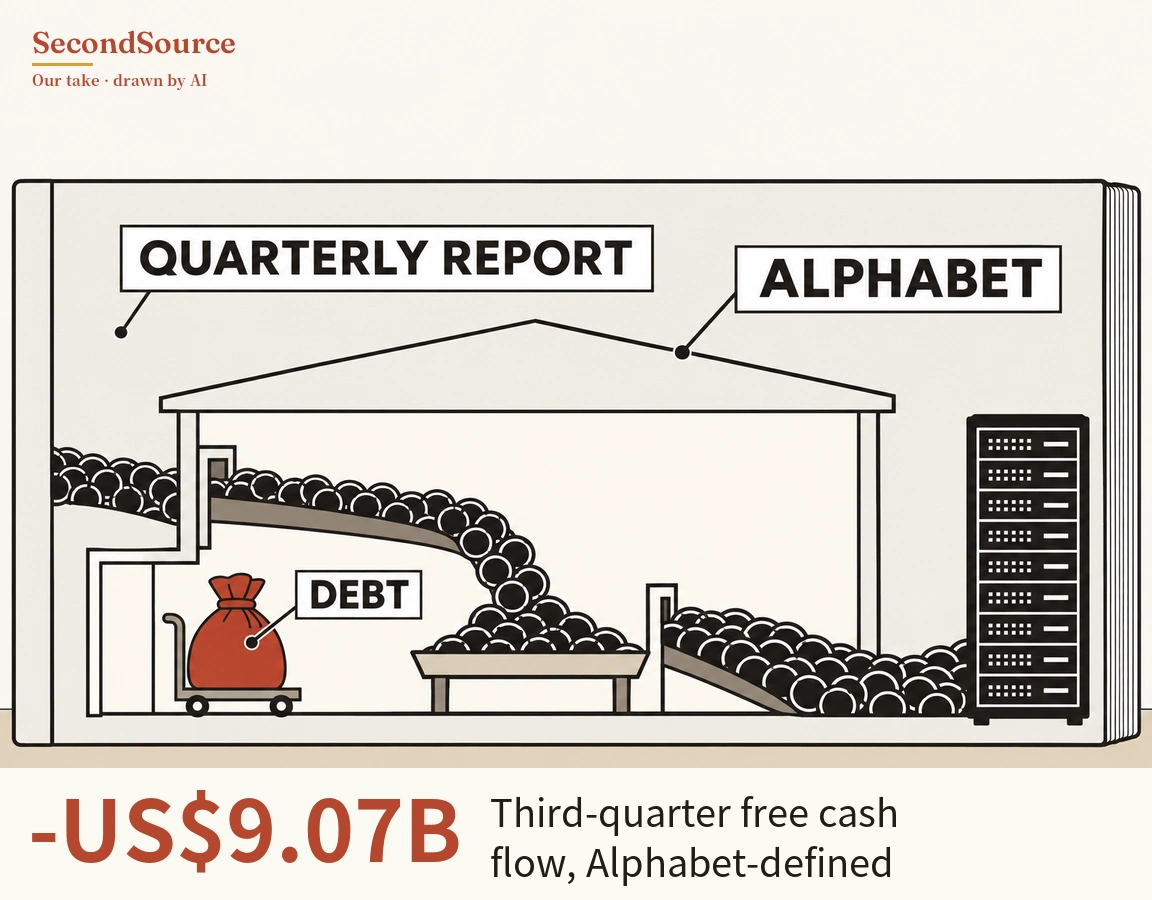
Our inference: Alphabet borrowed in a quarter when its capital spending exceeded its operating cash flow, so investors tracking the large cloud companies' spending now have one quarter in which part of it looks debt-funded.
Also happened — not verified by us yet
No new items in this section this issue.
Academic papers, 203: 57 read, 29 screened out (1 of them before fetching), 117 not yet read. Linked articles, 93: 52 read, 3 screened out, 38 not yet read. Social-platform posts, 89: 20 read, 38 screened out, 5 logged only, 26 not yet read. Second paper feed, 5: none read yet. Blogs, 3: 2 screened out, 1 logged only. Show transcripts (6) and newsletters (3): all read.
The government response letter and withholding list in main-line item 1 came in through the link attached to Leo Schwartz's post, and are counted among the 93 linked articles. Last night's collection pulled 266 original X posts from 374 accounts. These 266 are a separate count from the 89 above and can't be converted into each other. @teortaxesTex alone accounted for 37 of the 266, followed by @elonmusk and @mitsuhiko.
One-time catch-up. The show-transcript catch-up totals 770 pieces and the linked-article catch-up 61 pieces, dated through October 30. None of it was used in this issue.
Still missing today. The gap that most affects judgment is the 60 withheld pages themselves, none of which the government has released; the body of Kundojjala's post doesn't name the five equipment makers. The full text from the shows' official pages wasn't obtained last night. This issue has no macro section.
Tracked sources. The long-term roster currently has 529 named sources: 302 on social platforms, 90 shows, 51 news outlets, 48 blogs, 48 paper authors and 46 newsletters, with the rest spread across earnings reports, keynotes and other channels. The same source may be tracked on several channels, so the channel figures add up to more than 529. These are counts of tracked sources and can't be added to the piece counts above; the 374 accounts actually pulled last night are also not the same population as the 302 social-platform sources on the roster. Representative names include Daniel Kokotajlo, Sergey Levine, Arvind Narayanan and Chris Lattner on social platforms; Terence Tao and Lilian Weng among blogs; and Sam Altman, Dario Amodei and Demis Hassabis among show interviewees. This issue uses 15 outside sources in the body. Only outside links actually cited in the body are counted, and links to SecondSource's own site are left out; these 15 are a separate count from the 529 tracked sources. Taiwanese-side sources total 148, with 43 added in October and 7 so far in November; Taiwanese media, Taiwanese companies' official channels and local reporters in Taiwan count, while foreign outlets relaying Taiwanese media do not.
SecondSource isn't a news digest: AI reads primary sources across fields, every judgment comes with its original source, and mistakes are corrected in public. The focus is what has changed and which claims still lack evidence, not what happened today.
Written from the same research and judgments as the Traditional Chinese edition. Sources are linked; we distinguish original documents from reporting and mark what we could not verify.